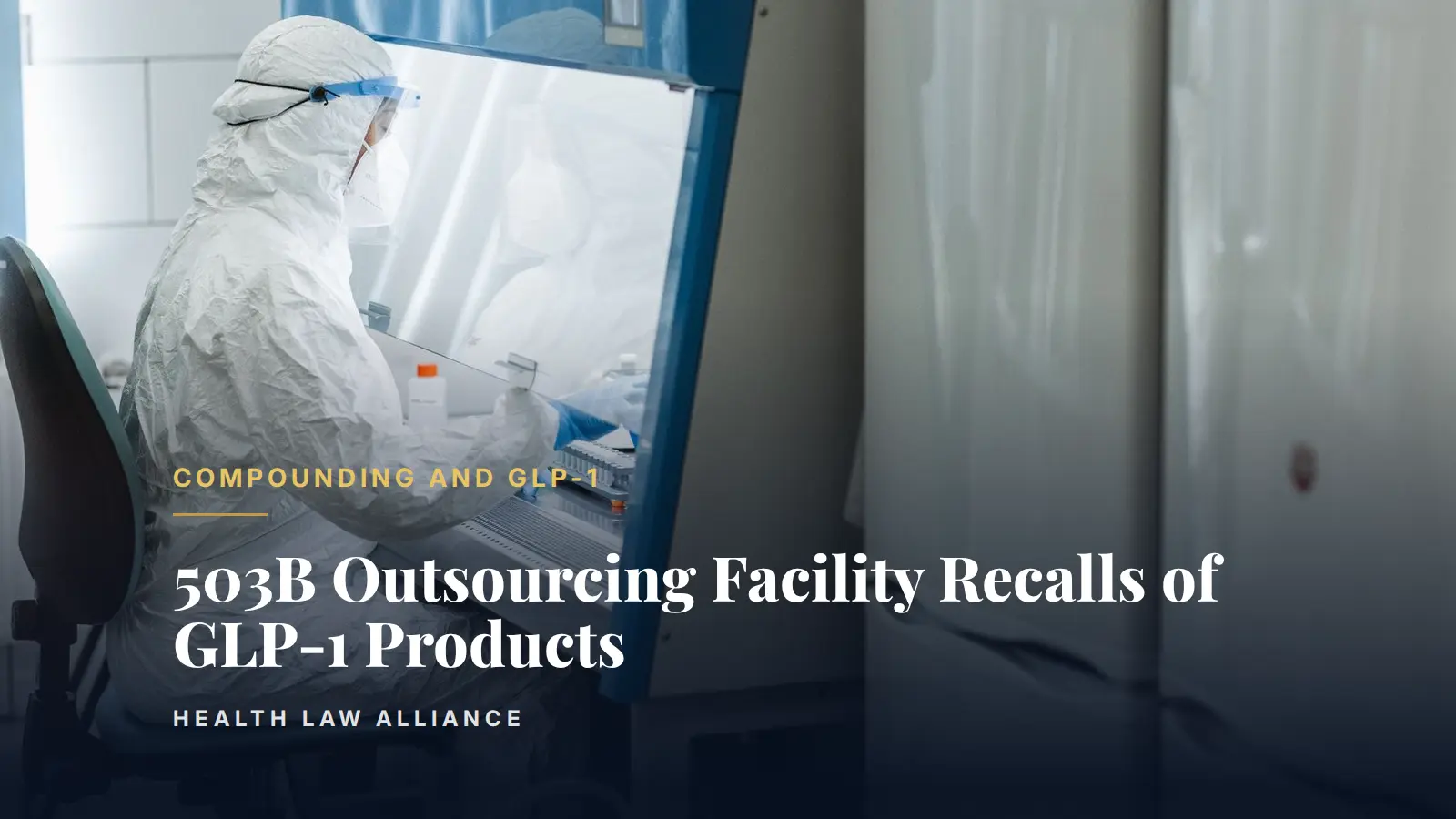
A 503B outsourcing facility compounding semaglutide or tirzepatide injections carries sterility risk that a single contaminated lot can turn into a nationwide recall. FDA's April 2026 warning letter to ProRx LLC tied a voluntary recall of tirzepatide and semaglutide multidose vials directly to the sterility failures its inspectors documented the prior fall. How a facility handles that recall, the speed of the decision, the completeness of the public notice, becomes part of the compliance record FDA reads at the facility's next inspection.
Voluntary Recalls Versus FDA-Requested Recalls
Recall authority over compounded drugs sits almost entirely with the firm, not FDA. Under 21 CFR 7.40, recall is a voluntary action firms carry out to protect the public from products that present a risk of injury, and an FDA request that a firm recall a product is reserved for urgent situations. Instead, 21 CFR 7.46 lets a facility launch its own recall and notify its FDA district office directly, while 21 CFR 7.45 allows the FDA Commissioner to request a recall when a distributed product presents a risk of illness or injury, the firm has not already recalled it, and agency action is necessary to protect the public health and welfare.
The choice matters for every 503B outsourcing facility, including ones that also run a companion 503A pharmacy under the 503A/503B framework. Facilities operating both registrations at one address face added recall-related complications we address separately in Owning Both a 503A Pharmacy and a 503B Outsourcing Facility. This guide covers recall decisions for a 503B facility on their own, as part of our broader compounding pharmacy defense work.
Recall Classification and FDA's Enforcement Report
Once a recall begins, FDA's health hazard evaluation under 21 CFR 7.41 assigns it a classification, Class I, Class II, or Class III, reflecting the relative risk the recalled lots present. The ProRx recall covered lots of Tirzepatide Injection and Semaglutide Injection multidose vials pulled for a lack of sterility assurance, the same failure the facility's warning letter traced to environmental monitoring and disinfection lapses in its clean rooms, the kind of aseptic technique USP 797 sterile compounding standards exist to prevent. Firm-initiated recalls under 21 CFR 7.46 also enter FDA's weekly Enforcement Report, so the recall becomes a public, searchable record independent of whether a warning letter ever follows.
Closing out a recalled lot does not close the file FDA keeps on the facility that recalled it.
Recall Handling and the Facility's Next Inspection
The Enforcement Report listing is only the start of the record. The ProRx warning letter described the facility's September 2025 inspection findings, the clean room failures that fell short of current Good Manufacturing Practice (cGMP) standards, and its October 2025 recall of tirzepatide and semaglutide lots as a single narrative, then gave the facility 15 working days to respond with corrective action. A facility that recalls before FDA asks, and documents the root cause completely when it does, controls more of that narrative than a facility that FDA had to push toward a recall under 21 CFR 7.45, the scenario 21 CFR 7.40 treats as grounds for seizure or other court action instead.
A beyond-use date sets the outer limit on how long compounded product may be dispensed or administered. FDA's health hazard evaluation addresses the risk a recalled lot presents to a patient who could still receive it, which is why recall decisions concentrate on product still inside that window. The facility's next inspection reads the recall record alongside the original finding, not as a separate event.
Health Law Alliance's attorneys have overseen 2,000+ audits and handled 5,000+ matters, with 25+ years of experience.
Why Early Legal Counsel Is Critical
It is critical that 503B outsourcing facilities promptly retain experienced healthcare defense counsel upon receiving an FDA recall request, a Form 483 inspection finding, a warning letter, or other government inquiry. Early legal intervention can protect the facility's rights, ensure appropriate responses to government requests, avoid inadvertent admissions, preserve relevant defenses, and allow counsel to communicate with investigators on the facility's behalf. Delaying legal representation can significantly affect the outcome of a matter and expose the facility to unnecessary risk.
How Health Law Alliance Can Help
Health Law Alliance represents 503B outsourcing facilities and 503A pharmacies through FDA recalls, warning letters, and the inspections that follow them. If your facility is weighing a semaglutide or tirzepatide recall, or responding to FDA about one it already initiated, our 503B compounding defense team is available for a free, confidential consultation.