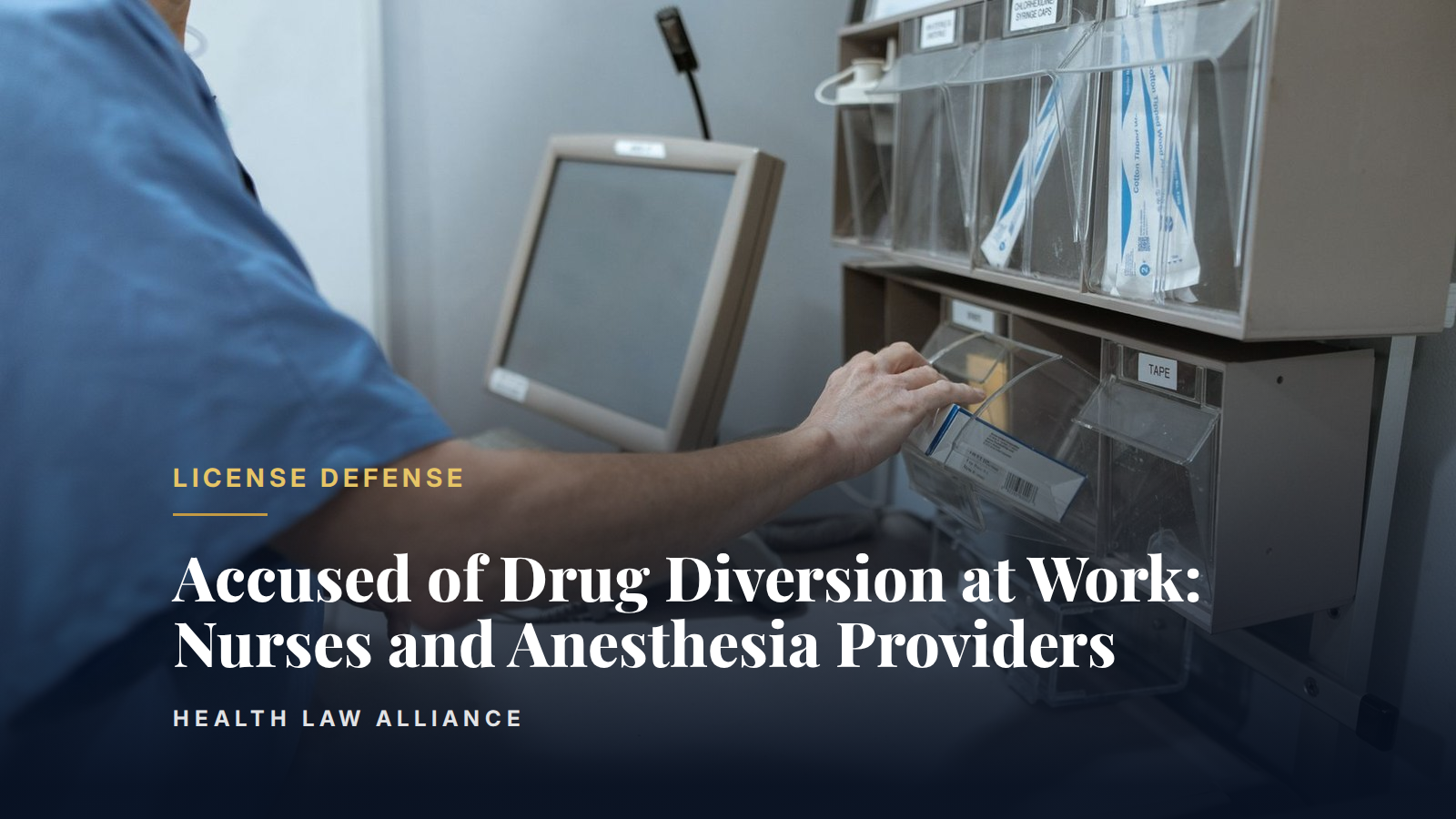
A hospital compliance team flags a pattern in the automated dispensing cabinet report: a nurse's waste documentation does not match the quantity of opioids pulled, or an anesthesia record shows a discrepancy between what was administered and what remains unaccounted for. The facility opens an internal drug diversion investigation. Within days, the nurse or anesthesia provider named in the file may be called into an interview, asked to submit to a for-cause drug test, and suspended from patient-facing duties while the investigation is open. The exposure extends past the job itself: a licensing board investigation, a possible report to the DEA, and in some cases a referral for criminal prosecution can all follow from the same underlying facts.
How a Facility Diversion Investigation Unfolds
Most hospital and health system diversion programs run on the same backbone: dispensing cabinet transaction logs, waste-witnessing requirements, and anesthesia record reconciliation. A pharmacy or compliance officer who notices a pattern, missed wastes, overridden pulls, unusually frequent cabinet access, or a witnessed waste that does not match what was observed, opens a file and pulls the underlying patient records. The facility typically interviews the nurse or anesthesia provider named in the file and often requires a for-cause drug test to keep working while the review is open. Suspension commonly follows the interview regardless of what the test shows, because the decision rests on the facility's own personnel policy, not a legal finding.
What the Employer Reports, and to Whom
When the facility holds the DEA registration, as most hospitals, health systems, and many clinics do, a confirmed theft or significant loss of controlled substances triggers the registrant's duty under 21 CFR Section 1301.74(c) to notify the DEA's local Diversion Field Office in writing within one business day of discovery, followed by a DEA Form 106. That duty applies whether or not the drugs are recovered or anyone is charged, and it belongs to the facility, not the individual nurse. A state licensing board may also require a report once diversion is suspected, and some facilities separately contact law enforcement. The same facts can support a criminal referral, and a subpoena or, where prosecutors have named the clinician as a target, a target letter, can arrive before the board investigation concludes.
The Board Investigation and the Choice Nurses Face
A diversion report to the state nursing board opens an investigation separate from the facility's internal review. Board of Nursing Investigations: What a Nurse Should Expect covers that process. At some point a board may offer a choice: contest the allegation through the formal disciplinary process, or apply for an alternative-to-discipline or monitoring program built for substance use disorder cases. Eligibility, confidentiality, and the board's duty to report a confirmed finding are all state-specific, and a nurse should confirm the current rule where the license is held. Contesting preserves the chance of a finding that no violation occurred. A monitoring program typically keeps the matter non-public while active, detailed in Impaired Practitioner Programs: Terms and Tradeoffs, but it carries its own multi-year testing and reporting obligations.
Why a Documentation Discrepancy Is Not Proof of Diversion
A dispensing cabinet discrepancy report describes a pattern of pulls and wastes that does not reconcile. A missed co-signature, a mislabeled waste, a system delay, or another clinician's error on a shared patient can produce the same flagged line. Before answering questions, a nurse or anesthesia provider should ask to see the underlying data: the full dispensing and waste log for the shifts at issue, the co-signing witness records, access logs showing who else used the same cabinet, and the specific policy provision the facility says was violated.
A dispensing cabinet discrepancy shows a mismatch in the record. Whether that mismatch is diversion, a workflow error, or someone else's mistake is the question an investigation is supposed to answer, not the conclusion it starts from.
Why Early Legal Counsel Is Critical
It is critical that a nurse or anesthesia provider promptly retain experienced healthcare defense counsel upon being named in a facility diversion investigation, asked to submit to a for-cause drug test, or notified of a board complaint. Early legal intervention can protect the clinician's rights during the interview, help preserve the underlying dispensing and waste records, avoid inadvertent admissions usable in the licensing case and any later criminal referral, and allow counsel to communicate with the facility, the board, and investigators. Delaying representation until after the interview can foreclose options available at the outset.
How Health Law Alliance Can Help
This article addresses the accused clinician's own response to a facility investigation. The employer's side of building and running a diversion program is covered separately in Employee Drug Diversion: Detection and Response. Health Law Alliance's attorneys have overseen 2,000+ audits and handled 5,000+ matters, with 25+ years of experience. If a facility, a licensing board, or the DEA has opened a drug diversion inquiry naming you, contact Health Law Alliance's professional license defense attorneys for a free, confidential consultation before you answer further questions.