A compounding pharmacist drawing from an opened vial mid-shift is applying one of the most consequential distinctions in USP General Chapter 797: which container category the vial falls into, and how long its contents stay usable once opened. USP 797 treats an ampule, a single-dose vial, a multiple-dose container, a bulk package and a compounded stock solution as separate things, each with its own in-use time. Confusing that in-use time with the beyond-use date assigned to the finished preparation is the kind of error FDA and state boards of pharmacy read as a sterility assurance failure, not a paperwork lapse.
Five Container Categories, Five Different Rules
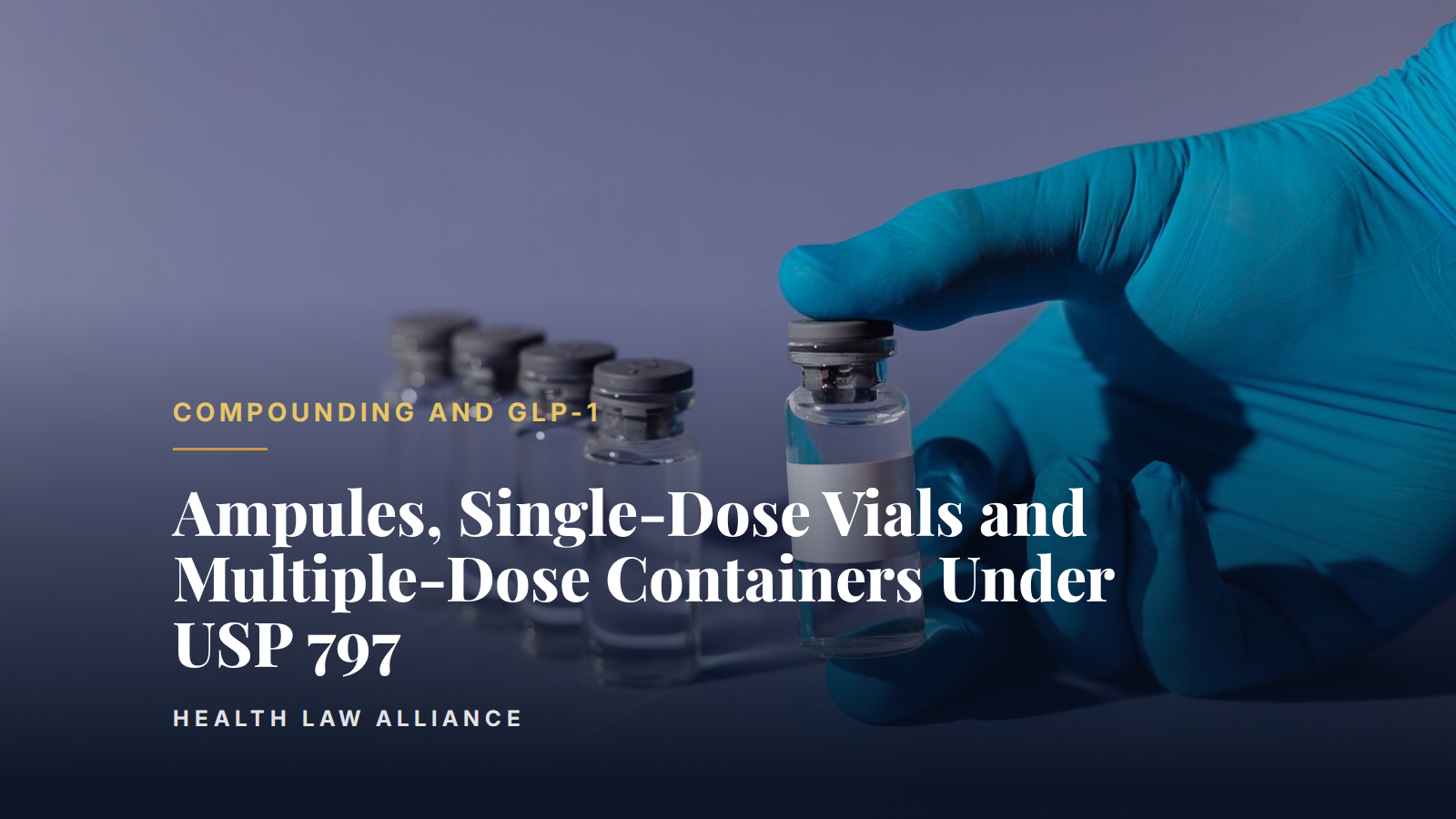
USP 797 does not treat every opened container the same way. An ampule is a sealed glass container meant to be opened, used in a single compounding event, and discarded; once the neck is broken it cannot be resealed or held for later use. A single-dose vial or bag is labeled by its manufacturer for one entry, and the chapter treats the quality of the air where that entry happens, inside ISO Class 5 air or outside it, as the variable that controls how long the contents may still be drawn after puncture. A multiple-dose container carries an antimicrobial preservative so it can tolerate repeated entries, and the chapter evaluates it on its own timeline. Pharmacy bulk packages and compounded stock solutions sit in their own categories again, and the hours or days attached to each one moved with the 2023 revision, so read the current official text rather than a number carried over from an earlier edition.
In-Use Time Versus the Beyond-Use Date
The container's in-use time and the finished preparation's beyond-use date answer two different questions. In-use time governs how long the original container may still be entered after it is first opened, while the beyond-use date is a separate clock that starts once the preparation is made and controls how long that finished product can still be dispensed. A multiple-dose vial can carry a longer manufacturer expiration date and still reach the end of its in-use time well before that date arrives, and a compounded preparation's assigned BUD is capped by whichever is shorter. Beyond-Use Dating: Where Compounders Get Cited covers how that ceiling gets assigned and challenged on inspection.
Why the Limit Can Differ From State to State
The 2023 revision to USP 797 became official on November 1, 2023, and changed several of the chapter's in-use and beyond-use provisions. States do not all adopt a revision on the same timeline; a board can incorporate the chapter by reference, amend specific provisions, or lag behind the current edition, so the same ampule or single-dose vial can carry a different allowed in-use time depending on which board is inspecting the pharmacy. Confirm any specific figure against the current chapter text and the pharmacy's own state board, not a secondary summary.
How FDA and State Inspectors Cite Container Handling
FDA's own guidance on insanitary conditions, issued in November 2020, lists container handling among the practices it treats as evidence of an insanitary condition, a basis for finding a drug adulterated under Section 501(a)(2)(A) of the Federal Food, Drug, and Cosmetic Act. Examples include failing to disinfect a container before opening it, using a container that was not pre-sterilized, and staging an open sterile vial in the critical area longer than the fill requires. The same guidance ties a beyond-use-date ceiling of 12 hours at room temperature and 24 hours refrigerated or frozen to the limited enforcement discretion FDA extends to a segregated compounding area. 503B outsourcing facilities, which must also meet cGMP requirements, face routine FDA inspection, while state-licensed 503A pharmacies are overseen mainly by their state board and inspected by FDA chiefly after a complaint. Either way, a finding travels through a Form 483, a warning letter, a recall, or an injunction.
Compounding facilities must correct all insanitary conditions at their facility regardless of whether the drugs pass a sterility test.
Why Early Legal Counsel Is Critical
It is critical that compounding pharmacies and outsourcing facilities promptly retain experienced healthcare defense counsel upon receiving an FDA Form 483, a warning letter, or a state board inspection report naming beyond-use dating or container handling. Early legal intervention can protect the facility's rights, shape the written response before the agency reaches a final position, avoid inadvertent admissions, and let counsel communicate with investigators on the facility's behalf. Delaying representation can significantly affect the outcome and expose the pharmacy to a recall, a license action, or a federal referral.
Health Law Alliance represents compounding pharmacies and 503B outsourcing facilities through FDA inspections, Form 483 responses, warning letters, and state board actions tied to USP 797 and USP General Chapter 800 compliance. If your facility is facing a finding on beyond-use dating, container handling, or sterile compounding practice, contact our compounding pharmacy attorneys for a free, confidential consultation.