

Alison Goldman
Articles by Alison

Wound Care Management Companies: MSO Structure and Fee Risk
How the clinician-owned practice and management company split in wound care draws corporate practice and anti-kickback scrutiny.

Timely Filing Denials on Wound Care Claims
A wound care claim that misses Medicare's 12-month filing deadline, even one delayed by prepayment review, can be denied with no r…
WISeR Prior Authorization Denied for a Skin Substitute: Next Steps
A non-affirmed WISeR request is not a denial. What to fix on resubmission, when to request peer review, and when the standard appe…
Surgical Dressing Claims: Supplier Records Under DME MAC Review
Home dressings bill to the DME MAC on a track separate from the clinic's procedure claims, and that track draws its own contractor…
Selective vs Non-Selective Debridement: CPT 97597, 97598 and 97602
Selective debridement (97597, 97598) and non-selective debridement (97602) are coded and reviewed differently, not interchangeable…

Arterial Ulcer Documentation and Vascular Assessment Records
Medicare reviewers test arterial ulcer claims against the vascular assessment, perfusion findings, and whether the diagnosis code…

Consignment Skin Substitute Inventory: Expired Product and Records
Grafts held on consignment create inventory and expiration records that auditors use to match every billed unit to the product tha…
Appealing a Medicare Wound Care Overpayment Determination
Rebutting a Medicare wound care overpayment claim by claim: measurements, debridement depth, conservative care, product selection,…

Skin Substitute Application Coding: CPT 15271 Through 15278
CPT 15271 through 15278 split by anatomic site and measured wound area. A reviewer's first move is checking that split against the…

Hospital Outpatient Wound Center Billing: Facility and Physician Claims
One wound center visit produces two Medicare claims from the same chart, under different rules for documentation, supervision, and…

Continuing Skin Substitute Applications When a Wound Is Not Healing
When a skin substitute graft does not close a wound on schedule, the record must show why continuing, changing, or stopping the co…

Commercial Payer Audits of Skin Substitute Claims
Commercial plans audit skin substitutes under their own medical policy and provider agreement, not Medicare's LCD, with network te…

Billing an Office Visit on the Same Day as Debridement
Modifier 25 lets an E/M office visit and a debridement procedure pay on the same date, but only when the visit documents work the…

Advance Beneficiary Notices for Non-Covered Wound Care Services
What a wound care ABN must state before a skin substitute or debridement claim Medicare may deny, and why a missing or invalid not…
Wound Care Practices Facing Prepayment Review
How wound care practices manage the cash-flow hit of Medicare prepayment review and what actually meets the error-rate criteria th…

Wound Care Telehealth and Remote Assessment Limits
What Medicare covers for wound care telehealth, why debridement stays in-person, and how hybrid practices should document each vis…

Wound Care Nurse Practitioner Billing Compliance
Independent versus incident-to billing for wound care NPs, and why the billing method must match your state's scope-of-practice la…

Wound Care Practice Acquisitions and Audit Liability
A wound care acquisition can inherit the seller's audit exposure. What diligence should uncover, and how the 60-day overpayment cl…

When a Wound Care Audit Becomes an FCA Case
The civil investigative demand, payment suspension, and extrapolated demand signals that mark when a wound care Medicare audit bec…

Self-Auditing Wound Care Claims Before the Payer Does
How to sample your own wound care charts, quantify extrapolated exposure, and decide between the 60-day refund rule and OIG self-d…

Podiatry Wound Care Audits
Routine foot care exclusions, at-risk exception documentation, and debridement coding standards are driving new Medicare audits of…

Responding to a Wound Care ADR From Your MAC
The 45-day deadline, chart elements MAC reviewers check, and submission mechanics for a wound care Additional Documentation Reques…

Extrapolated Overpayments in Wound Care Audits
A single flawed sample can turn a handful of wound care claims into a six-figure Medicare demand. Sample composition is where thes…

Wound Measurement Documentation That Survives Audit
Medicare's LCDs require three separate wound measurements and a documented reassessment when healing stalls. Most audit-failing ch…

Building a Wound Care Compliance Program
Chart auditing cadence, coding review, and remediation records are what turn a self-identified billing error into a correction ins…

Wound Care LCD Compliance Across MAC Jurisdictions
CMS nationalized the skin substitute payment rate for 2026, but coverage still depends on which Medicare Administrative Contractor…

Wound Care Kickback Exposure: Manufacturer Relationships
Rebates, consulting fees, and free skin substitute product tied to referral volume can trigger Anti-Kickback Statute and False Cla…

Wound Care in Skilled Nursing Facilities: Audit Exposure
SNF consolidated billing bundles most wound care into the Part A rate. Facility, practitioner, and Part B billing splits are drawi…
Venous Leg Ulcer Care and Compression-Therapy Documentation
Medicare pays for compression bandages only over a qualifying wound. The same chart entry backs the pump, the graft, and every cla…

Skin Substitute Distributor Arrangements and Enforcement
A $309 million DOJ settlement shows how distributor commissions and pricing spreads on skin substitutes become Anti-Kickback Statu…

Selective Versus Excisional Debridement Documentation
Selective and excisional debridement pay differently and require different proof. What the operative note must show, and why wound…

Selecting a Skin Substitute: Documenting Medical Necessity
How to document product selection, conservative care, and wound measurement so a skin substitute claim holds up under Medicare's 2…
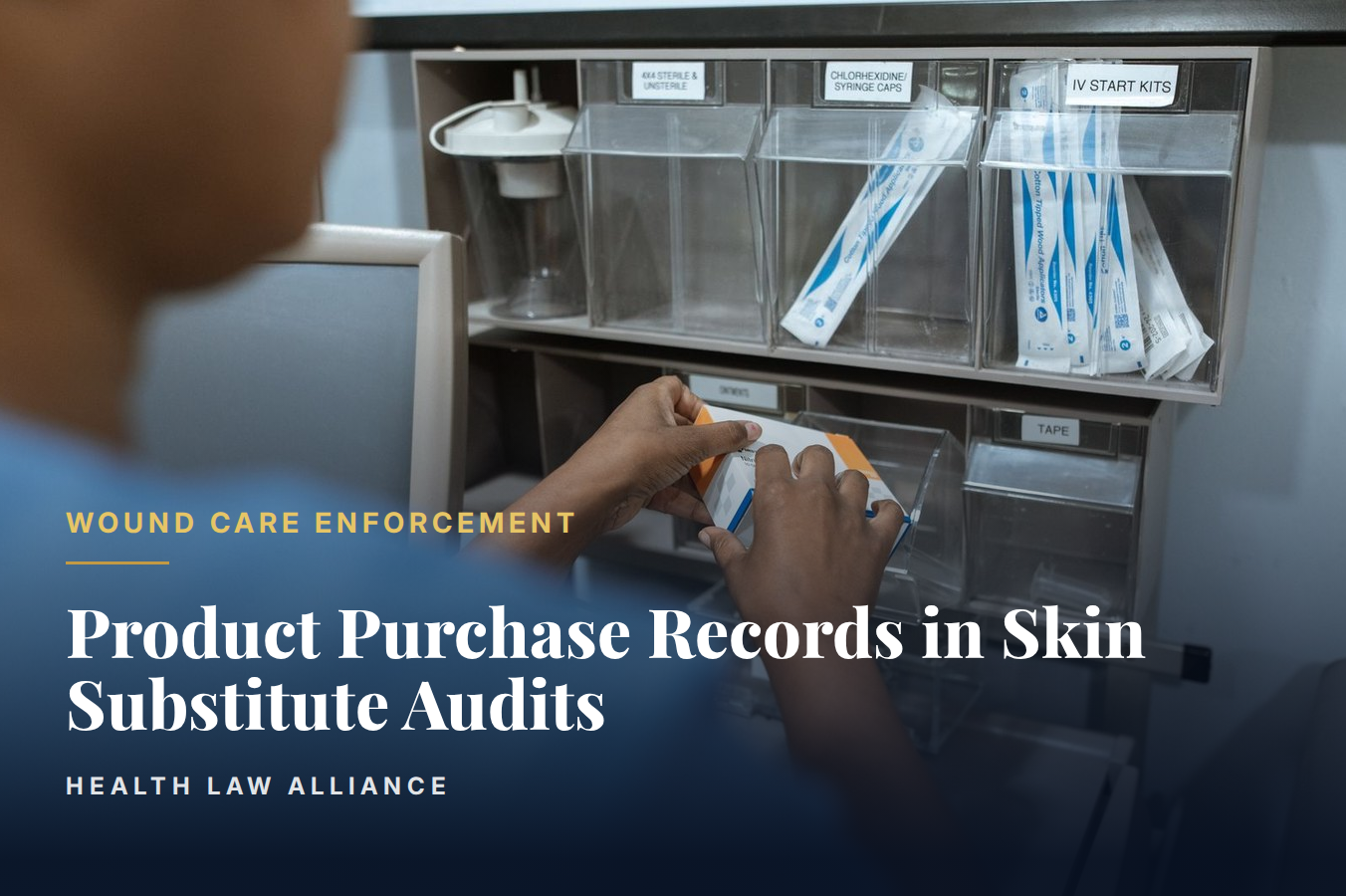
Product Purchase Records in Skin Substitute Audits
UPIC and MAC auditors now compare skin substitute purchase records against billed units. A shortfall between the two is becoming t…

Pressure Ulcer Staging and Billing Accuracy
How pressure injury staging errors and present-on-admission coding gaps translate into HAC payment reductions and audit exposure f…

Physician Supervision in Wound Care Clinics
How incident-to billing rules tie wound care claims to direct or general physician supervision, and why undocumented supervision d…
Mobile Wound Care Practices Under Federal Review
Travel-based wound care models are drawing federal scrutiny over place-of-service coding, patient selection, and visit documentati…

Negative Pressure Wound Therapy Billing Under Audit
How NPWT device documentation, duration-of-use limits, and DME overlap with professional wound care billing become audit findings.

Hyperbaric Oxygen Therapy Audits
CMS covers hyperbaric oxygen therapy for only fifteen conditions, and OIG audits found the majority of sampled claims failed to do…

Diabetic Foot Ulcer Documentation Requirements
Medicare's Local Coverage Determinations specify exact documentation for diabetic foot ulcer care: Wagner grading, vascular assess…

Debridement Frequency and Medical Necessity Challenges
How Medicare frequency checkpoints and documentation standards determine whether a repeat debridement claim survives audit review.

CTP Reimbursement Changes and What They Mean for 2027
CMS moved skin substitute reimbursement to a flat per-square-centimeter rate in 2026. A proposed 2027 rule would extend it to non-…

Debridement Depth Coding: 11042 Through 11047
CPT 11042-11047 pay on the deepest tissue removed, not the deepest visible. What documentation each depth tier needs, and how gaps…
Conservative Care Requirements Before Advanced Therapy
Medicare will not cover a skin substitute graft or hyperbaric oxygen therapy without proof that conservative wound care failed fir…

Cellular and Tissue-Based Product Waste Billing
CMS ended wastage billing for skin substitutes effective January 1, 2026, and UPIC audits already test whether billed graft sizes…

UPIC Audits of Wound Care Practices: What Triggers Them
UPICs select wound care practices through data analysis, not complaints. What the outliers look like, and the compliance check tha…
Skin Substitute FCA Enforcement: The Government's Theories
DOJ's $309M Apex Medical settlement maps three theories driving skin substitute enforcement: pricing spreads, medical necessity, a…

Wound Care Prepayment Review: Documentation That Releases Claims
CMS prepayment review holds wound care claims until the record proves medical necessity. The ADR deadline and what reviewers check…

Physician Office Wound Care Billing: Site-of-Service and Supply Audits
Physician office wound care billing faces two audit vectors: place-of-service mismatches and skin substitute supply-line errors.

Wound Care LCD Compliance: Coverage Criteria by Documentation Element
Medicare LCDs condition wound care coverage on documented conservative care, 30-day progress checks, and a medical necessity narra…

Skin Substitute Audits: Product Selection, Size, and Frequency Findings
How the LCD framework, wastage documentation, and application-count rules drive skin substitute audit findings after CMS's 2026 pa…
Medicare Wound Care Documentation: The Chart That Survives Audit
What Medicare requires in the wound care chart: measurements, photographic evidence, treatment-plan progression, and signature req…

Debridement Coding Audits: Depth, Documentation, and CPT 11042-11047
Medicare contractors check CPT 11042-11047 surgical debridement claims against the depth of tissue the chart shows was removed, an…

Feds Seize $2 Million From Pasadena Wound Care Clinic Amid Data-Driven Medicare Fraud Allegations
In a stark reminder of the federal government’s enhanced capability to rapidly freeze the assets of its enforcement targets, the U…

CMS Imposes Nationwide Moratorium on Hospice and Home Health Enrollments: A Major Escalation in the J.D. Vance Task Force Crackdown
The Centers for Medicare & Medicaid Services (CMS) has imposed a six-month nationwide moratorium on new hospice and home health pr…

California Hospice Fraud Crackdown: What it Means for Providers & How to Protect Your Business
California’s hospice fraud crackdown is only the beginning of what CMS and Medi-Cal regulators have claimed will be many more case…

The WISeR Model: A New Era of Prior Authorization and Audit Risks for Wound Care
On January 1, 2026, the Centers for Medicare & Medicaid Services (CMS) officially launched the Wasteful and Inappropriate Service…

OMIG Audit Defense New York: What the 2026 Work Plan Means for Providers
Every year, the New York Office of the Medicaid Inspector General (OMIG) releases its Work Plan outlining enforcement priorities.…

CMS Skin Substitute Reimbursement Limitations Signal Continued Scrutiny of Wound Care Providers in 2026
CMS’s 2026 reimbursement overhaul for skin substitutes signals more than cost control. It marks a sharp rise in audits, enforcemen…

The 2025 Healthcare Fraud Takedown Is a Warning Shot for Wound Care Providers
Wound care is now an enforcement priority. The 2025 fraud takedown targets skin substitute billing, graft utilization, and Medicar…
The Performant Audit Playbook: How to Protect Your Practice from New York’s New Medicaid RAC
For years, New York healthcare providers have navigated the complex oversight of the Office of the Medicaid Inspector General (OMI…