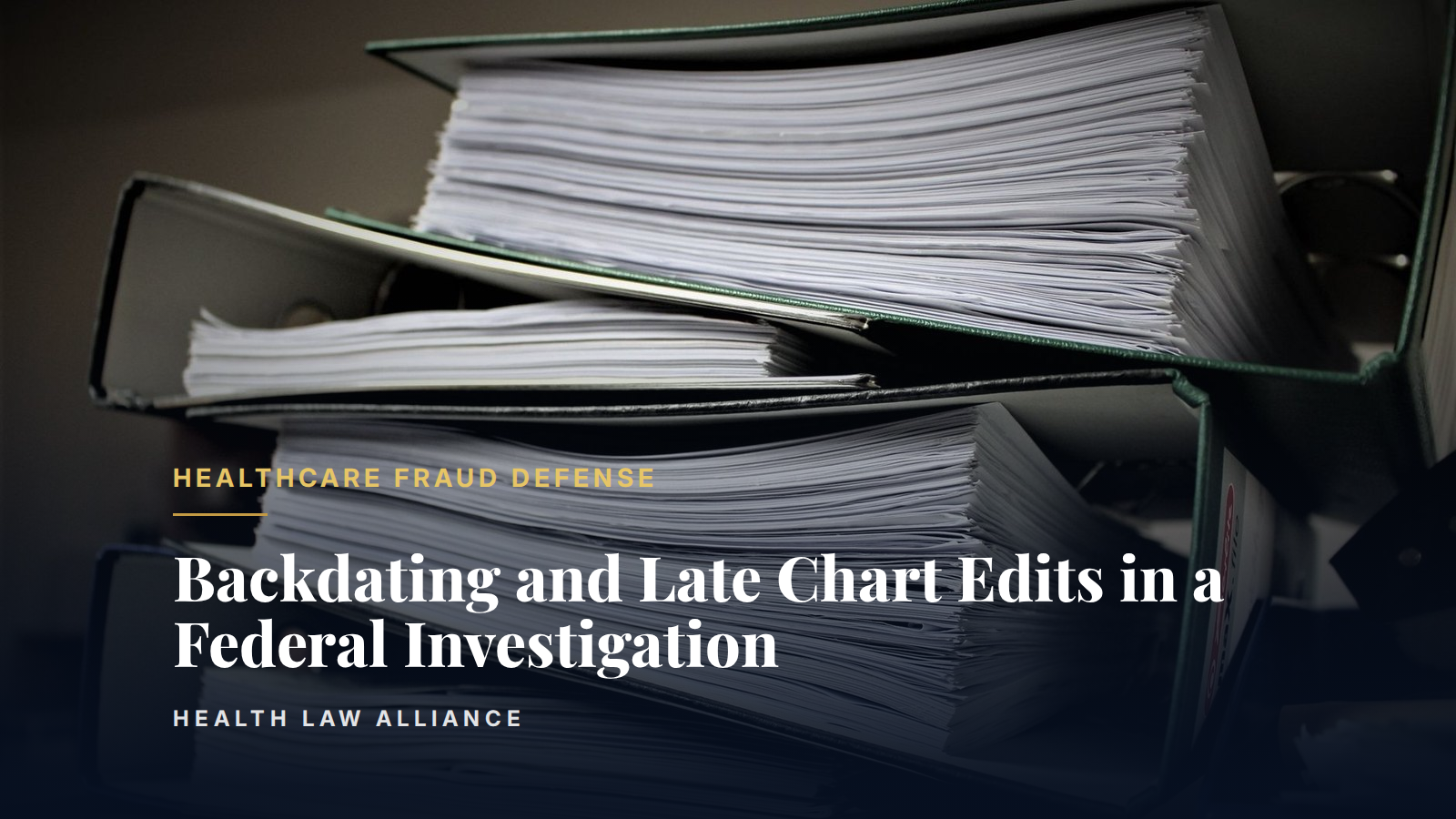
A physician, pharmacy owner, or practice manager who realizes a chart is incomplete after learning about a federal healthcare fraud investigation faces a decision that can matter as much as the underlying billing question. Going back into the record to add detail, correct a note, or make it show what was actually done, without disclosing that the entry was made later, is backdating, and it carries its own exposure. Federal law treats the knowing alteration or falsification of a record made to influence a pending or reasonably anticipated federal investigation as obstruction of justice, a separate and often more severe problem than the audit or fraud allegation that prompted the edit. The chart itself, not just the notes it contains, becomes evidence.
How an EHR Audit Trail Exposes a Late Edit
Every major electronic health record system logs who touched a note, when, and what changed. That metadata, the audit trail, survives independently of the visible chart text and is typically among the first items a federal investigator's subpoena or civil investigative demand requests. An entry carrying an old date of service but a system timestamp from months later, added only after the practice received notice of an investigation, reads as an edit timed to the inquiry rather than as ordinary diligence, and the audit trail is what proves the timing.
The Difference Between a Late Entry and an Alteration
Clinical documentation standards allow providers to add information after the original note, but only through a specific, transparent mechanism. A late entry carries the current date, is added as soon as the omission is noticed, and is signed by the person making it. An addendum references the original note, states plainly that it is an addendum, and adds information that was not available when the original entry was made, such as a lab result received afterward. Neither format changes the original text or the original timestamp. The American Health Information Management Association's best-practice guidance for EHR documentation is explicit that the original content must remain visible and unaltered, with the correction or addition clearly flagged as such.
Why Timing Turns an Edit Into Evidence of Intent
Once a practice has received a grand jury subpoena, a civil investigative demand, or notice that its claims are under review, the calculus changes even for a genuinely well-intentioned correction. An edit made after that point, if not disclosed as a late entry or addendum, can be read by investigators as an attempt to shape the record before it is produced, exposure that exists independent of whether the underlying billing was proper. The same conduct before any investigation was known or anticipated is ordinary documentation practice. After that point, making the same edit without disclosing it and without counsel's involvement is a decision with obstruction exposure attached.
Once an investigation is known or reasonably anticipated, no chart correction, however well-intentioned, should be made without counsel involved in how it is documented.
Why Early Legal Counsel Is Critical
It is critical that providers promptly retain experienced healthcare defense counsel before making any chart correction once an investigation, subpoena, or audit is known or reasonably anticipated. Early legal intervention can prevent an innocent correction from being read as spoliation, preserve defenses that a poorly timed edit would otherwise undermine, and allow counsel, rather than the provider directly, to communicate with investigators about the state of the record. Delaying that call is often what turns a documentation gap into an obstruction allegation.
How Health Law Alliance Can Help
Health Law Alliance has represented 2,500+ clients in healthcare regulatory and fraud defense matters over 25+ years, including providers navigating chart documentation questions in the middle of a federal investigation. If your practice has received a subpoena, a civil investigative demand, or notice of a federal healthcare fraud inquiry and a chart needs to be corrected or completed, contact Health Law Alliance's healthcare fraud defense attorneys for a free, confidential consultation before any entry is changed.