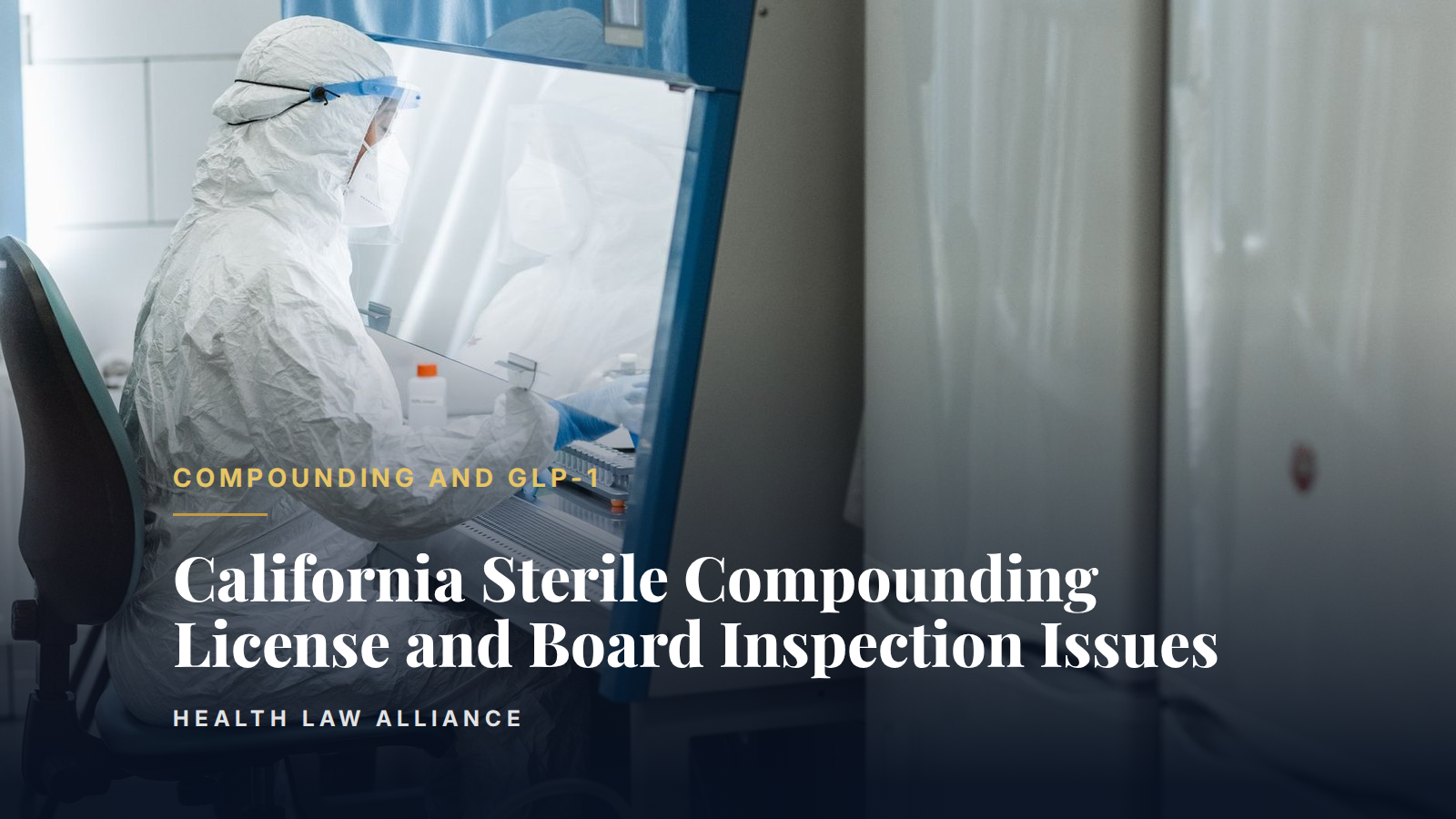
California does not let a pharmacy compound sterile drug products on the strength of its ordinary pharmacy license. The California State Board of Pharmacy requires a separate sterile compounding pharmacy license, will not issue or renew it without inspecting the premises first, and runs the same license-and-inspection framework against out-of-state pharmacies that ship compounded sterile products into the state. New board regulations covering sterile compounding took effect October 1, 2025, raising the standard every inspection now applies.
California's Sterile Compounding License Requirement
Under Article 7.5 of California's Business and Professions Code, a pharmacy may not compound sterile drug products without a sterile compounding pharmacy license issued by the board. That state license is additional to the federal 503A/503B line that already determines whether a preparation is patient-specific compounding or outsourcing-facility production. The state license is issued only to a location already licensed as a pharmacy, and only to the owner of the pharmacy at that location. The license stays with that location and that owner: it does not survive a sale or a relocation, and it comes up for renewal every year.
Board Inspection Before Issuance and Renewal
The board will not issue or renew a sterile compounding license until it has inspected the location and confirmed compliance with the governing article and the board's own regulations. Before that inspection, the pharmacy must already have submitted its sterile compounding policies and procedures, a completed self-assessment form, inspection reports from the prior twelve months from any source, and a list of every sterile medication it has compounded since the last renewal. The regulations the inspection measures against, covering nonsterile compounding, sterile compounding, hazardous drugs and radiopharmaceuticals, took effect October 1, 2025, and they require the pharmacy's beyond-use dating and sterile technique to track USP 797/800.
A California sterile compounding license is tied to the location and the owner, not the brand on the door, and the board's inspection stands between every renewal and the pharmacy's next sterile batch.
Nonresident Pharmacies Need Their Own Sterile Compounding License
An out-of-state pharmacy that ships compounded sterile products into California needs a separate nonresident sterile compounding pharmacy license. Its home-state license and its general nonresident pharmacy license do not carry that authority. The board issues the sterile compounding license only once the pharmacy already holds a nonresident pharmacy license and only to the owner at that location, under the same annual renewal and non-transferability terms as the in-state license. The board inspects the actual out-of-state facility before issuing the license, and the pharmacy reimburses the board for the cost of that inspection. For a 503B outsourcing facility compounding at that scale, the state inspection is additional to the facility's existing cGMP obligations to the FDA.
Reporting Obligations Once the License Is Active
The board's oversight continues after the license issues. A sterile compounding pharmacy must notify the board within ten days of discipline by another state or a suspension of its accreditation, within twelve hours of any recall of a compounded sterile product, and within twelve hours of an adverse effect report, which must also go immediately to the FDA's MedWatch program. These deadlines sit inside the broader compounding inspection practice that state boards run nationally, and a lapse on any one of them can turn a routine renewal into an enforcement referral.
Health Law Alliance's attorneys have overseen 2,000+ audits and handled 5,000+ matters, with 25+ years of experience.
Why Early Legal Counsel Is Critical
It is critical that compounding pharmacies promptly retain experienced healthcare defense counsel upon receiving a board inspection finding, a license deficiency notice, or any other Board of Pharmacy inquiry. Early legal intervention can protect the pharmacy's rights, ensure appropriate responses to board requests, avoid inadvertent admissions, preserve relevant defenses, and allow counsel to communicate with investigators on the pharmacy's behalf. Delaying legal representation can significantly affect the outcome of a matter and expose the pharmacy to unnecessary risk.
How Health Law Alliance Can Help
Health Law Alliance represents California sterile compounding pharmacies and nonresident pharmacies shipping into the state in board inspections, license renewal disputes, and enforcement referrals tied to sterile compounding findings. If your pharmacy is facing a Board of Pharmacy inspection or licensing issue, contact our California pharmacy audit defense attorneys for a free, confidential consultation.