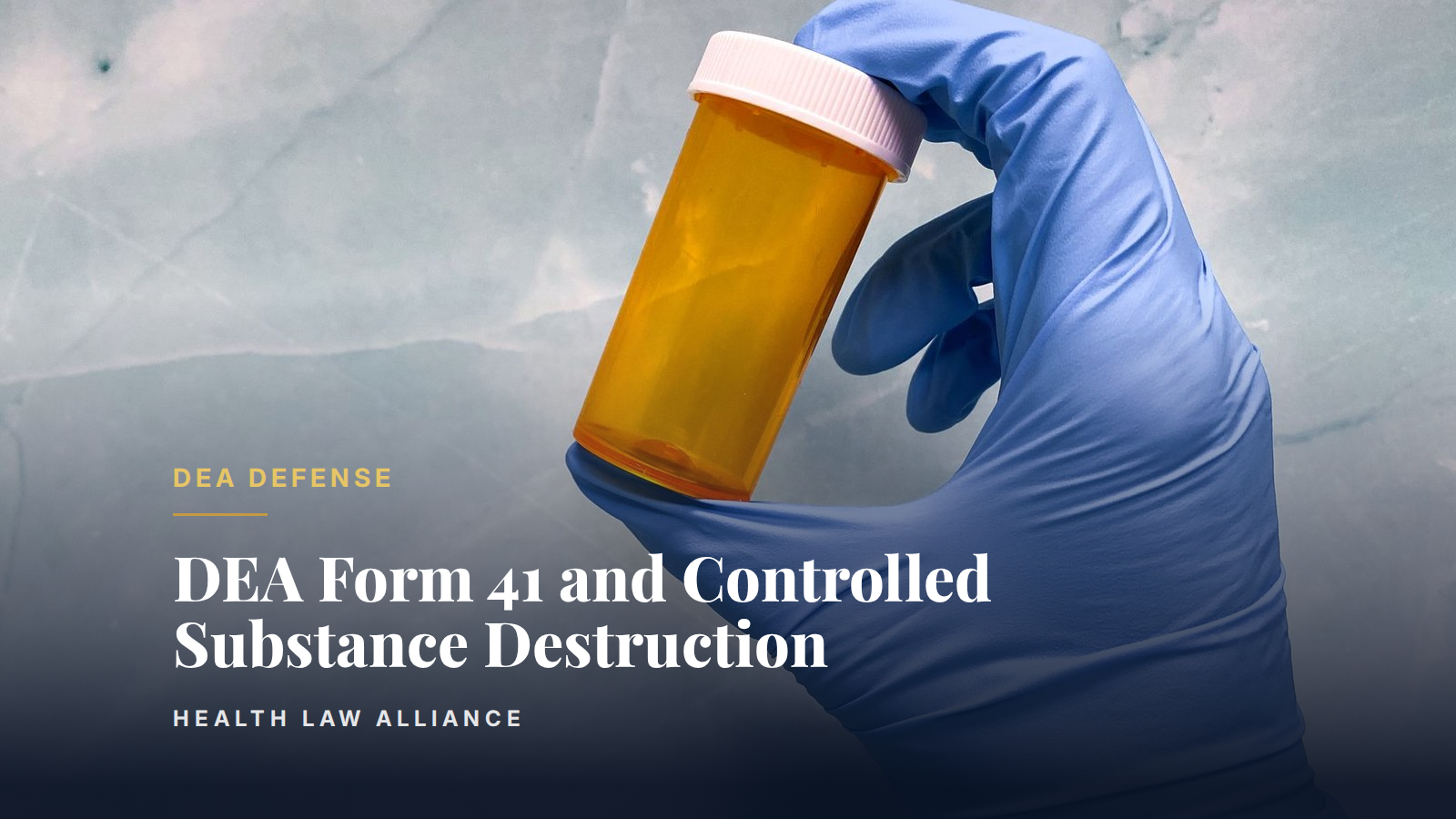
When a pharmacy pulls expired, damaged, or unusable inventory off the shelf, controlled substances cannot go in the trash or down the drain. Federal law requires every DEA registrant to document that destruction on a DEA Form 41, with the same specificity DEA expects for dispensing records. Get the disposal method wrong, skip a witness signature, or route the drugs through an unregistered destruction site, and the pharmacy has traded an inventory problem for a registration problem.
Disposal Options Under 21 CFR Part 1317
21 CFR Part 1317 gives a registrant four ways to dispose of controlled substances: destroy them on-site following the procedures in Subpart C, transfer them to a DEA-registered reverse distributor by common carrier or pickup, return or recall them to the original manufacturer or another registrant authorized to accept returns, or request DEA's own assistance removing the substances under 21 CFR 1317.05(a). Whichever method a pharmacy chooses, the disposal has to end in what DEA defines as non-retrievable under 21 CFR 1300.05: the controlled substance rendered permanently unusable through an irreversible process, unavailable for all practical purposes. A pharmacy that picks a disposal method without confirming it meets the non-retrievable standard has not actually disposed of anything DEA will recognize as destroyed.
The Two-Witness Rule For On-Site Destruction
When a pharmacy destroys controlled substances at its own registered location, 21 CFR 1317.95 requires two employees of the pharmacy to handle or observe the substances from removal through destruction and personally witness the destruction itself until it is rendered non-retrievable. One witness is not enough, and a witness who steps away before the process finishes has not satisfied the rule. 21 CFR 1304.21(e) then requires the pharmacy to record the destruction on a DEA Form 41 that is complete and accurate and carries the name and signature of both witnessing employees. DEA does not require the form to be filed with the agency unless requested, but 21 U.S.C. 827 requires the pharmacy to keep it on file for at least two years. A Form 41 that does not reconcile against the pharmacy's own inventory reconciliation is exactly the kind of gap an auditor is trained to find.
Reverse Distributors And The 30-Day Deadline
A pharmacy can transfer controlled substances to a reverse distributor instead of destroying them on-site. Anyone handling that transfer chain has to hold an active registration as a reverse distributor under 21 CFR 1317.15, and once the reverse distributor takes possession, it has 30 calendar days to destroy the substances or cause their destruction under 21 CFR 1317.15(d). The reverse distributor, not the pharmacy, completes the DEA Form 41 for that destruction event. The pharmacy should still confirm the reverse distributor's registration is current before handing anything over, and should keep its own transfer documentation on file, since the pharmacy remains the DEA registrant of record even after the drugs leave the building.
A DEA Form 41 missing a witness signature is not an incomplete form. It is evidence the destruction never happened the way the pharmacy says it did.
Why Early Legal Counsel Is Critical
It is critical that pharmacies promptly retain experienced healthcare defense counsel before a destruction event becomes a compliance problem, not after DEA flags a discrepancy. Early legal intervention can review a pharmacy's Form 41 process, confirm a reverse distributor's registration is active, and correct documentation gaps before an inspection finds them first. A pattern of incomplete destruction records can become the basis for a DEA order to show cause questioning the registration itself, and in cases DEA treats as an imminent danger to public health, an immediate suspension order before any hearing. Delaying legal review until DEA raises the issue means defending decisions that were already made without legal input.
How Health Law Alliance Can Help
Health Law Alliance represents pharmacies and other DEA registrants on controlled substance destruction, DEA Form 41 documentation, and reverse distributor compliance, as part of the firm's DEA defense practice. If your pharmacy needs its destruction records and reverse distributor relationships reviewed before DEA does it for you, contact us for a free, confidential consultation.