Given a combination of economic and political factors, HLA previously predicted an uptick in the frequency and intensity of pharmacy audits in 2024. Unfortunately, HLA's predictions appear to be spot-on, and the information we are receiving from clients indicates that PBMs are terminating network pharmacies based on minor and inconsequential audit violations at a higher rate than ever before. In addition, a late December 2023 announcement from the Department of Health & Human Services ("OIG"), confirms that the "feds" are now prioritizing pharmacy audit enforcement.
OIG Oversees the Medicare & Medicaid Programs
OIG is one of the largest federal agencies and is responsible for maximizing the efficiency of government healthcare programs. Among other responsibilities, OIG ensures the programs operate efficiently by policing fraud, waste and abuse, including the submission of false claims, kickbacks for referrals, medical identity theft, and abuse in nursing homes.
Each year, OIG establishes priority areas for enforcement, with certain probes conducted by the Office of Audit Services. These efforts are publicized in OIG's Work Plan, which is updated monthly. OIG focuses on those areas it believes are most in need of attention.
OIG's 2024 Work Plan Prioritizes Inventory Audits
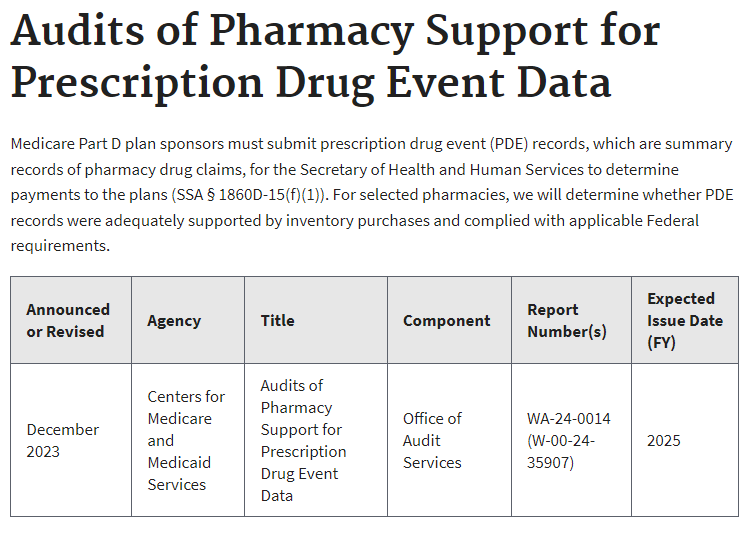
In December 2023, OIG updated its workplan to include "Audits of Pharmacy Support for Prescription Drug Event Data." When pharmacies submit claims for reimbursement, they are contained in a Prescription Drug Event (PDE) record that is relied on by the government and plan sponsors for adjudication. The PDE contains various data elements, including prescription drug costs and payment data that enables CMS to make Medicare and Medicaid payments.
Specifically, OIG announced that it will conduct audits to "determine whether PDE records were adequately supported by inventory purchases and complied with applicable Federal requirements." In other words, in addition to MCOs, PBMs, and CMS auditors, now a federal agency is planning to conduct inventory audits directly. Here is OIG's announcement:
Inventory Discrepancies are Mostly Trivial
HLA has published numerous articles on the defense of inventory audits, which you can access HERE and HERE. In summary, inventory shortfalls are commonplace due to the complexities of pharmacy practice. Accordingly, the federal government's focus on pharmacy inventory audits appears misguided.
For example, where is the compelling federal interest in whether a diabetic failed to pick-up his or her insulin? Or a patient had enough doses remaining on an inhaler to skip the refill? As a long-time, former public servant for the federal government, I always understood that the focus should be on the most meaningful and impactful issues. "Don't make a federal case out of it," is a saying for people blowing things out of proportion. Now, however, it seems the government is making a federal case out of trivial matters.
HLA Specializes in Audit Defense
Politics aside, the consequences of any type of failed audit can be severe, including recoupments, network sanctions, licensing board issues, and even criminal prosecution. Our experienced healthcare defense attorneys have a demonstrated track-record of highly successful outcomes in these cases, including the outright dismissal of criminal indictments and settlements for fractions of the claims paid with no licensing ramifications. Whether it be a PBM, payor, or OIG audit, our audit specialists are always available. Don't wait until your rights are jeopardized to pick up the phone.
MORE ARTICLES BY CATEGORY
OMIG Audit Defense New York: What the 2026 Work Plan Means for Providers
Every year, the New York Office of the Medicaid Inspector General (OMIG) releases its Work Plan outlining enforcement priorities. The 2026 plan sends a clear signal that Medicaid providers in New York are entering a far more aggressive enforcement environment.
Read More >>PBM Member Denial Audit Findings: A Growing Threat to Pharmacies
Pharmacies often approach a PBM audit with the understanding that small discrepancies and modest recoupments are simply part of doing business. In today’s enforcement landscape, that assumption is no longer safe.
Read More >>From Minor PBM Audit Finding to Major Liability: How Small Issues Trigger Big Consequences
Pharmacies often approach a PBM audit with the understanding that small discrepancies and modest recoupments are simply part of doing business. In today’s enforcement landscape, that assumption is no longer safe.
Read More >>HLA’s Latest PBM Win Highlights the Dangers of Inventory Discrepancies
Inventory discrepancies are one of the first things PBMs look for during an audit. Even minor clerical errors like entering the incorrect NDC or failing to return a medication to stock can snowball, creating major financial risks that could place your pharmacy in jeopardy.
Read More >>