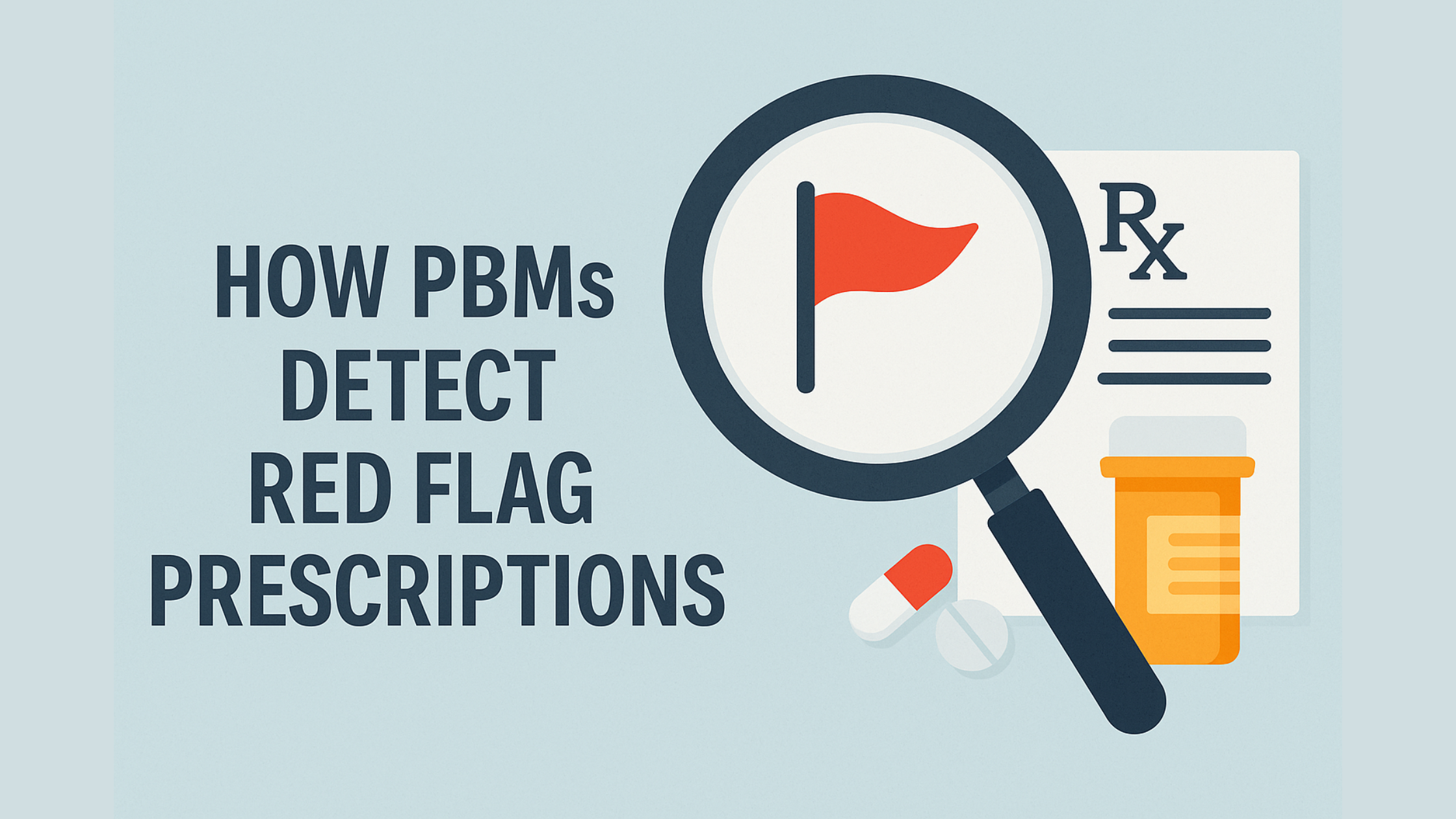
In today’s aggressive pharmacy benefit manager (“PBM”) enforcement landscape, understanding how PBMs identify “red flag prescriptions” is essential for any independent pharmacy seeking protect its network status. Major PBMs such as OptumRx, Express Scripts, and CVS Caremark increasingly rely on sophisticated analytics, data-mining algorithms, and automated surveillance tools to detect potential irregularities in a pharmacy’s dispensing patterns. Once a PBM flags a particular pattern as suspicious, a pharmacy may quickly find itself the subject of an audit, network termination, and/or payment withholdings, often with little advance notice.
How PBMs Detect Red Flag Prescriptions
At the heart of PBM scrutiny is the concept of the problematic prescription. These are prescriptions that, on their face, raise questions about medical necessity, prescriber behavior, beneficiary utilization, or potential fraud, waste, or abuse. PBMs frequently focus on outlier patterns within a pharmacy’s claims history, comparing dispensing activity to national utilization norms, peer groups, regional patterns, and trending data. Pharmacies dispensing medication combinations or quantities considered “atypical,” frequently draw increased PBM attention.
Atypical dispensing do not necessarily mean wrongdoing. Many independent pharmacies serve unique patient populations with unusual medical needs. Still, PBMs view certain issues, such as duplicative therapy, high-dose prescriptions, early refills, telemedicine orders, inconsistent prescriber-patient geography, or prescribing patterns concentrated among a handful of providers, as signals of potential non-compliance. If the PBM’s system identifies enough of these triggers, it typically escalates the matter to an audit, often beginning with a desk audit, on-site audit, or discrepancy evaluation request. These audits can expand rapidly, sometimes leading to recoupments, pharmacy terminations, and/or withholding of reimbursements.
Common Triggers That Elevate PBM Risk Scores
Once a PBM assigns a pharmacy a high-risk score, it often continues to monitor that pharmacy for months, meaning the presence of questionable prescriptions can have long-lasting repercussions. Pharmacies should also be aware that weight-loss medications, GLP-1 products, compounded medications, and high-cost drugs remain at the top of PBM audit priorities.
However, pharmacies do have defenses, and proactive steps they can take, to minimize the risk associated with questionable dispensing practices. Maintaining strong standard operating procedures, conducting internal audits, documenting prescriber communications, verifying the legitimacy of telehealth providers, and obtaining proper supporting documentation that establishes a valid patient/prescriber relationship can significantly reduce a pharmacy’s exposure. Importantly, even when PBMs flag legitimate prescriptions as suspicious, pharmacies can often resolve matters through a well-supported appeal demonstrating compliance, medical appropriateness and necessity, and adherence to professional standards.
For pharmacies already facing a PBM audit or termination threat, engaging experienced healthcare counsel early is critical. Law firms specializing in PBM audits, network terminations, and appeal advocacy can help pharmacies respond to records requests, gather the necessary evidence, challenge flawed audit methodologies, and negotiate with PBMs. A proactive and strategic approach often makes the difference between preserving network status and sustaining severe financial and reputational damage.
As PBMs continue to expand their use of algorithmic surveillance and intensify their scrutiny of pharmacy dispensing patterns, understanding how they identify questionable flag prescriptions is no longer optional. Pharmacies must anticipate how their claims data is interpreted, recognize potential risk indicators, and adopt compliance frameworks designed to withstand PBM review. With careful planning and knowledgeable legal support, pharmacies can remain compliant, maintain access to their patient populations, and reduce the risk of disruptive PBM enforcement actions.
How HLA Can Help
Whether your pharmacy is already under PBM scrutiny or simply wants to prepare for the potential PBM oversight, HLA provides experienced, strategic, and results-driven representation. With a deep understanding of PBM enforcement trends and a proven record of defending independent pharmacies nationwide, HLA is equipped to help protect your pharmacy. Contact us today for a free consultation.