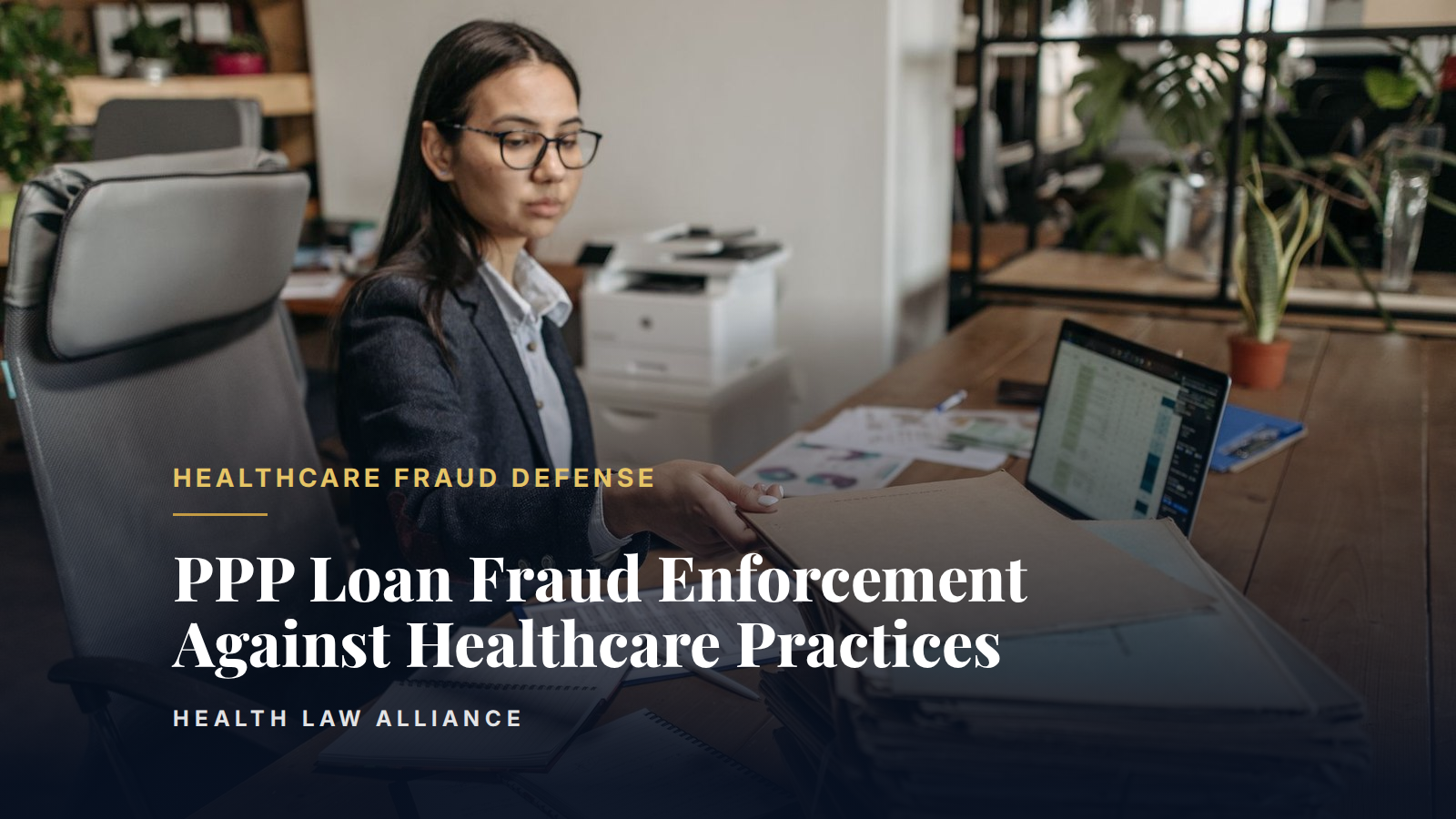
A signature on a five-year-old PPP application is still live exposure for a healthcare practice. In January 2026, the Department of Justice won summary judgment against a California rehabilitation center and its owner for $1,565,294.38 after the owner certified the company would not take more than one Paycheck Protection Program loan, then kept both. Congress extended the enforcement window for PPP fraud to 10 years in 2022, civil and criminal alike, which means loans funded in 2020 stay open to investigation into 2030. For physician practices, home health agencies, and other healthcare businesses that took PPP money, the certifications made in 2020 remain a live liability question, not closed history.
The Certifications That Created the Exposure
Every PPP application required the borrower to certify that "current economic uncertainty makes this loan request necessary," and that the applicant would not knowingly receive more than one loan. SBA guidance (FAQ 46) created a safe harbor for loans under $2 million when aggregated with affiliates, but larger loans faced a Loan Necessity Questionnaire and individualized review. Affiliation is where healthcare practices most often stumble: a practice managed through a management services organization, or owned in part by a private equity sponsor, can be required to aggregate its employee count and loan totals with affiliated entities. A practice that certified eligibility without running that aggregation made a certification the government can later call false.
How a Signed Application Becomes a False Claims Act Case
The JMG Investments judgment did not turn on how the money was spent. It turned on the certification itself: the owner, Jeffrey Schwartz, certified single-loan compliance, the rehabilitation center received two PPP loans, and neither was repaid. A relator filed the case under the False Claims Act's qui tam provisions, and the Central District of California entered judgment for the government in January 2026 (U.S. ex rel. Quesenberry v. JMG Investments, Inc., No. 20-cv-8497). A 2025 case against an Idaho home health agency shows the same theory from another angle: DOJ alleged the owner's necessity certification was false because she was concurrently billing Idaho Medicaid for services not rendered, a fraud she had already pleaded guilty to. Neither case required proof the PPP funds themselves were misused.
Civil Exposure Runs Independent of Criminal Charges
Physicians and practice owners should not assume that avoiding criminal charges closes the matter. Criminal PPP fraud is typically charged under bank fraud, wire fraud, or false statement statutes, not the healthcare fraud statute, because the loan runs through a bank rather than a federal health program. The False Claims Act sits alongside that criminal exposure as a separate civil track, provable by a preponderance of the evidence rather than beyond a reasonable doubt, and it carries treble damages plus a per-application penalty. A practice already navigating anti-kickback statute or Stark Law exposure, our comparison of the two statutes explains, should treat a PPP certification question as its own line of liability, not a footnote.
Neither PPP judgment required proof the loan funds were misspent. Both turned entirely on whether the certification made in 2020 was true when signed.
The Enforcement Window Runs Through 2030
The PPP and Bank Fraud Enforcement Harmonization Act of 2022 extended the statute of limitations on PPP and EIDL fraud from six years to 10 years, civil and criminal alike. A practice that received a PPP loan in April 2020 remains within the government's reach until 2030, even if the loan was fully forgiven years ago. Forgiveness reflects an SBA determination about use of funds; it does not resolve whether the underlying eligibility and necessity certifications were accurate. A practice that receives a civil investigative demand or a grand jury subpoena referencing a 2020 PPP loan is not looking at stale history. It is looking at an active matter.
Why Early Legal Counsel Is Critical
It is critical that healthcare providers promptly retain experienced healthcare defense counsel upon receiving a subpoena, civil investigative demand, or other government inquiry touching a PPP loan. Early legal intervention can protect the provider's rights, ensure appropriate responses to government requests, avoid inadvertent admissions about how eligibility or necessity was assessed in 2020, preserve relevant defenses, and allow counsel to communicate with investigators on the provider's behalf. Delaying legal representation can significantly affect the outcome of a matter and expose the provider to unnecessary risk, particularly where the honest-mistake and knowing-falsity line, the same line our billing error versus fraud analysis walks through, decides the case.
How Health Law Alliance Can Help
Health Law Alliance defends physician practices and healthcare businesses facing False Claims Act and criminal exposure tied to PPP loan certifications, from the first civil investigative demand through negotiated resolution or trial. Our bench includes a former federal prosecutor and attorneys who have represented providers through DOJ and SBA inquiries into loan necessity, affiliation, and forgiveness. If your practice has received a government inquiry referencing a PPP loan, contact us today for a free consultation.