
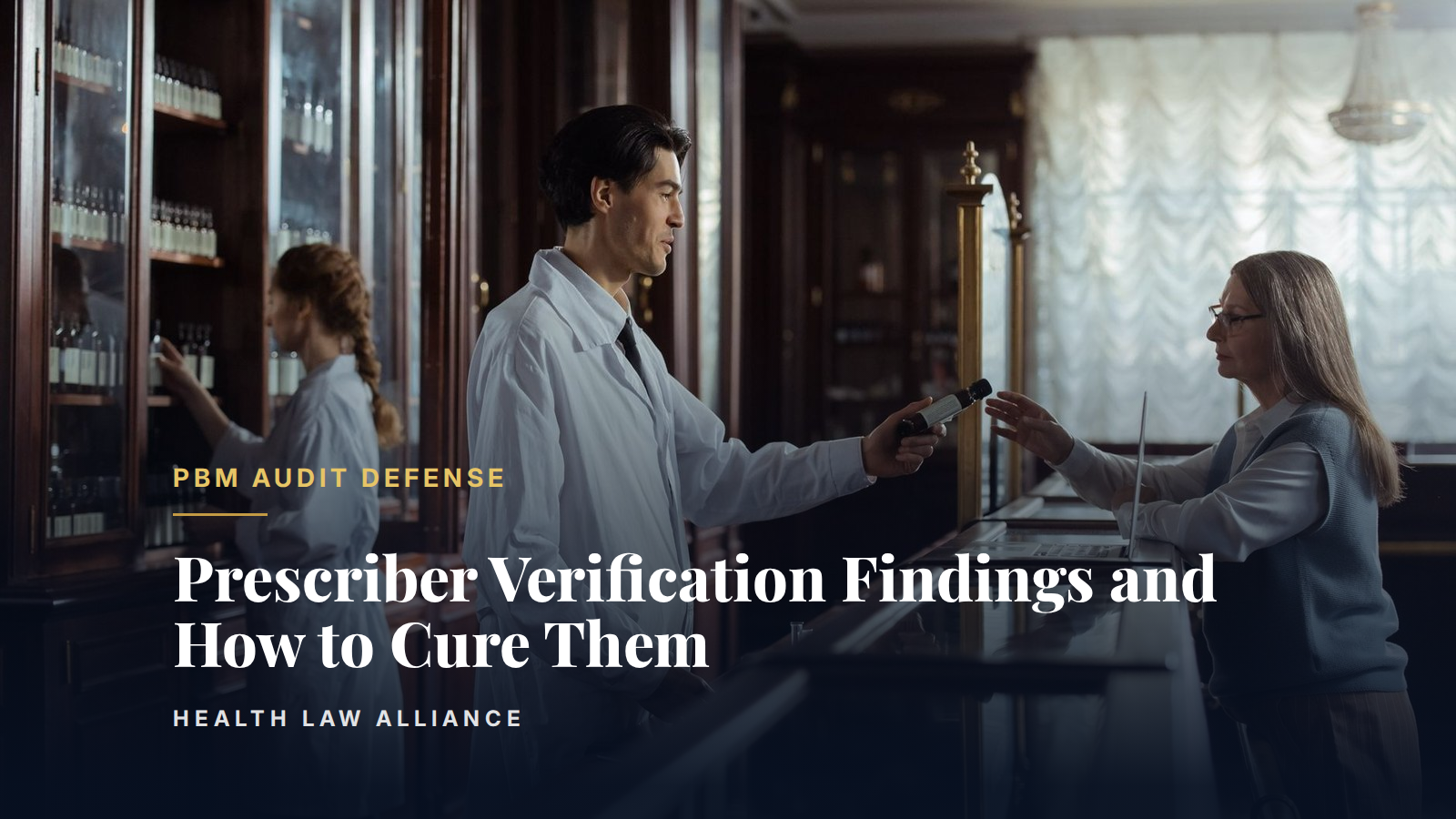
When a pharmacy benefit manager cannot confirm that a prescription was authorized by the prescriber listed on the claim, it opens a prescriber verification finding. These findings surface in routine PBM audits conducted by Optum Rx, CVS Caremark, Express Scripts, Humana, and Prime Therapeutics, and they carry real financial stakes: an unverified claim becomes the basis for a recoupment demand, and a pattern of unverified claims can support network termination. Pharmacies that understand how PBMs run these checks, and what to do when a prescriber will not respond, are better positioned to cure the finding before it becomes final.
How PBMs Verify Prescriber Authorization
PBM auditors flag a claim for prescriber verification when the drug is high-cost, a controlled substance, billed under a DAW code, or tied to a prescriber the PBM's system cannot match to an active NPI. The audit team then contacts the prescriber's office directly, by mail, fax, or phone, to confirm that the prescriber wrote the prescription for that patient and in that quantity. If the office does not respond within the window stated in the PBM's provider manual, the auditor generally treats the claim as unsupported and moves toward recoupment.
Requesting a Prescriber Attestation
The standard way to cure a verification finding is a written attestation from the prescriber confirming that the prescription was authorized as billed. Provider manuals typically give the pharmacy a short window, often 10 to 14 business days, to produce that attestation, and most PBMs also allow a separate appeal window after the initial audit result. Once both windows close, the PBM generally will not accept new documentation, so the pharmacy should request the attestation as soon as the audit notice arrives rather than waiting for the initial deadline to pass.
A prescriber attestation drafted by the pharmacy rather than written by the prescriber gives a PBM auditor grounds to reject it as self-serving.
When the Prescriber Cannot Be Reached
Verification breaks down most often when the prescriber has retired, relocated, left the practice, or simply does not answer the pharmacy's outreach. A pharmacy has no independent access to a prescriber's medical records, so an unreachable prescriber leaves the pharmacy to substantiate the claim from its own dispensing records rather than the prescriber's chart. Left uncured, a single unreachable-prescriber finding can grow into a pattern serious enough to support network termination, a path this firm has covered in From Audit Finding to Network Termination: How PBMs Escalate.
Curing the Discrepancy Without a Prescriber Statement
When a prescriber attestation is not available, a pharmacy can still cure a verification finding with contemporaneous records created when the prescription was received and filled: signature logs, fax or e-prescribing confirmations transmitted under the NCPDP SCRIPT standard, phone logs noting the date, the name of the person the pharmacist spoke with, and the pharmacist who took the call, and purchase invoices showing the drug was on hand to dispense. This evidence should go in during the post-audit window and, if the finding stands, through the formal audit appeal before the file closes.
Why Early Legal Counsel Is Critical
It is critical that pharmacies promptly retain experienced healthcare defense counsel upon receiving a prescriber verification audit notice. Early legal intervention can protect the pharmacy's rights, ensure appropriate responses to PBM requests, avoid inadvertent admissions, preserve relevant defenses, and allow counsel to communicate with auditors on the pharmacy's behalf. Delaying legal representation can significantly affect the outcome of a matter and expose the pharmacy to unnecessary risk.
How Health Law Alliance Can Help
Health Law Alliance represents pharmacies through prescriber verification findings, from the first audit notice through recoupment demands and, where necessary, network appeals. The firm has handled 2,000+ audits and works directly with prescriber offices, PBM auditors, and appeal panels to build the record a pharmacy needs to cure a finding. Pharmacies facing a prescriber verification audit can turn to our PBM audit defense practice or contact us for a free, confidential consultation.