
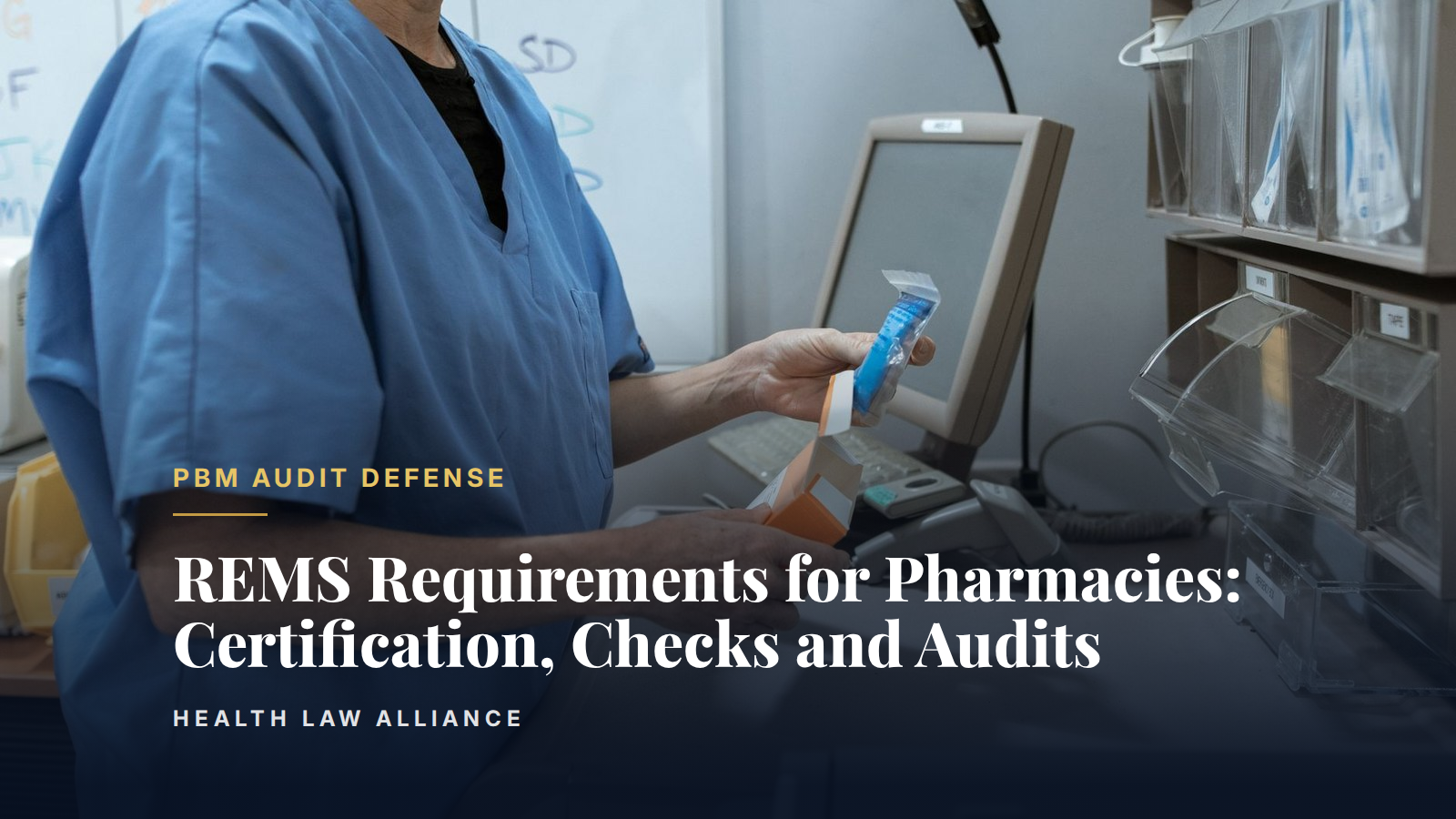
Pharmacies that dispense a drug under a Risk Evaluation and Mitigation Strategy carry oversight beyond ordinary pharmacy law: certification to the manufacturer or a third party it retains to run the program. When a REMS requires pharmacy certification, the pharmacy's authorized representative, staff training records, and the verification step before each dispense all become material a REMS audit can request. A finding can result in decertification, ending the pharmacy's ability to dispense that drug, and the same documentation gap can resurface in a PBM audit on the identical claims. Because REMS programs are drug-specific and FDA can modify or eliminate their requirements over time, confirm the obligations below against the current REMS document for the specific drug.
When a REMS Requires Pharmacy Certification
FDA adds a certification requirement only when it determines that Elements to Assure Safe Use, known in FDA's own documents as ETASU, are necessary to manage a drug's risk, applied to drug classes including isotretinoin, certain opioid products such as transmucosal fentanyl, medications used to treat opioid use disorder, and certain oncology and immunomodulatory therapies. Where it applies, the pharmacy must enroll and certify before it can dispense the drug. FDA's REMS@FDA database lists which programs currently carry that requirement, and because FDA can add, modify, or eliminate REMS requirements on an ongoing basis, the database is the place to confirm whether a given drug's program still requires it.
The Authorized Representative and Staff Training
Certification runs through a single designated person at the pharmacy, the authorized representative, who enrolls the pharmacy, completes the required training, and puts the REMS policies and procedures into practice. That duty extends to staff: the representative must ensure every pharmacist and technician who may handle the drug is trained on the program's specific requirements, and that the training is documented well enough to survive a later audit. A certification tied to one person, with no plan for what happens when that person leaves, is a gap a REMS audit is positioned to find.
Verification Before Each Dispense
Several REMS programs require the pharmacist to confirm specific conditions at every fill, not just at certification. Depending on the program, that can mean confirming the prescriber is currently certified, the patient is enrolled and has acknowledged the required risk information, and any required lab monitoring has been completed, checked through the program's website, call center, or a dispensing-system interface. A dispense that proceeds without that step is the kind of claim a REMS audit, and a downstream PBM audit, is built to find.
What the Manufacturer or FDA Can Audit
FDA runs its own REMS compliance program of inspections, and separately requires the manufacturer to monitor pharmacy compliance, audit certified pharmacies, and maintain a plan for addressing noncompliance. Records in scope include the pharmacy's enrollment and certification paperwork, evidence the authorized representative completed training and staff training was documented, the written policies and procedures implementing the REMS, and verification records showing required safe-use conditions were checked before each dispense. A pharmacy that cannot produce that documentation on request is exposed on the claim even when the dispensing decision was clinically appropriate.
Consequences of REMS Noncompliance
FDA requires manufacturers to maintain a plan for addressing REMS noncompliance, calling for a corrective action response before more severe steps. Repeated or unresolved findings change that calculus: decertification ends the pharmacy's ability to dispense the drug, and where that drug is a meaningful share of a specialty pharmacy's book, decertification can end the line of business behind it. Separate FDA enforcement against the manufacturer does not insulate the pharmacy from the same facts: a REMS documentation gap that surfaces in a PBM audit on the identical claims can become a recoupment demand, and if the drug moves through a limited-distribution specialty network, the same findings can trigger a network termination review independent of the REMS program itself.
A REMS audit finding can end a pharmacy's ability to dispense the restricted drug entirely, and the same documentation gap can resurface as a recoupment demand in a PBM audit on the identical claims.
Why Early Legal Counsel Is Critical
It is critical that pharmacies promptly retain experienced healthcare defense counsel upon receiving a REMS audit notice, a corrective action request, or any notice threatening decertification. Early legal intervention can protect the pharmacy's rights, shape the documentation record before findings harden into a broader determination, avoid inadvertent admissions during the audit exchange, and let counsel communicate with the manufacturer or FDA on the pharmacy's behalf. Delaying representation can narrow the pharmacy's options by the time a finding becomes final.
How Health Law Alliance Can Help
Health Law Alliance's attorneys have overseen 2,000+ audits and handled 5,000+ matters, with 25+ years of experience. If your pharmacy has received a REMS audit notice, a certification or decertification notice, or a records request tied to a REMS-restricted drug, contact Health Law Alliance's PBM audit defense attorneys for a free, confidential consultation before the response window runs.