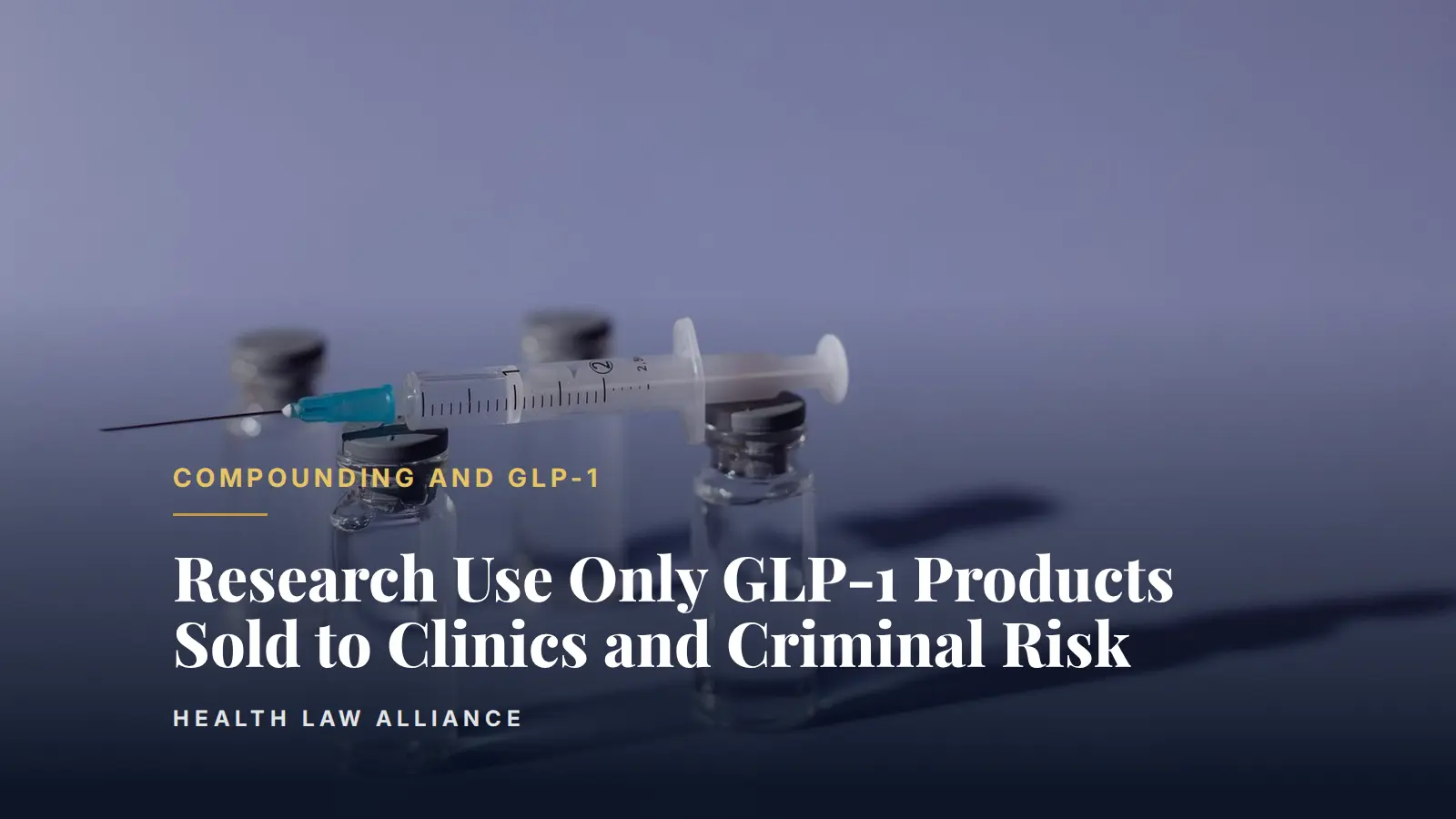
Clinics marketing semaglutide and tirzepatide injections increasingly source the drugs from online sellers whose vials carry a research use only or not for human use disclaimer. That label does not change the clinic's criminal exposure. The Food and Drug Administration treats research use only as a marketing claim, not a legal shield, and the Department of Justice has already built felony misbranding cases against a prescribing physician and a drug importer on that same theory. A clinic that administers a research use only semaglutide or tirzepatide product to a patient is taking on the exposure that already produced a felony plea from the physician and a federal prison sentence for the importer.
The Felony Line Inside the Misbranding Statute
The Federal Food, Drug, and Cosmetic Act treats introducing a misbranded drug into interstate commerce as a strict-liability misdemeanor under 21 U.S.C. 331(a) and 333(a)(1). Section 333(a)(2) raises the stakes: a violation committed with intent to defraud or mislead becomes a felony, carrying up to three years in prison and a fine. A clinic that buys a product labeled research use only, says nothing to patients about the label, and administers it anyway is building the intent element itself. Prosecutors have used that same label as evidence the clinic knew the product was unapproved and proceeded regardless.
An FDA Warning Letter Naming the Same Products
FDA's August 24, 2026 warning letter to Peptide Partners LLC shows how closely the agency reads a seller's website against its label. The company sold semaglutide and tirzepatide under the code names GLP-1 S and GLP-2 T, alongside bacteriostatic water, the diluent used to prepare an injectable drug for a person. FDA wrote that despite the company's research use only and not for human or veterinary use labeling, its own website showed the products were intended as drugs for human use. The letter cites 21 U.S.C. 331(d) and 355(a), the unapproved-new-drug provisions that sit in the same federal statute as the misbranding charges below. A clinic that keeps reconstitution water on hand for its own research use only vials is building the identical record against itself. FDA's broader peptide crackdown, reaching products beyond the GLP-1 class, is covered in Research Use Only Peptides Sold to Clinics: The Legal Risk.
Two Prosecutions Built on the Same Label
Two federal cases already apply this theory. On April 14, 2025, Matthew Lewis, an Ashland, Kentucky physician who owned Lewis Family Care, pleaded guilty in the Eastern District of Kentucky to receiving a misbranded drug and offering it for sale with intent to defraud or mislead. Lewis bought semaglutide from unauthorized suppliers in California and Georgia, some of it labeled for lab research and development only, and administered it to weight-loss patients without disclosure; the clinic collected $249,044.40 doing so. On July 23, 2026, the U.S. Attorney's Office for the Western District of Michigan announced that Brandon Piper of Gobles, Michigan was sentenced to 21 months in prison for conspiracy to introduce misbranded semaglutide and tirzepatide into interstate commerce. Piper's websites told customers the drugs were for research purposes only while he and his co-conspirators knew buyers would use them personally.
The same conduct that draws a civil warning letter today can draw a felony misbranding charge tomorrow, because intent to defraud or mislead, not the label on the vial, is what separates the two.
The Exposure Reaches the Clinic, Not Only the Importer
Both prosecutions reached the person who gave the patient the product, not only the company that shipped the vial. Lewis was the prescribing physician; Piper's customers bought directly and injected the product themselves, with no clinic in between. A clinic that administers a research use only semaglutide or tirzepatide product sits closer to Lewis's position: a licensed provider treating a patient with an unapproved drug, with full knowledge of what the vial said. A clinic that wants the same medication without that record still has a lawful route, a licensed 503A/503B pharmacy compounding from an FDA-listed bulk substance.
Why Early Legal Counsel Is Critical
It is critical that clinics, prescribers, and the compounding pharmacists who supply them promptly retain experienced healthcare defense counsel upon receiving an FDA warning letter, a subpoena, or any other government inquiry touching on a research use only product administered to a patient. Early legal intervention can protect the provider's rights, ensure an accurate reading of a product's actual regulatory status, avoid inadvertent admissions during an inspection, and preserve defenses that are only available before a warning letter becomes a criminal referral. Delaying legal representation can significantly affect the outcome of a matter and expose the provider to unnecessary risk.
How Health Law Alliance Can Help
Health Law Alliance's attorneys have overseen 2,000+ audits and handled 5,000+ matters, with 25+ years of experience. The firm defends clinics, prescribers, and compounding pharmacies that sourced a research use only GLP-1 product before a warning letter becomes a federal indictment. If your clinic has administered a research use only semaglutide or tirzepatide product to patients, contact Health Law Alliance's compounding pharmacy defense attorneys for a free, confidential consultation.