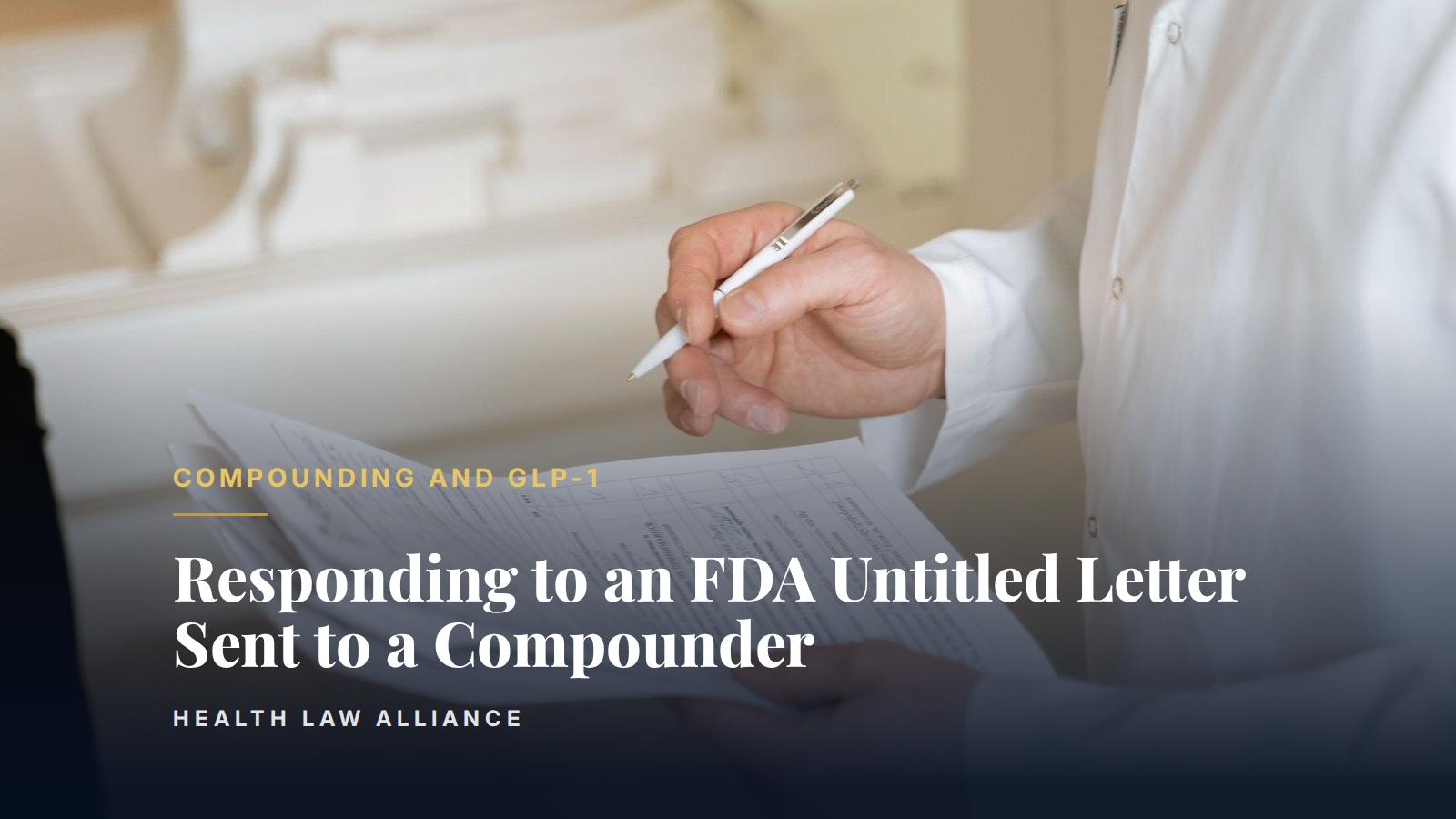
An FDA Untitled Letter sent to a compounding pharmacy cites violations below the regulatory-significance threshold FDA reserves for a warning letter, such as sterility and documentation gaps tied to the pharmacy's 503A/503B status. The letter asks for correction, but it does not warn that FDA will pursue enforcement and does not trigger a mandated agency follow-up. A pharmacist who treats the letter as a formality instead of a documented opportunity to close out the finding risks a tougher letter on the next inspection.
What an FDA Untitled Letter Is
FDA's Regulatory Procedures Manual defines the Untitled Letter as a citation for violations that do not meet the threshold for a warning letter, and it sets five tests every Untitled Letter must meet: no title, no statement that FDA will notify other federal agencies, no warning that failure to correct may bring enforcement action, no mandated follow-up, and a request, rather than a requirement, for a written response. Any appropriate agency compliance official can issue an Untitled Letter, and its content and format are deliberately built to read differently from a warning letter at a glance.
How an Untitled Letter Differs From a Warning Letter
The distinction between the two letters is procedural. A warning letter is reserved for violations of regulatory significance, carries FDA's statement that failure to adequately address the violations may result in regulatory or legal action, and, under the Regulatory Procedures Manual, requests a written response within a specific period, usually fifteen working days. An untitled letter requests a response within a reasonable amount of time, and the manual's own example is thirty days, a window FDA can lengthen or shorten under a relevant compliance program. Neither letter is a legal prerequisite to enforcement. FDA states plainly that it is under no obligation to warn a firm before acting, outside a few narrow statutory exceptions that do not reach compounding.
An untitled letter asks for a response rather than requiring one, and an inadequate answer still becomes part of the record FDA reads at the next inspection.
Whether a Response Is Required
No statute compels a reply to an untitled letter. In practice, compounding pharmacies sourcing bulk substances under the Section 503A lists, or compounding semaglutide and tirzepatide amid the scrutiny driving brand-manufacturer litigation, have the most to lose by staying silent. The letter becomes part of the facility's inspection history regardless of whether a response is required, and a thin or absent response leaves less of a corrective record for FDA to weigh at the next inspection. The pharmacy's own documentation is what ultimately limits the matter's reach.
Answering an Untitled Letter Without Escalating It
A response that closes out an untitled letter names each cited violation and backs it with dated corrective actions a surveyor can verify on a return visit. A cGMP finding calls for updated batch records and environmental monitoring logs. If the citation is a beyond-use date finding, the response needs stability support behind every BUD the pharmacy assigns, not only the one FDA flagged. Sterile or hazardous-handling findings under USP 797/800 call for documented air sampling, garbing, and cleaning records tied to the specific room or hood cited. The reply should go out inside the window FDA requested, even though the agency cannot compel it, because a late or thin response is itself a data point the next inspector reads.
Why Early Legal Counsel Is Critical
It is critical that compounding pharmacies promptly retain experienced healthcare defense counsel upon receiving an FDA Untitled Letter, a 483 inspection finding, or any other FDA inquiry. Early legal intervention can protect the pharmacy's rights, shape appropriate responses to the agency's request, avoid inadvertent admissions, preserve relevant defenses, and allow counsel to communicate with FDA on the pharmacy's behalf. Delaying legal representation can significantly affect the outcome of the matter and expose the pharmacy to unnecessary risk.
How Health Law Alliance Can Help
Health Law Alliance's compounding pharmacy attorneys represent pharmacies through FDA correspondence at every stage, from an untitled letter's first request through a full FDA warning letter response. Health Law Alliance has represented 2,500+ clients nationwide. If your pharmacy received an untitled letter, contact us for a free, confidential consultation.