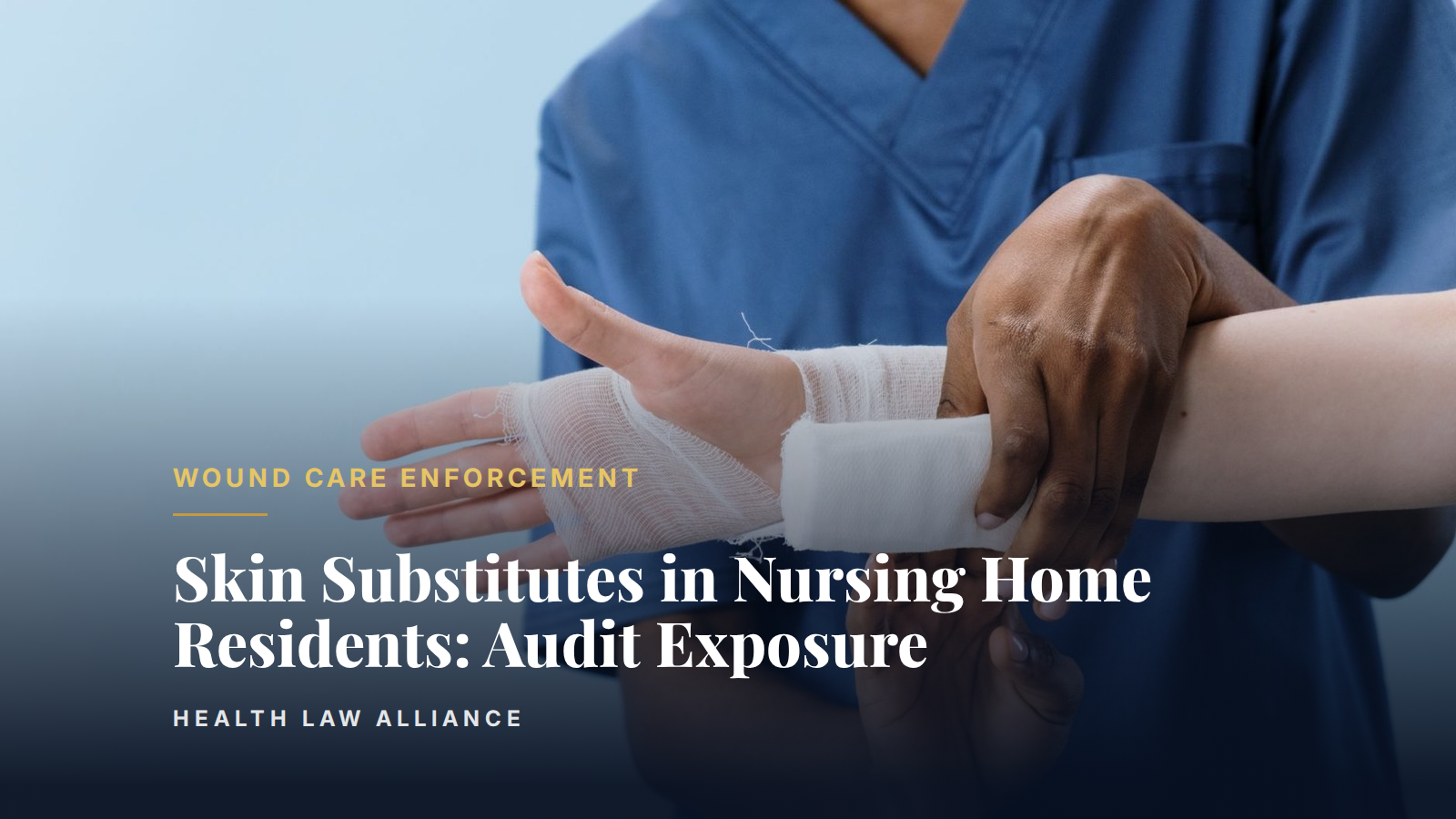
A mobile wound care practice that applies a skin substitute to a nursing home resident is adding a second claim on top of the facility's own Medicare bill, and the two often conflict. Part B spending on skin substitutes rose from $252 million in 2019 to more than $10 billion in 2024, a nearly 40-fold increase CMS reported when it finalized its new payment rule, following a two-year surge the HHS Office of Inspector General called a major fraud, waste, and abuse concern in a September 2025 report. Inside a skilled nursing facility, the exposure runs deeper: Medicare's consolidated billing rule can make the claim unbillable to Part B before a reviewer ever reaches medical necessity.
Consolidated Billing and the Part A Stay
Section 1888(e)(2)(A)(i) of the Social Security Act requires a skilled nursing facility to bill for substantially every service a resident receives during a covered Part A stay. CMS's exclusion list carves out physicians' services, dialysis, certain chemotherapy drugs, and a short list of other categories, and nothing else is separately billable to Part B while the stay is covered. Skin substitute application does not appear on the exclusion list. A provider who bills Part B directly for a graft applied during a covered Part A stay has billed a service the facility was required to fold into its own per diem claim, vulnerable to recoupment regardless of whether the graft met the local coverage determination's medical necessity criteria.
An Advance Beneficiary Notice does not solve that problem. It tells a resident Medicare will not cover a service so the resident can pay out of pocket, and it applies only when a service falls outside Part B coverage. Consolidated billing is different: the service is covered, and the facility must bill for it. A provider who has the resident sign an Advance Beneficiary Notice for Non-Covered Wound Care Services and bills the resident directly has not avoided the exposure; the claim still belongs on the facility's bill.
Documentation Pulled From the Facility's Own Chart
Auditors look past the application note to where the wound history came from. A facility's nursing notes describe the wound for care planning, not to establish medical necessity for a Part B claim, and a provider who records only what that chart says has not created the independent examination the claim requires. The same gap appears in wound measurement: reviewers expect the provider's own measurements and debridement notes on the wound bed before the graft, not a restated figure from the facility's log, a distinction covered in wound measurement documentation that survives audit. The visit itself still needs its own encounter record; a facility sign-in sheet is not a substitute.
Why These Claims Draw Scrutiny Now
Two forces are converging on these claims. The OIG's September 2025 report, scoped to non-institutional settings rather than nursing facilities, found that costs for enrollees treated at home ran four times as high as costs for those treated in an office, and it called the spending growth a major fraud, waste, and abuse concern. That report did not reach SNF consolidated billing claims, but it set the climate MACs and UPICs are now auditing: skin substitute claims as a category, wherever they originate. Effective January 1, 2026, CMS reclassified skin substitutes as incident-to supplies and replaced per-product average sales price payment with a single rate of about $127.28 per square centimeter, narrowing the margin behind switching to pricier products. That does not touch consolidated billing: a reviewer across several facilities still checks whether the resident was in a covered Part A stay when the claim went to Part B.
Skin substitute application does not appear on the SNF consolidated billing exclusion list, which means billing it to Part B during a covered Part A stay is a billing error before any medical necessity question is reached.
Why Early Legal Counsel Is Critical
It is critical that wound care providers billing inside nursing facilities retain experienced healthcare defense counsel promptly after a records request, an additional documentation request, or a notice of overpayment, not after an appeal deadline has already started running. Early legal intervention can sort which claims were properly billable to Part B before a response locks in a position, and preserve the provider's appeal rights, including the process covered in appealing a Medicare wound care overpayment determination. Delaying representation can significantly affect the outcome of a matter.
How Health Law Alliance Can Help
Health Law Alliance's wound care audit defense attorneys represent mobile and facility-based providers through MAC and UPIC review of skin substitute billing, covering both the consolidated billing question and the medical necessity record a claim requires. Health Law Alliance's attorneys have overseen 2,000+ audits and handled 5,000+ matters, with 25+ years of experience. If your practice bills skin substitute claims inside skilled nursing facilities and has received an audit notice, contact Health Law Alliance for a free, confidential consultation.