
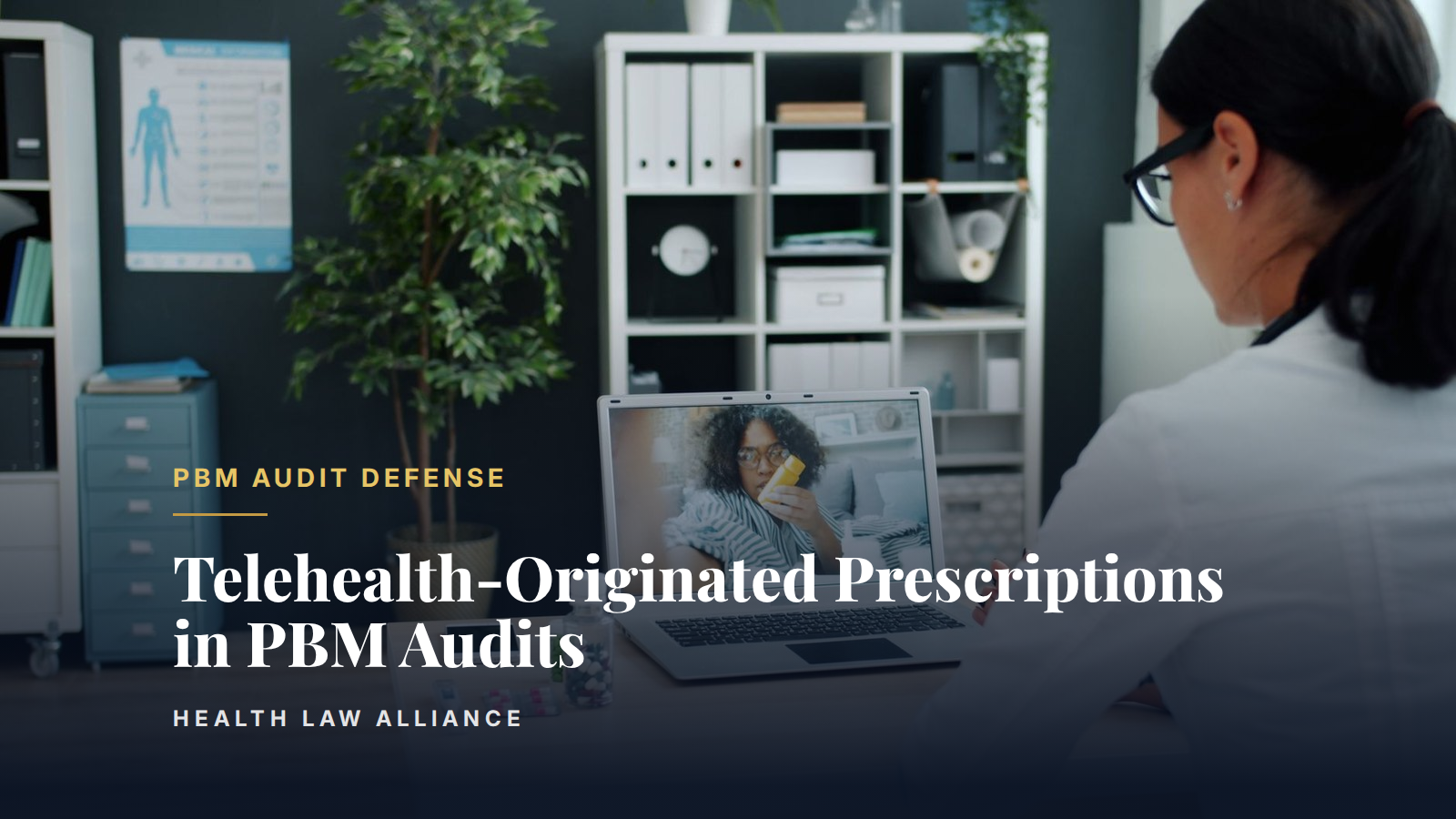
A PBM audit of a claim written by a telehealth prescriber now runs on a different set of questions than a claim written in a traditional office visit. OptumRx, CVS Caremark, and Express Scripts audit teams have expanded their review beyond dosage, quantity, and prior authorization to the underlying prescriber-patient relationship itself, and a finding that the relationship was invalid can support a full recoupment even when the dispensing pharmacy filled the prescription exactly as written. The pharmacy did not conduct the telehealth encounter and often has no way to observe it directly, yet the PBM's audit manual places the burden of verifying its legitimacy on the pharmacy at the point of sale.
How PBM Audit Teams Frame the Telehealth Encounter
PBM audit findings on telehealth claims typically fall into one of two categories: the patient denies a valid doctor-patient relationship when contacted for a post-payment survey, or the prescriber's practice cannot produce records confirming the encounter occurred as billed. Auditors treat either finding as evidence the prescription lacked a legitimate medical basis. Common triggers include a prescriber located far outside the patient's home state, a prescribing pattern concentrated in a single drug class, and an absence of any documented follow-up visit or refill authorization.
The Controlled Substance Layer
Controlled substance prescriptions add a federal dimension. The Drug Enforcement Administration and HHS have kept the pandemic-era telemedicine exception in place through a series of temporary extensions, most recently a fourth temporary extension published December 31, 2025, which permits a DEA-registered practitioner to prescribe a Schedule II-V controlled substance by telemedicine without a prior in-person evaluation through December 31, 2026, provided the prescription is issued for a legitimate medical purpose and complies with applicable federal and state law (Federal Register, Fourth Temporary Extension of COVID-19 Telemedicine Flexibilities). That flexibility governs whether the prescriber acted lawfully. It does not resolve whether the PBM will honor the claim, because the PBM's contract standard for a valid prescriber relationship can be narrower than the federal permission to prescribe. A pharmacy can dispense a lawful controlled substance prescription and still face a recoupment on the theory that the underlying relationship failed the PBM's own criteria.
A telehealth prescription can be lawful under federal and state prescribing rules and still be recouped, because the PBM applies its own, often stricter, standard for what counts as a valid prescriber-patient relationship.
Where the Pharmacy's Exposure Sits
Most pharmacy provider manuals, including those from the major national PBMs, place responsibility for confirming a valid prescriber-patient relationship on the dispensing pharmacy, not the prescriber. In practice, a pharmacy has limited tools to verify a telehealth encounter beyond the prescription itself, the prescriber's DEA registration and state license status, and any prior authorization record the plan generated. Prescriptions transferred from a closing pharmacy carry additional exposure, because the receiving pharmacy inherits a telehealth relationship it did not originate and cannot independently confirm. Building a routine file of prescriber licensure checks, prior authorization records, and refill history at the time of dispensing is the strongest available defense once an audit reopens the question months or years later. Left unaddressed, a pattern of telehealth-related findings can escalate from a single recoupment into a broader review and, in the most severe cases, network termination.
Responding to a Telehealth-Related Finding
A telehealth-related audit finding should be treated as a distinct category within the broader PBM audit response. The response should assemble whatever prescriber licensure and DEA registration records the pharmacy holds, cross-reference the dispensing date against any prior authorization or refill activity, and identify the specific contractual provision the PBM relies on to define a valid relationship. Because these findings often arrive extrapolated across the full lookback period, an audit appeal that isolates the telehealth-specific claims from the rest of the audit can materially change the size of the demand.
Why Early Legal Counsel Is Critical
It is critical that pharmacies promptly retain experienced healthcare defense counsel upon receiving an audit notice, subpoena, or other investigative request tied to telehealth-originated prescriptions. Early legal intervention can protect the pharmacy's rights, ensure appropriate responses to the PBM's document requests, avoid inadvertent admissions about prescriber relationships the pharmacy cannot itself verify, preserve every available defense, and allow counsel to communicate with the auditor on the pharmacy's behalf. Delaying representation can significantly affect the outcome of the audit and expose the pharmacy to unnecessary recoupment and network risk.
How Health Law Alliance Can Help
Health Law Alliance defends pharmacies against PBM audits involving telehealth-originated prescriptions, including recoupment demands built on invalid prescriber-relationship findings and disputes arising from transferred prescription records. If your pharmacy has received an audit notice raising questions about a telehealth prescriber, contact us for a free, confidential consultation.