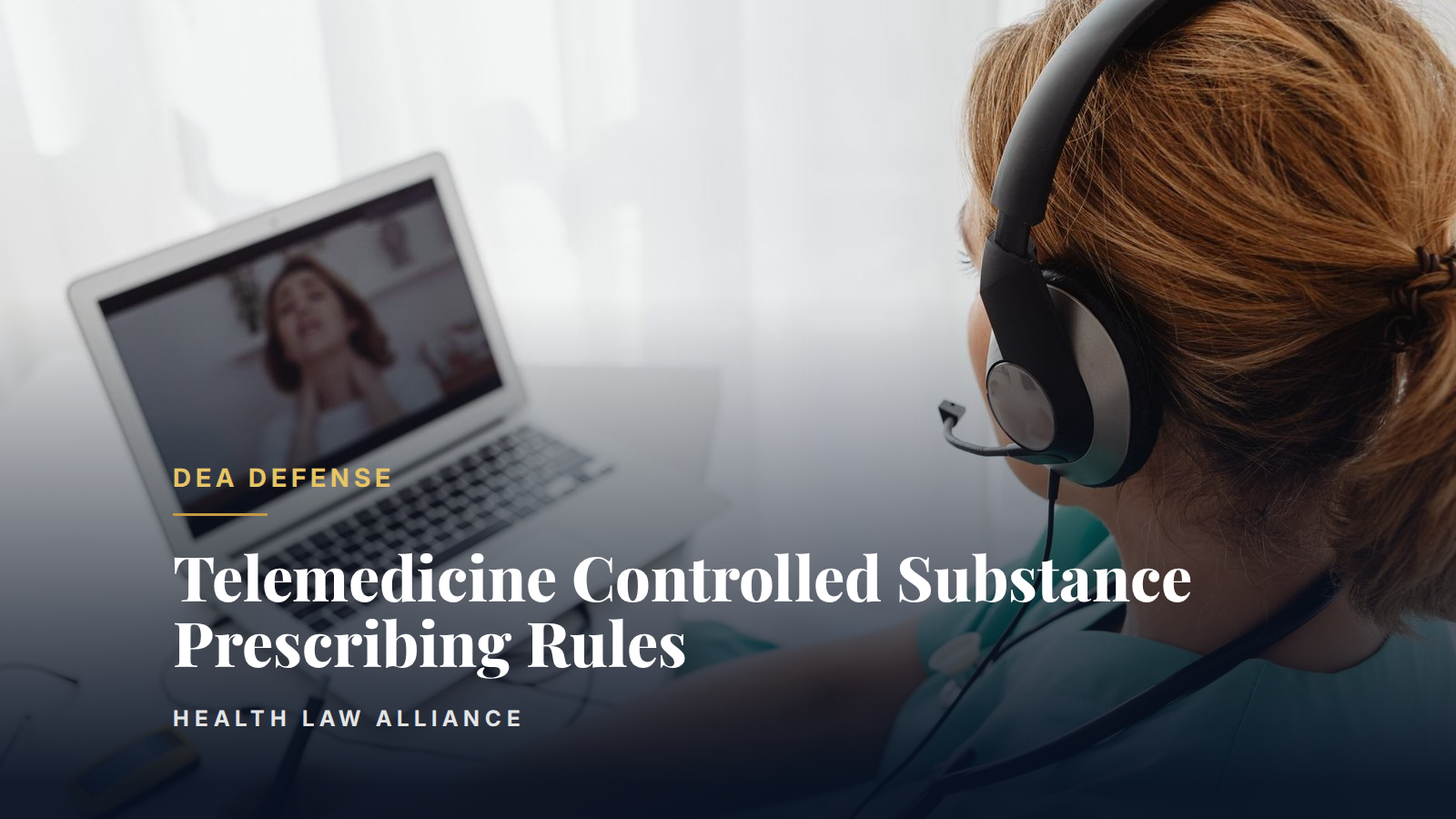
A pharmacist filling a controlled substance prescription that traces back to a telemedicine visit is operating inside a regulatory window that keeps getting renewed rather than settled. The Ryan Haight Act generally requires a prescribing practitioner to conduct an in-person medical evaluation before prescribing a Schedule II-V controlled substance by telemedicine, and the pandemic-era exception to that requirement has now been extended a fourth time, through December 31, 2026, while the Drug Enforcement Administration works toward a permanent rule. Under 21 CFR 1306.04, the dispensing pharmacist carries a corresponding responsibility for that prescription, and a pharmacy that fills a telemedicine controlled substance script without resolving an obvious red flag can face DEA registration action alongside the prescriber.
The Ryan Haight Act's In-Person Examination Requirement
The Ryan Haight Online Pharmacy Consumer Protection Act, enacted in 2008, amended the Controlled Substances Act to require a prescribing practitioner to have conducted at least one in-person medical evaluation of a patient before prescribing a controlled substance, unless the prescribing fits one of seven narrow statutory exceptions. Those exceptions cover arrangements such as a covering practitioner treating a patient during the temporary absence of the patient's regular prescriber, and prescribing within the Indian Health Service, the Department of Veterans Affairs, and a small number of other defined federal settings. Outside those exceptions, a controlled substance prescription issued after a telemedicine encounter with no in-person examination fails the statutory requirement unless a separate flexibility applies.
The Fourth Temporary Extension Through 2026
In March 2020, the DEA and the Department of Health and Human Services invoked the COVID-19 public health emergency to grant a blanket exception allowing DEA-registered practitioners to prescribe Schedule II-V controlled substances by telemedicine without the in-person evaluation Ryan Haight otherwise requires. The public health emergency ended in May 2023, but the DEA has kept the exception alive through successive temporary extensions rather than letting it lapse. The fourth of these extensions, published in the Federal Register on December 31, 2025, keeps the telemedicine prescribing flexibility in effect through December 31, 2026. A proposed rule that would replace the temporary extensions with a permanent special registration framework for telemedicine prescribers has been pending since January 2025 and remains unfinalized.
Corresponding Responsibility at the Pharmacy Counter
21 CFR 1306.04 places the primary responsibility for a lawful controlled substance prescription on the prescribing practitioner and a corresponding responsibility on the pharmacist who fills it. A pharmacist who fills a prescription with reason to know it was issued outside the usual course of professional practice can be held responsible alongside the prescriber, and telemedicine layers additional verification onto that standard rather than changing it. Before dispensing, the pharmacist needs to confirm the prescriber holds a valid DEA registration and, where required, state licensure covering the patient's state, and that the prescription either reflects a completed in-person evaluation or cites a specific, current exception.
Red Flags in Telemedicine Dispensing
Certain patterns recur in telemedicine controlled substance dispensing. Significant geographic distance separating the prescriber, the patient, and the pharmacy is one, since it can signal the encounter did not meet the standard the current flexibility requires. A telemedicine platform generating a high volume of prescriptions for the same drug, quantity, and diagnosis across many patients is another, along with a prescription for a condition outside the prescriber's stated area of practice. Recognizing a red flag is the first step; the DEA requires a pharmacist to also resolve it and document how before dispensing. An unresolved pattern of red flags across telemedicine prescriptions can support a DEA order to show cause or, in urgent cases, an immediate suspension order against the pharmacy's own registration. Our companion piece on responding to a DEA order to show cause covers what that proceeding looks like once it starts.
A telemedicine prescription for a controlled substance carries the same corresponding responsibility as any other, with more verification required, not less.
Why Early Legal Counsel Is Critical
It is critical that pharmacies retain experienced healthcare defense counsel promptly upon receiving a DEA subpoena, a request for records, or any inquiry tied to telemedicine controlled substance dispensing, rather than waiting until a formal proceeding such as a registration denial follows. Early legal intervention can protect the pharmacy's rights, ensure documented red-flag resolutions are presented in a form investigators credit, avoid inadvertent admissions in written responses, and preserve defenses that can be lost once a formal proceeding begins.
How Health Law Alliance Can Help
Health Law Alliance defends pharmacies in DEA registration matters nationwide, including dispensing patterns tied to telemedicine controlled substance prescriptions. Our companion piece on building the audit-ready controlled substance file walks through the recordkeeping practices that support a defensible red-flag resolution record. If your pharmacy has received a DEA inquiry tied to telemedicine prescribing, contact us for a free, confidential consultation.