A healthcare fraud investigation that starts as a company matter rarely stays that way. Once investigators begin asking individual physicians, billing staff, or compliance personnel to sit for interviews or produce personal records, the company's legal exposure and an individual employee's legal exposure can diverge, sometimes sharply. The lawyer retained by the company protects the company. An employee whose own conduct is in question needs to know, early, whether that protection extends to them.
The Upjohn Warning and Who It Protects
The governing case is Upjohn Co. v. United States, 449 U.S. 383 (1981). The attorney-client privilege it recognized belongs to the company, not to the employee who spoke with counsel. Model Rule of Professional Conduct 1.13 states the same division: a lawyer retained by an organization represents the organization, not any individual director, officer, or employee. That division is the basis for what lawyers call the Upjohn warning.
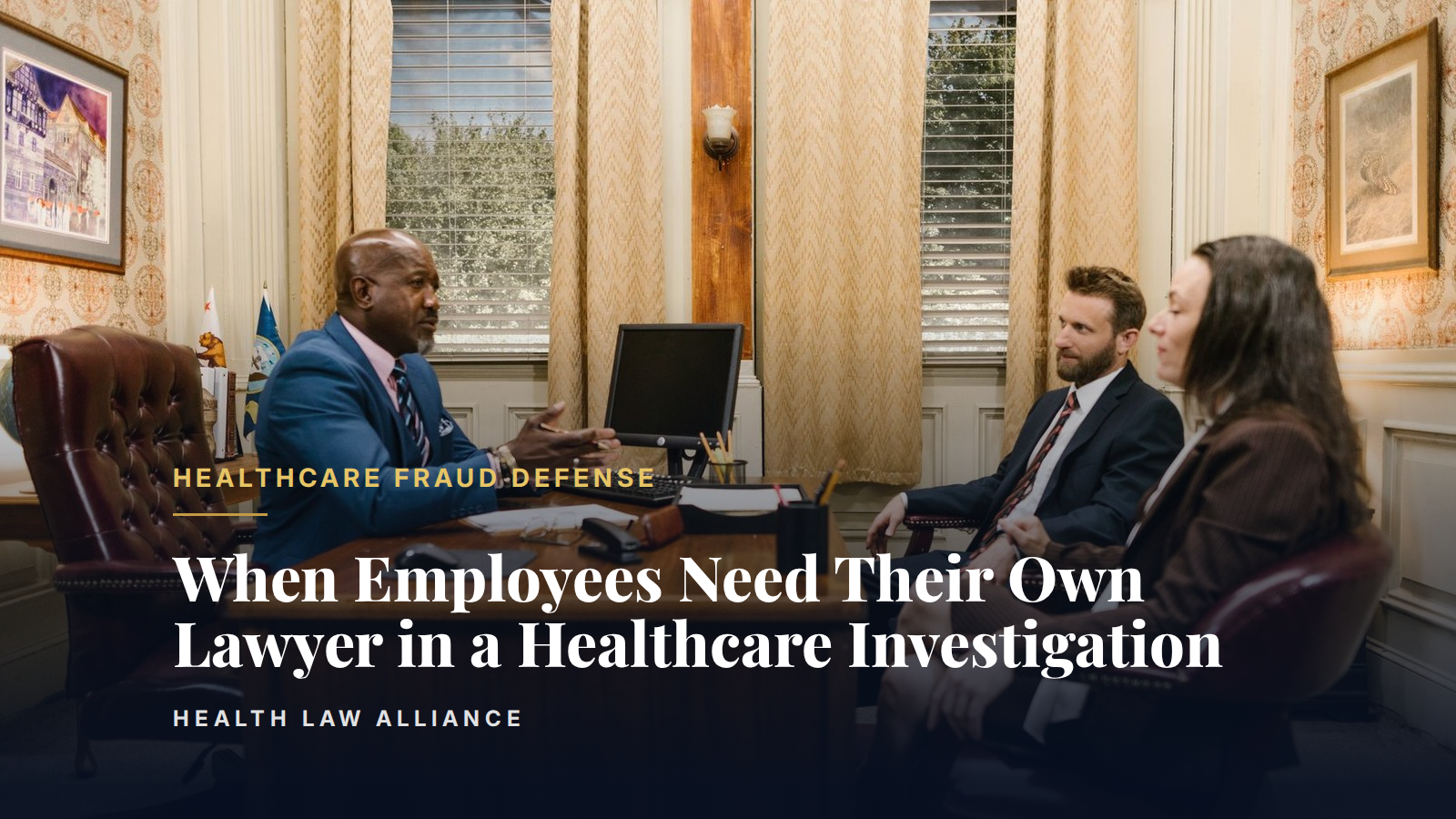
Under Upjohn and the ethics rules governing organizational representation, the lawyer who represents a healthcare company represents the company, not any individual employee, officer, or director, even when that lawyer interviews the employee directly.
Signs an Employee's Interests Diverge From the Company's
Not every employee interviewed in a company's investigation needs independent counsel. The signal to watch for is a shift from describing the company's conduct to describing the employee's own conduct. An employee who is told investigators consider them a subject or a target, who receives a civil investigative demand or a grand jury subpoena addressed to them personally rather than to the company, or who is asked to explain decisions they made individually under statutes like the anti-kickback statute, is in a different position than a colleague being asked only about the company's general practices. The same is true once company counsel can no longer advise the employee without also advising the company on the same set of facts. A closer look at how a criminal probe compels testimony and documents is in Grand Jury Subpoenas in Healthcare Investigations.
Who Pays for Separate Counsel
Companies may advance or reimburse an employee's legal fees in a government investigation, under corporate bylaws, an employment or indemnification agreement, or a directors-and-officers insurance policy. Advancement terms vary by company, by role, and by the nature of the allegation, and are not automatic. A company that is paying for an employee's lawyer, directly or through its own counsel's referral, has an interest in how that representation is conducted. That interest does not have to be improper to be worth naming before the employee decides who represents them.
When Company Counsel Has a Conflict
A single lawyer cannot adequately represent two clients whose interests are opposed on the same set of facts. When company counsel interviews several employees about the same events, and one employee's account could expose that employee individually while helping or hurting the company's position, the conflict is not hypothetical. The company's lawyer answers to the company, including the company's decision on whether to waive privilege over what an employee said in an interview. These conflicts can surface in healthcare fraud defense matters, where a single investigation can reach a company and several of its employees at the same time. An employee facing that structure can seek independent counsel to review the same facts from the employee's own position, without obstructing the company's investigation or the government's.
Health Law Alliance has represented 2,500+ clients nationwide.
Why Early Legal Counsel Is Critical
It is critical that healthcare employees and the companies that employ them promptly retain experienced healthcare defense counsel once a government investigation reaches the individual level, whether through a subpoena, a civil investigative demand, or a request for an interview. Early legal intervention can protect an individual employee's rights, clarify who a given lawyer actually represents, and help the employee and the company avoid the kind of conflict that can compromise both of their positions. Delaying that decision can narrow an employee's options later.
How Health Law Alliance Can Help
Health Law Alliance represents healthcare companies, physicians, and staff facing federal and state healthcare investigations, including the employees whose individual interests no longer align with their employer's. If you have been asked to sit for an interview, respond to a civil investigative demand, or appear before a grand jury in a matter involving your employer, contact us for a free, confidential consultation through our government investigations and litigation team.