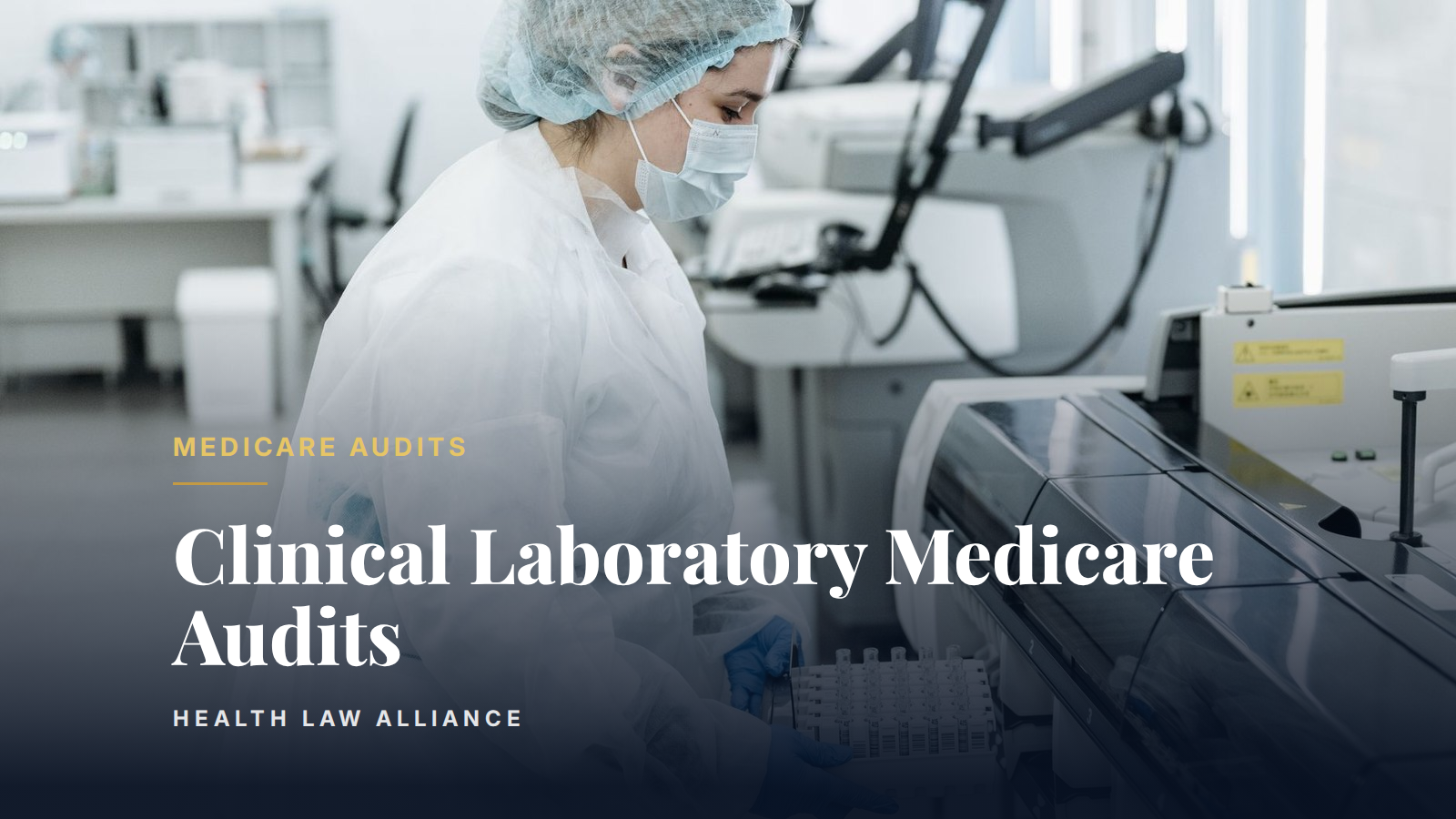
A clinical laboratory Medicare audit does not resemble a routine paperwork request. Investigators pull ordering-physician records, coverage files, and billing histories, then extrapolate a small sample of denied claims into a demand that can reach seven figures. Genetic and molecular testing and toxicology panels draw a disproportionate share of that scrutiny because per-test reimbursement is high and the medical necessity trail from order to result is often incomplete. A laboratory that cannot tie each ordered test to an individualized clinical indication faces repayment exposure, and where referral relationships are involved, the same audit record can support an Anti-Kickback Statute or Stark Law inquiry running alongside it.
Medical Necessity Documentation For Lab Orders
Every claim a laboratory submits to Medicare must be supported by documentation showing the test was medically necessary, measured against the applicable local coverage determination. For molecular pathology and genetic tests, coverage generally turns on whether the assay is FDA approved or, for a laboratory-developed test, supported by documented analytical validity, and whether the result will directly affect treatment. A diagnosis code on the order form is not, by itself, evidence of either element. Medicare Part B spending on genetic tests reached roughly $3.6 billion in 2024, now 43 percent of all Part B laboratory spending, and the HHS Office of Inspector General has opened a work plan project examining fraud and billing vulnerabilities in that growth. Auditors will ask for the ordering clinician's contemporaneous notes, not just the requisition form, and a laboratory whose intake process does not capture that clinical narrative is the laboratory most likely to see the claim denied.
Standing Orders And Panel Testing Scrutiny
Standing orders and preset panel testing protocols are a recurring fact pattern in laboratory enforcement, substituting a fixed test menu for the individualized assessment each order is supposed to reflect. In 2025, a national toxicology laboratory agreed to pay $27 million to resolve allegations that it promoted standing orders causing physicians to order excessive urine drug tests without assessing each patient individually. A separate OIG audit found Medicare improperly paid tens of millions of dollars for specimen validity tests billed alongside noncompliant drug tests. When a Recovery Audit Contractor flags this pattern, it typically applies statistical extrapolation to a sample of claims and projects the error rate across the full claims universe, turning a handful of questioned panels into a full-scale recoupment demand, a projection our piece on challenging extrapolation in Medicare overpayment demands covers contesting on sampling grounds.
Kickback And Stark Exposure Alongside Billing Audits
A laboratory billing audit rarely stays confined to coverage and coding. Arrangements paying physicians or hospitals for specimen collection sit close to a referral relationship, and OIG has treated that proximity with skepticism. In Advisory Opinion 22-09, OIG declined to approve a laboratory's proposal to pay hospitals a per-patient-encounter fee for specimen collection, concluding the structure carried more than a minimal risk of inducing referrals under the Anti-Kickback Statute. A 2014 Special Fraud Alert on laboratory payments to referring physicians remains the operative guidance on blood-draw fees and other remuneration flowing to the physicians who order a lab's tests. A practice under billing review for lab claims should assume reviewers will also examine whether any collection payment reflects the volume of referrals rather than fair market value. Laboratories are also subject to Protecting Access to Medicare Act private payor rate reporting, and a mismatch between reported rates and billing practices can itself draw follow-up review.
A laboratory billing audit and a kickback inquiry often draw on the same referral records. A response built for one that ignores the other leaves half the exposure unaddressed.
Why Early Legal Counsel Is Critical
It is critical that laboratories and the physicians who order their tests promptly retain experienced healthcare defense counsel upon receiving an additional documentation request, a prepayment review notice, or any sign that a Medicare audit of lab claims is underway. Early counsel can shape how records are produced, flag any kickback or Stark exposure alongside the billing question, and preserve rights at every level of the Medicare overpayment appeal process. Waiting until an overpayment demand has already issued narrows the options available and can let an extrapolated projection go unchallenged.
How Health Law Alliance Can Help
Health Law Alliance defends clinical laboratories, ordering physicians, and pharmacies in Medicare audits, prepayment reviews, and related kickback inquiries nationwide. Our bench includes a former federal prosecutor and a former senior pharmacy benefit manager executive, background that shapes how we evaluate a laboratory's medical necessity documentation and specimen collection arrangements during an audit. If your laboratory or practice has received a records request, a prepayment hold such as the one covered in our piece on getting off a Medicare prepayment review, or an overpayment demand tied to lab testing, contact us for a free, confidential consultation.