
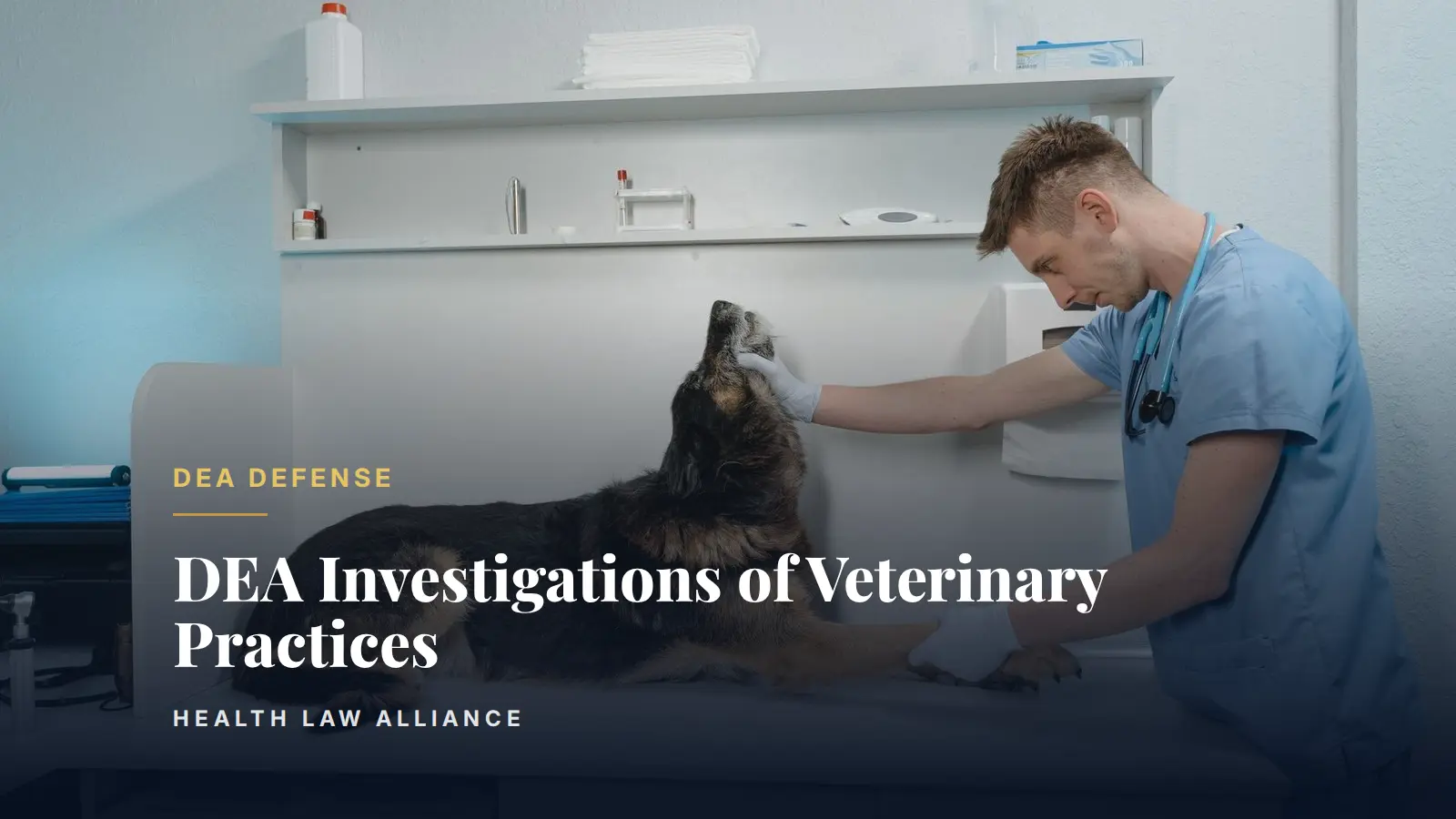
The Drug Enforcement Administration reviews veterinary practices that order, store, and administer injectable Schedule III anesthetics and other controlled substances. A veterinary practice's DEA registration permits it to handle these drugs only under strict recordkeeping and inventory rules, and a single documented discrepancy can open a registration action that threatens the practice's ability to operate. Veterinarians who receive a records request, an unannounced inspection, or a formal notice from DEA's Diversion Control Division need to understand both the underlying recordkeeping duty and the administrative process that follows a finding of noncompliance.
Recordkeeping and Inventory Obligations for Veterinary Registrants
Federal recordkeeping rules draw a line between a veterinarian who only writes prescriptions a client fills at a pharmacy and one who dispenses or administers controlled substances directly. Under 21 CFR 1304.03, a practitioner who only prescribes controlled substances in the lawful course of professional practice is not required to keep the inventory and transaction records a dispenser must keep. A veterinarian who regularly administers injectable Schedule III anesthetics during surgery or sedation and charges the client for the drug is a dispenser under federal law and falls under the full inventory scheme in Part 1304.
A dispensing veterinary practice must take an initial inventory on first handling controlled substances and a new inventory at least every two years after, under 21 CFR 1304.11, and must keep records of every quantity received and administered for at least two years, with Schedule I and II records kept separately from the practice's other records, under 21 CFR 1304.04. Inventory reconciliation, comparing purchase records against what was administered and what remains on hand, is how a DEA diversion investigator tests those records once a practice is under review.
What Draws DEA Attention to a Veterinary Practice
DEA diversion investigators identify veterinary practices for review through several channels. A controlled substance order that deviates in size or frequency from a practice's ordinary caseload can surface through the distributor side of the transaction: distributors run their own suspicious order monitoring programs and must flag and report orders departing from a registrant's normal pattern. A practice's own obligations under Distributor and Reverse Distributor Registration for expired or returned stock add another touchpoint. Unannounced inspections and staff tips round out the paths into a practice-level review.
The same documentation discipline that applies at the pharmacy counter governs the treatment room. When a controlled substance order or administration departs from the practice's normal pattern, contemporaneous documentation of why it was administered, or why it was not, is the record that resolves a diversion inquiry before DEA opens a formal action, a standard described in Documenting Red Flag Resolution at the Counter. Electronic systems that generate a dispensing trail, including those addressed in Electronic Prescribing of Controlled Substances Compliance, make that contemporaneous record easier to produce on request.
The practice's own inventory and dispensing records, not the drugs themselves, are what a DEA diversion investigation actually tests.
DEA Order to Show Cause and Immediate Suspension
When an investigation finds a recordkeeping, security, or inventory violation serious enough to threaten a registration, DEA can issue a DEA order to show cause proposing to revoke, suspend, or deny the veterinarian's registration. Under 21 CFR 1301.43, the registrant has 30 days from receipt of the order to file a written request for a hearing before a DEA administrative law judge; missing that window waives the hearing right and the registrant is deemed in default, unless the registrant shows good cause for the delay.
Under 21 U.S.C. 824(d), the Attorney General can suspend a registration at the same time proceedings to revoke it begin, when continued registration poses an imminent danger to public health or safety. A veterinary practice served with an immediate suspension order stops handling controlled substances before any show cause hearing occurs, and the suspension stays until the proceedings conclude unless a court dissolves it.
Why Early Legal Counsel Is Critical
It is critical that veterinary practices promptly retain experienced healthcare defense counsel upon receiving a records request, an inspection notice, or notice of an order to show cause. Early legal intervention can protect the practice's rights, help frame appropriate responses to government requests, avoid inadvertent admissions, and preserve relevant defenses, while allowing counsel to communicate with investigators on the practice's behalf. Delaying representation can affect the outcome of a matter and expose the practice to unnecessary risk, including an immediate suspension order that stops controlled substance handling before the case is resolved.
How Health Law Alliance Can Help
Health Law Alliance's attorneys have overseen 2,000+ audits and handled 5,000+ matters, with 25+ years of experience.
Health Law Alliance's DEA defense attorneys represent veterinary practices and other DEA registrants through diversion investigations, inventory reconciliation disputes, and order to show cause proceedings, from the first records request through any hearing before an administrative law judge. Contact us for a free, confidential consultation.