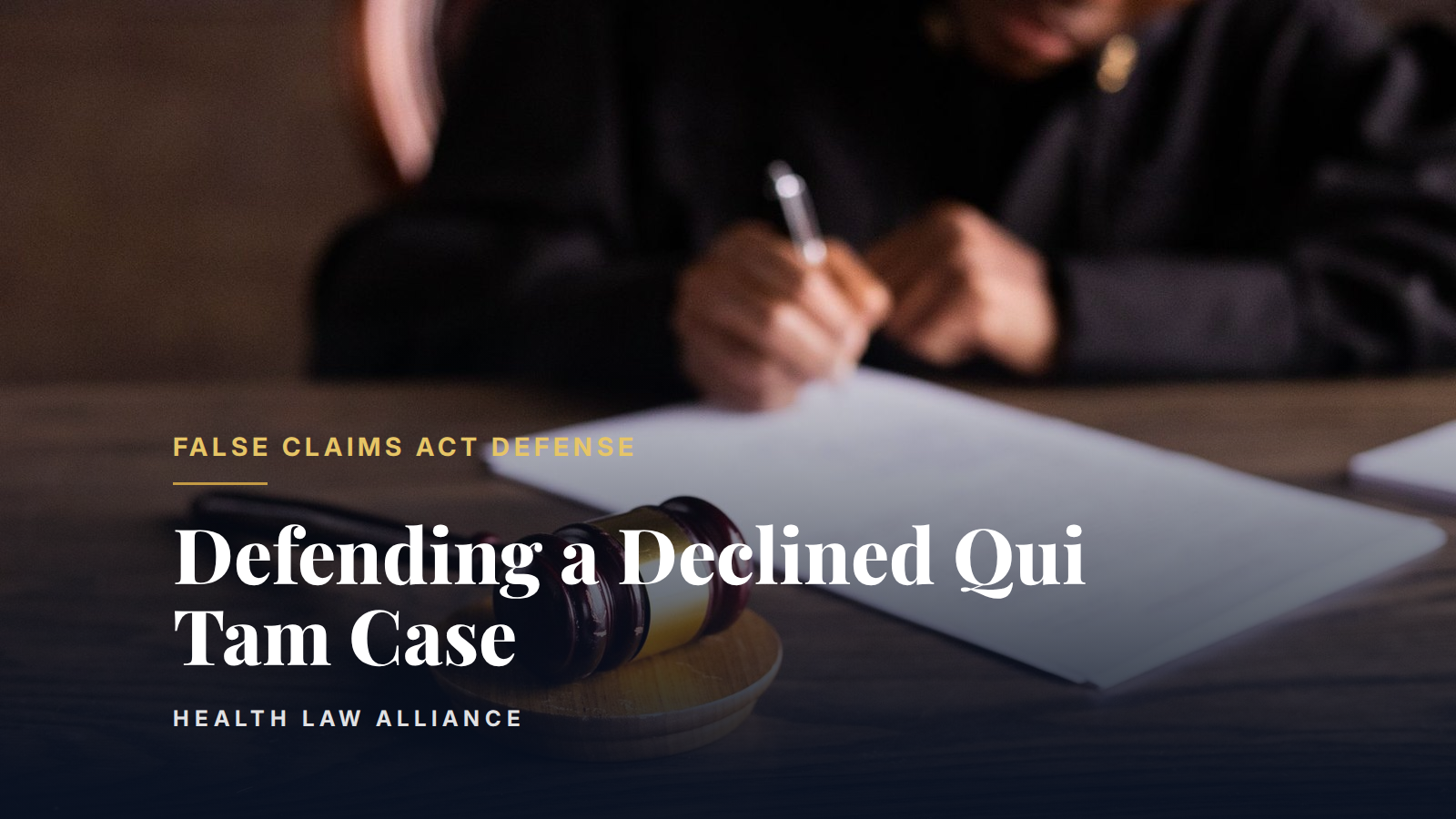
A relator's qui tam suit under the False Claims Act does not end when the Department of Justice declines to intervene. Under 31 U.S.C. § 3730(b)(4)(B), a declination transfers control of the case to the relator, who keeps the right to conduct the action without the government as a co-plaintiff. Compliance officers who read a declination as the end of the matter are wrong on both counts that matter: the same treble damages exposure and per-claim civil penalties stay on the table, and a relator who has already funded years of litigation has every reason to press forward alone. Defending a declined qui tam case starts with knowing exactly what declination changes, and what it leaves untouched.
Declination and What It Actually Changes
Every qui tam complaint is filed under seal for at least 60 days while the government investigates, a period the court routinely extends on the government's motion. At the close of that review, the Department of Justice elects under 31 U.S.C. § 3730(b)(4) to intervene and take over prosecution, or to decline. A declination is not a finding on the merits and it does not dismiss the case. It is a resource and litigation-risk decision by DOJ, and once the complaint is unsealed, the defendant is litigating directly against the relator's own counsel rather than a government trial team.
The Relator's Right to Proceed Alone
Section 3730(c)(3) gives the relator who initiated the action the right to conduct it after declination, and the financial incentive to do so increases rather than disappears. Under 31 U.S.C. § 3730(d)(2), a relator who wins or settles a declined case alone recovers between 25 and 30 percent of the proceeds, compared to 15 to 25 percent when the government intervenes under 3730(d)(1). Relator's counsel is frequently on contingency, which means the same lawyers who convinced DOJ the case was worth investigating now have a larger personal stake in taking it to trial.
Government Tools That Survive Declination
Declination does not retire the government's tools. Under 31 U.S.C. § 3730(c)(3), DOJ can intervene later on a showing of good cause, and under 3730(c)(2)(A), it can move to dismiss the relator's case over the relator's objection after notice and a hearing. It can also block a relator's settlement it views as inadequate under 3730(c)(2)(B). Because declination is a decision about the relator's private suit, not a release of the government's separate administrative authority, the same underlying conduct can still draw a parallel OIG exclusion action or feed into a future corporate integrity agreement if the matter later resolves.
Building the Defense Record After Declination
A declined case is won or lost on the same defenses that apply to any FCA matter, sharpened by the fact that a private relator, not a government trial team, now has to prove them. That includes distinguishing civil FCA exposure from any parallel criminal referral, stress-testing the government's damages and per-claim penalty calculations, and pressing the materiality defense that the Supreme Court's Escobar decision put at the center of every FCA case. Scienter, the public disclosure bar, and the first-to-file bar all remain available defenses regardless of whether the government ever appeared in the case.
A declination shifts who controls the lawsuit. It does not shift who bears the burden of proving the claim.
Why Early Legal Counsel Is Critical
It is critical that compliance officers and the companies they represent promptly retain experienced healthcare defense counsel once a qui tam complaint is unsealed, whether or not the government intervened. Early legal intervention can protect the company's rights, ensure appropriate responses to the relator's discovery requests, avoid inadvertent admissions, preserve relevant defenses, and allow counsel to communicate with opposing counsel and, where relevant, the government on the company's behalf. Delaying legal representation can significantly affect the outcome of a matter and expose the company to unnecessary risk.
How Health Law Alliance Can Help
Health Law Alliance has handled 5,000+ matters for healthcare companies and providers facing federal and state scrutiny, including qui tam suits the government declined to join. If your company is defending a declined qui tam case, contact us for a free, confidential consultation and put an attorney between your company and relator's counsel before the litigation schedule sets the pace.