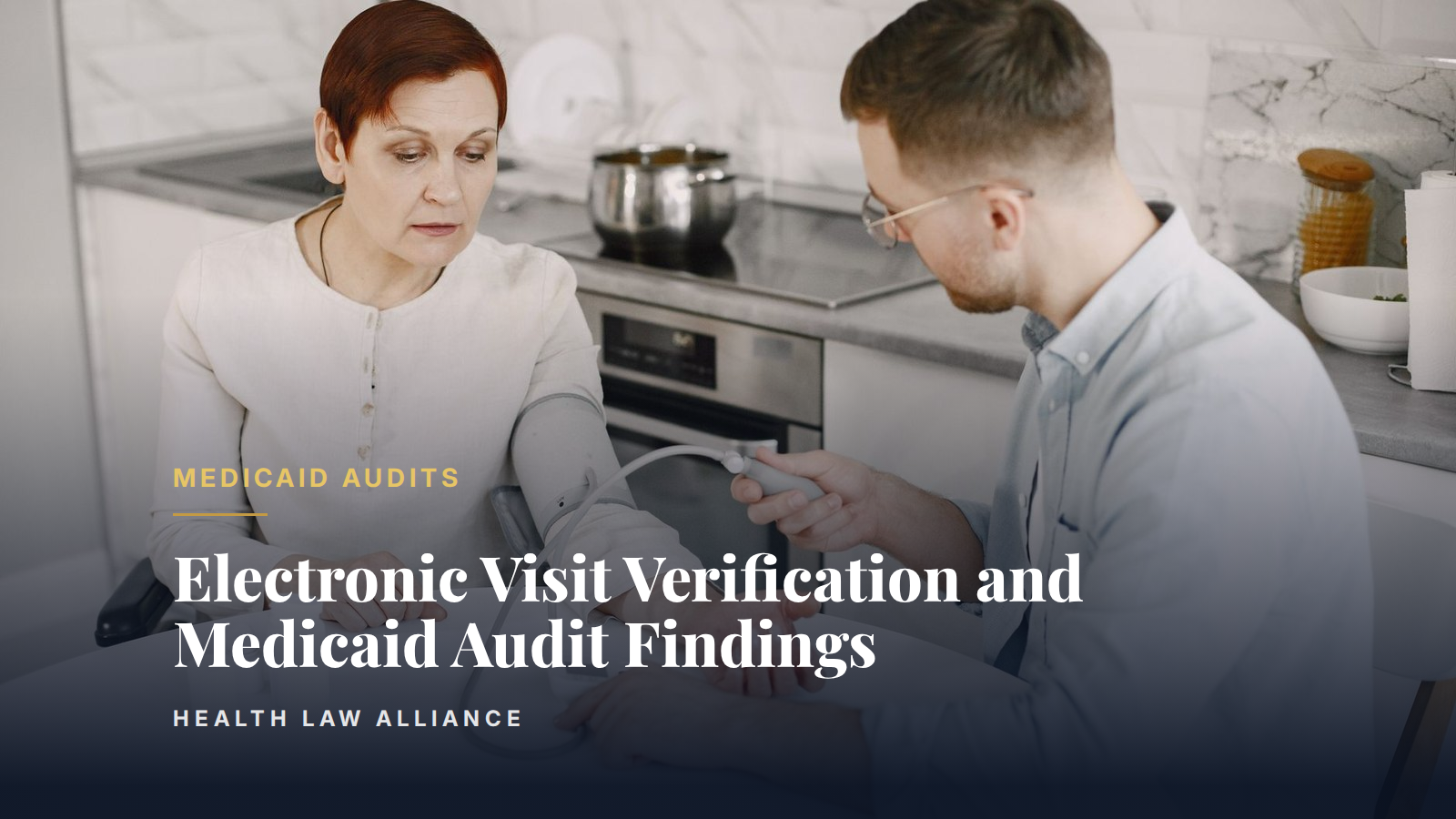
Electronic visit verification (EVV) is now the primary data source Medicaid program integrity contractors use to test whether a personal care or home health claim was actually rendered as billed. Every state Medicaid program must capture EVV records under Section 12006 of the 21st Century Cures Act, and a growing share of Medicaid audit findings start with a discrepancy inside that data: a visit that was never recorded, a manual entry that could not be corroborated, or hours billed that exceed what a single caregiver could have delivered. For personal care and home health providers, an EVV mismatch has become the opening exhibit in a recoupment case.
The EVV Mandate Under the Cures Act
Section 12006(a) of the 21st Century Cures Act required every state Medicaid program to implement EVV for personal care services by January 1, 2020, with CMS extending that deadline to January 1, 2021 for most states, and for home health services by January 1, 2023. The statute specifies six data elements EVV must capture for every visit: the type of service performed, the individual receiving the service, the date of service, the location of service delivery, the individual providing the service, and the time the service began and ended. States that fail to enforce EVV use face escalating reductions to their federal Medicaid matching rate, a penalty written directly into the statute to force compliance. The mandate closes a documentation gap: it verifies that a billed visit actually happened. Auditors now treat the EVV record as the baseline against which every personal care and home health claim is measured.
How EVV Records Become Audit Evidence
State Medicaid agencies and the HHS Office of Inspector General mine EVV data for the same gap a payer looks for in a claims adjudication log: the difference between what was billed and what the system actually verified. A July 2026 OIG audit of Colorado's personal care program found that the state had not confirmed that every in-home visit was recorded in its EVV system, that units paid exceeded the amounts approved in beneficiaries' service plans, and that attendant timesheets lacked the detail needed to support the hours billed. OIG recommended Colorado refund $8.0M in federal share overpayments outright and set aside an additional $45.7M in claims for CMS to determine allowability. Medicaid managed care plans run parallel reviews of the same claims, and an EVV mismatch that surfaces in a state program-integrity audit often triggers a matching finding in the MCO's own claims audit.
An EVV record that fails to reconcile to the claim becomes the evidence an auditor builds a recoupment demand around.
Common EVV Data Mismatches in Medicaid Audits
The mismatch patterns that recur across state EVV audits are specific. A visit is billed but never appears in the EVV system, or appears only as a manual entry without required justification. Units billed exceed what the beneficiary's approved service plan authorizes, or a single caregiver is recorded delivering more hours in a day than is physically possible. Task codes on the claim diverge from the services documented in the EVV record. Any one of these findings can support a recoupment demand that the provider must challenge through the state's audit appeal process, often a fair hearing under the state plan. When an auditor treats the mismatch as a pattern rather than an isolated error, the exposure widens: repeated EVV discrepancies can draw a False Claims Act referral, and a provider or caregiver with a documented pattern of unverified visits risks OIG exclusion from federal healthcare programs. The collateral consequences of an adverse audit finding, from exclusion to network termination, compound quickly once EVV data is in the record.
Why Early Legal Counsel Is Critical
It is critical that personal care agencies, home health providers, and their caregivers promptly retain experienced healthcare defense counsel upon receiving an EVV-based audit notice, a state program integrity inquiry, or an OIG audit request. Early legal intervention can protect the provider's rights, ensure appropriate responses to government requests, avoid inadvertent admissions about billing and documentation practices, preserve the provider's defenses to the EVV findings, and allow counsel to communicate with auditors on the provider's behalf. Delaying representation can significantly affect the outcome once a state or OIG has cast an EVV data pattern as a compliance failure.
How Health Law Alliance Can Help
Health Law Alliance defends personal care agencies, home health providers, and individual caregivers against Medicaid audit findings built on EVV data, including recoupment demands, program exclusion actions, and False Claims Act referrals that trace back to unverified or mismatched visit records, as part of the firm's Medicaid audit defense practice. The firm reconciles a provider's EVV data against the claims and service plans an auditor relies on before a finding hardens into a settled recoupment. If your agency has received an EVV-based Medicaid audit notice, contact us for a free, confidential consultation.