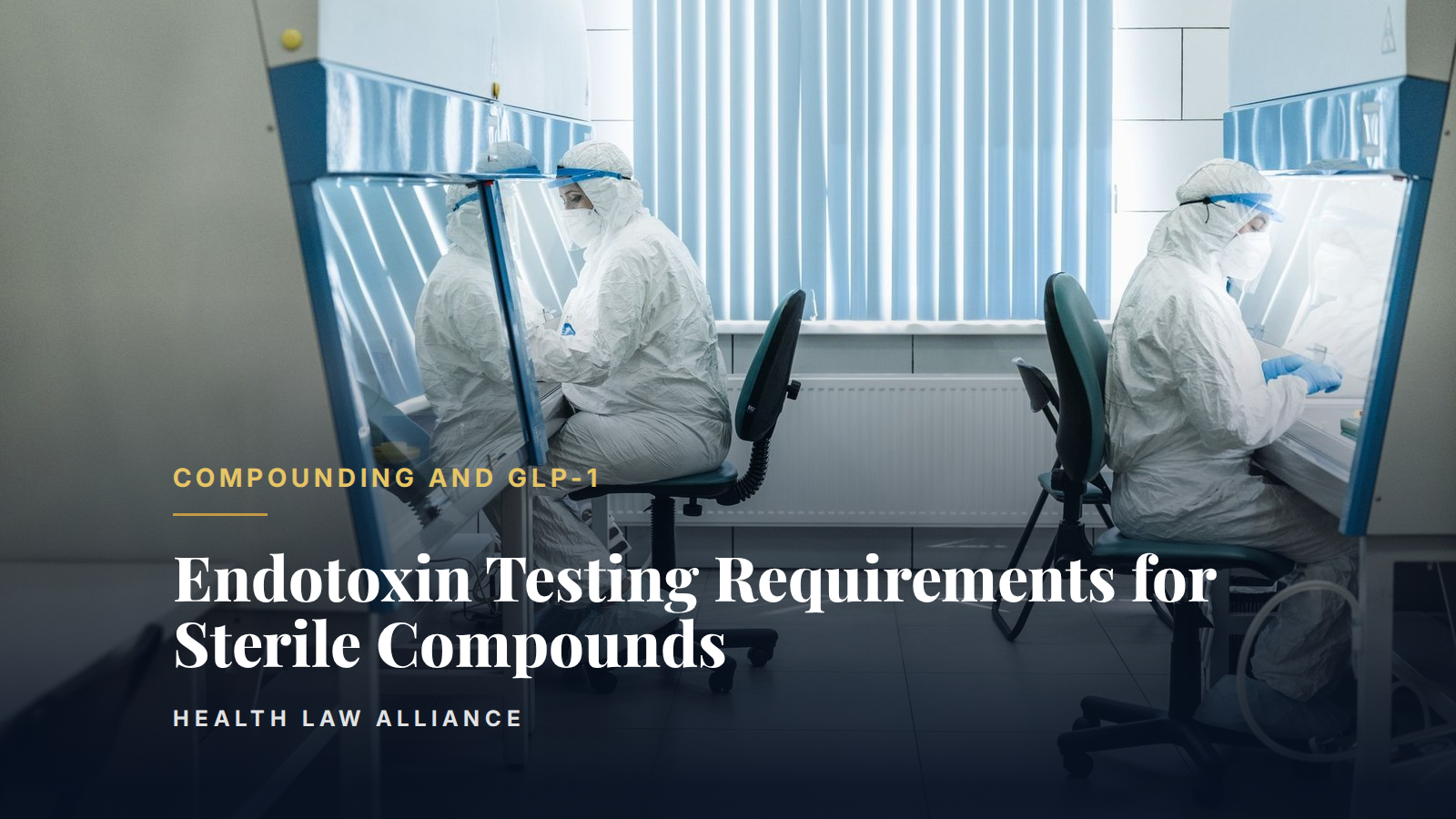
United States Pharmacopeia General Chapter USP <797> requires bacterial endotoxin testing for many compounded sterile preparations (CSPs), and a compounding pharmacy that treats the requirement as discretionary is exposed on two fronts: a patient safety failure if a pyrogenic reaction reaches a patient, and an FDA inspection finding if the pharmacy cannot produce the test result and the record behind it. Whether testing is required turns on the CSP's risk category and its ingredients, not on the pharmacy's own judgment about which batches are worth testing.
Endotoxin Testing Under USP 797
Bacterial endotoxins are cell-wall fragments shed by gram-negative bacteria. They survive the sterilization processes that kill the bacteria itself, and when they enter the bloodstream, the spinal fluid, or another normally sterile body compartment, they can trigger fever, septic shock, or death. USP 797/800 addresses that risk through the bacterial endotoxins test (BET) described in USP General Chapter <85>, which measures endotoxin content against a calculated limit before a preparation is released for use.
Which CSPs Require Testing
USP <797> ties the testing obligation to the preparation's risk category. Category 1 CSPs, the lowest-risk tier compounded with limited manipulation, generally fall outside the endotoxin testing requirement. Injectable Category 2 and Category 3 CSPs compounded from one or more nonsterile components carry the obligation: the pharmacy must run a BET before release. Category 3 batches, which typically support extended beyond-use dates, also carry sterility testing obligations under USP General Chapter <71>; endotoxin testing supplements that sterility testing for injectable products. Peptide and GLP-1 injectable preparations, a growing share of compounding volume, fall squarely into this tested category when compounded from nonsterile active pharmaceutical ingredient.
Most of this testing responsibility sits with 503A/503B pharmacies compounding for a specific patient under a practitioner's order. Outsourcing facilities compounding at scale operate under cGMP requirements that impose parallel, and often more detailed, testing controls on top of the USP <797> category rules.
Calculating the Endotoxin Limit
USP <797> calculates the endotoxin limit preparation by preparation, rather than assigning one number to a drug. The limit follows the formula K divided by M, where K is the threshold pyrogenic dose and M is the maximum dose administered per kilogram of body weight in a one-hour period. For most intravenous and intramuscular preparations, K is 5 EU per kilogram per hour; for intrathecal preparations, injected into the cerebrospinal fluid, the threshold drops to 0.2 EU per kilogram per hour because the central nervous system tolerates far less endotoxin than the bloodstream. A pharmacy compounding the same drug for an intrathecal order and an intravenous order is calculating two different endotoxin limits, and each calculation has to be documented on its own.
Each preparation carries its own calculated endotoxin limit, set by the dose, the patient's weight, and the route the prescriber ordered.
Documentation an Inspection Expects
An FDA or state board inspector reviewing a compounding pharmacy's endotoxin testing program looks for more than a passing result. The master formulation record should reference the test method and the calculated acceptance limit for the specific preparation, and the batch or preparation record should tie the result to the specific lot. If the pharmacy has a written procedure allowing a CSP to be dispensed before test results return, the procedure must specify how the pharmacy notifies the prescriber immediately if the result later fails, and how the pharmacy accounts for any dose already administered. Pharmacies that use a depyrogenation cycle for equipment or components should document the cycle parameters, temperature, duration, and load pattern, as part of that same record. Gaps in this documentation are a recurring theme behind FDA warning letters citing endotoxin or sterility deficiencies, and the response to one of those letters starts with rebuilding the record the inspector could not find on-site.
Why Early Legal Counsel Is Critical
It is critical that compounding pharmacies promptly retain experienced healthcare defense counsel upon receiving an FDA Form 483 observation, a warning letter, or any other inspection finding tied to endotoxin or sterility testing. Early legal intervention can protect the pharmacy's rights, ensure appropriate responses to government requests, avoid inadvertent admissions, preserve relevant defenses, and allow counsel to communicate with investigators on the pharmacy's behalf. Delaying legal representation can significantly affect the outcome of a matter and expose the pharmacy to unnecessary risk.
How Health Law Alliance Can Help
Health Law Alliance represents compounding pharmacies in FDA inspections, 483 responses, and warning letter matters, including findings tied to bacterial endotoxin testing and sterility gaps under USP <797>, as part of the firm's compounding pharmacy defense practice. If your pharmacy has received an inspection finding or a warning letter, contact us for a free, confidential consultation.