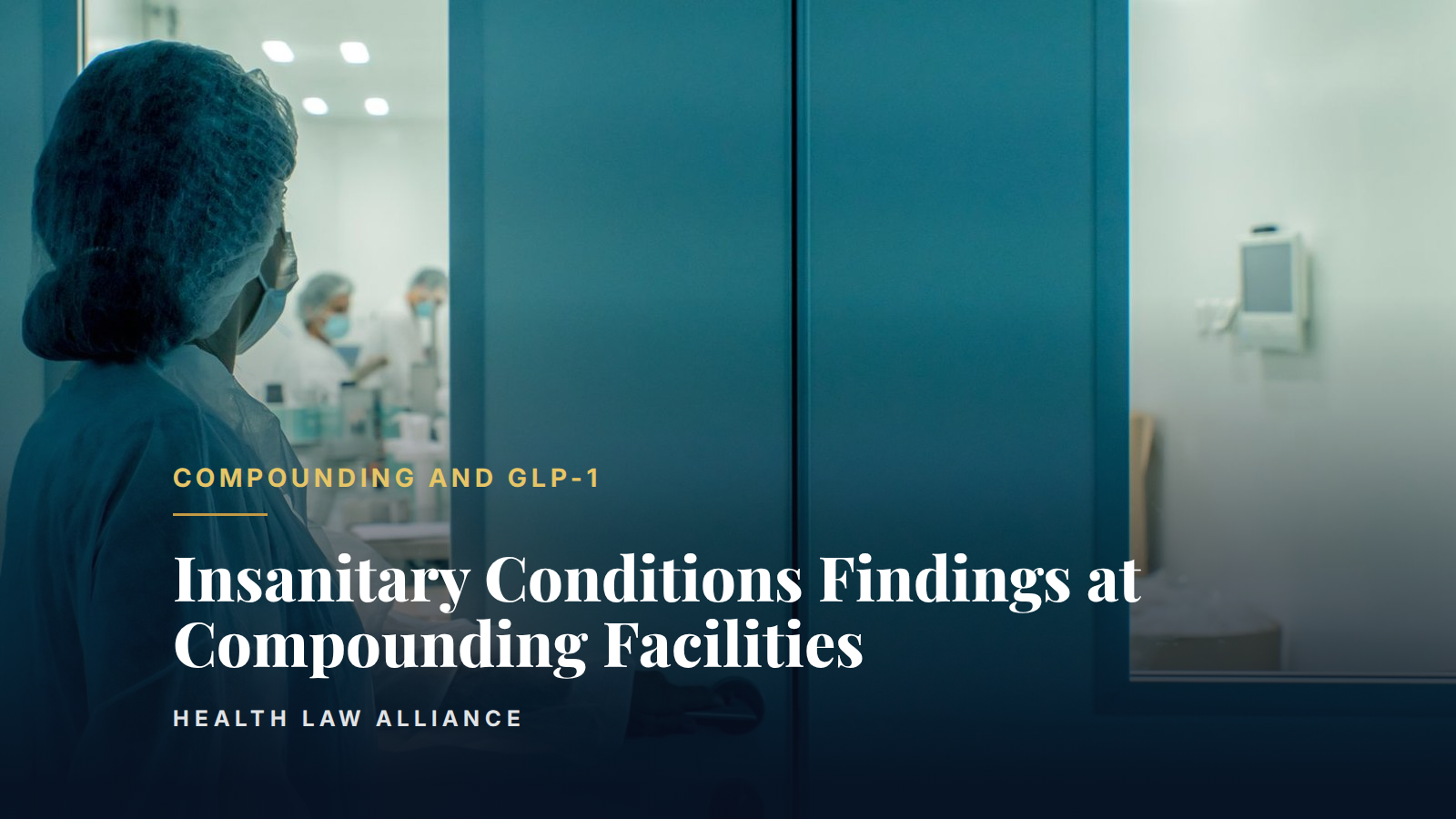
FDA inspections of compounding facilities increasingly reach past potency and labeling errors into a separate adulteration theory: insanitary conditions. Under Section 501(a)(2)(A) of the Federal Food, Drug, and Cosmetic Act (FDCA), a drug is adulterated if it was prepared, packed, or held under conditions that may cause it to become contaminated with filth or rendered injurious to health. The government does not have to prove that a specific batch was actually contaminated, or that a patient was actually harmed. A facility that fails a smoke study, gowns improperly, or stores product near standing water can face a warning letter, a recall request, or worse, on the insanitary conditions theory alone, even when every tested batch comes back clean.
The Insanitary Conditions Standard Under the FDCA
Section 501(a)(2)(A) is the government's broadest tool against a compounding facility because it does not depend on any single drug testing defective. FDA's own warning letters state that the insanitary conditions provision applies regardless of whether drug products meet the conditions of Section 503A, and the same holds for 503B outsourcing facilities. Neither exemption reaches Section 501(a)(2)(A). The standard asks only whether the conditions of preparation, packing, or holding created a risk of contamination or injury, a lower bar than proving that an individual dose failed.
The Same Theory Reaches Nonsterile Compounding
The insanitary conditions theory is not limited to sterile drug production. FDA guidance recognizes that a nonsterile compounded drug contaminated with microorganisms, filth, or an unintended drug component can still injure a patient, even though sterility itself is not the operative standard for that dosage form. FDA has cited nonsterile compounders for insanitary conditions findings ranging from vermin near production areas to porous, hard-to-clean surfaces in a compounding room. The theory reaches a topical cream or a troche line exactly as it reaches an injectable line; the question is always whether the conditions created a risk of contamination.
From Personnel Practices to Facility Design
What counts as an insanitary condition spans a wide range: a pharmacist reaching into an ISO 5 hood in a non-sterile lab coat, gowning breaches on reentry to a clean room, unsealed ceiling tiles above a compounding bench, or equipment surfaces too porous to disinfect. Cleanroom certification, environmental monitoring, and a facility's response to a Form 483 each document a piece of that record, but Section 501(a)(2)(A) is the theory that ties the individual findings together into a single adulteration claim. A facility does not need a finding in every category; a documented pattern in any one is often enough to support a warning letter.
An insanitary conditions finding does not require proof that a single dose was contaminated. It requires only that the conditions of preparation, packing, or holding created the risk of contamination, and that risk is enough to adulterate the batch and open the door to a recall request.
How an Insanitary Conditions Finding Escalates
An insanitary conditions finding tends to escalate in a predictable sequence. Inspectors document conditions on a Form 483. An unresolved 483 can become a warning letter that cites Section 501(a)(2)(A) directly and names the specific compounded drugs at risk. Boothwyn Pharmacy's January 2026 warning letter followed that path: after inspectors found insanitary conditions in the facility's sterile production area and drug products that failed sterility testing, including compounded semaglutide and tirzepatide injections, the pharmacy initiated a recall of all drug products within expiry carrying out-of-specification results. FDA can also request a recall directly, refer the matter for seizure of the adulterated product, or seek an injunction against continued operation while the insanitary conditions persist. The recall obligation runs alongside the facility's separate duty to report adverse events tied to the affected lots; a gap in either one compounds the exposure created by the other.
Why Early Legal Counsel Is Critical
It is critical that compounding pharmacies and outsourcing facilities promptly retain experienced healthcare defense counsel upon receiving a Form 483, a warning letter, or any FDA request for a voluntary recall. Early legal intervention can shape the inspection record before insanitary conditions findings harden into an adulteration claim, ensure the facility's response to FDA is accurate and complete, avoid inadvertent admissions during the inspection close-out, and allow counsel to communicate with the agency on the facility's behalf. Delaying representation narrows the facility's options once a warning letter or recall request is already in the government's hands.
How Health Law Alliance Can Help
Health Law Alliance has handled 5,000+ matters across healthcare regulatory and audit defense over 25+ years, including FDA compounding enforcement built on the insanitary conditions theory. If your facility has received a Form 483, a warning letter, or a recall request tied to insanitary conditions findings, contact Health Law Alliance's compounding pharmacy attorneys for a free, confidential consultation before the response window runs.