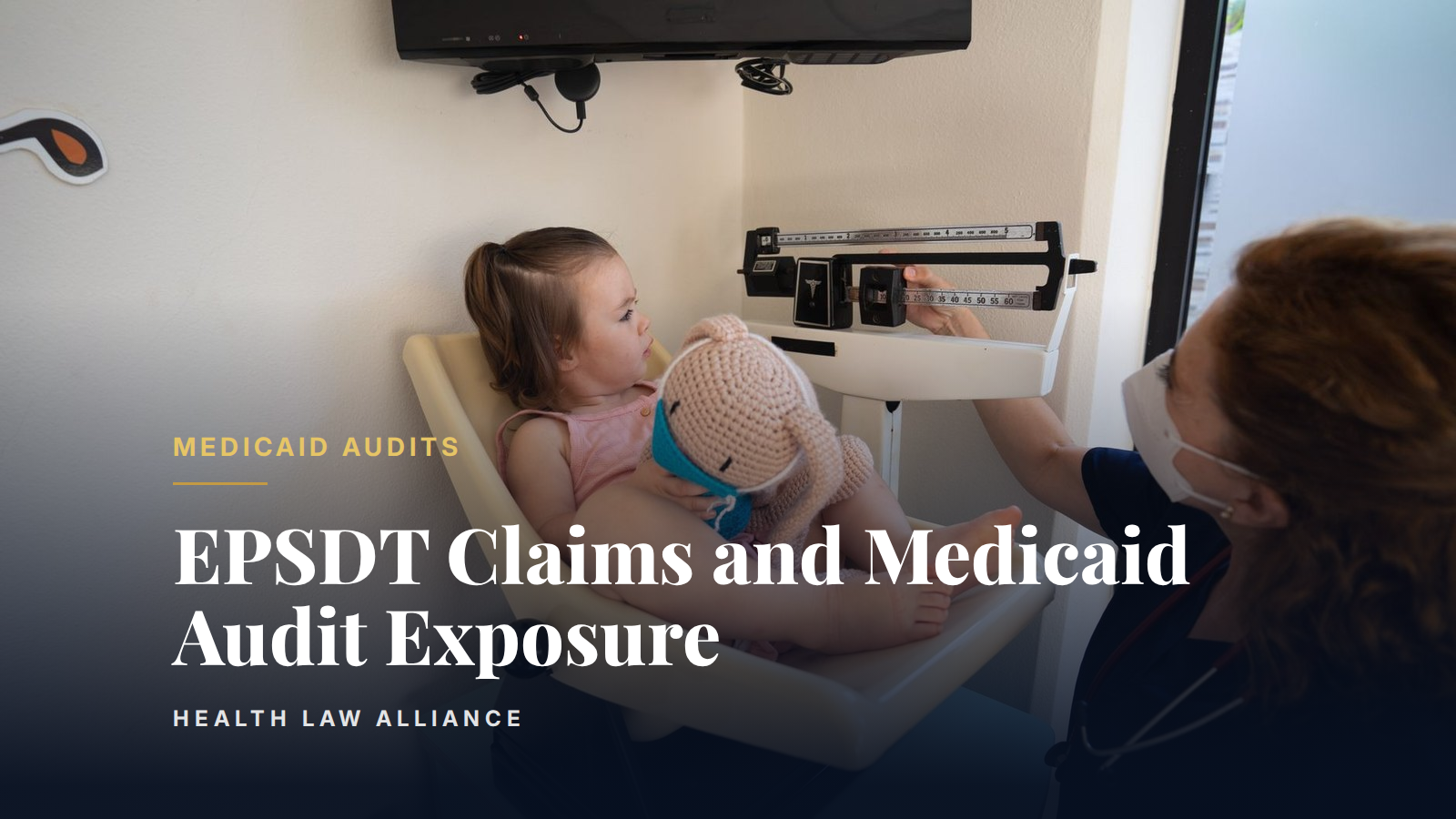
Every state Medicaid program must cover EPSDT, the Early and Periodic Screening, Diagnostic, and Treatment benefit, for enrollees under 21, and the benefit is built around a fixed list of components rather than a single well-child visit code. When a pediatric practice bills the full EPSDT screening code but the chart does not document every required piece, a state Medicaid audit can treat the entire visit as an unsupported claim rather than a partial one. The exposure compounds across a claims lookback period: a pattern of partial-documentation findings drives a recoupment demand, and in states that read the pattern as knowing or reckless, the same findings can support a fraud referral.
What EPSDT Requires
Under 42 U.S.C. § 1396d(r), EPSDT is not one exam but five categories of mandatory service: a screening component (a full health and developmental history, an unclothed physical exam, immunizations, laboratory testing, and health education), vision services, dental services, hearing services, and the corrective or treatment services needed to address whatever the screen finds. CMS requires states to set a periodicity schedule for medical screenings, developed with input from recognized child health organizations or adopted from a nationally recognized standard such as Bright Futures, plus a separate periodicity schedule for dental services. A billed EPSDT visit has to match both the component list and the age-appropriate interval on the state's schedule, and CMS's own guidance treats state oversight of that match as a compliance obligation, not a courtesy.
Where Component Documentation Falls Short
Audits built around EPSDT rarely dispute that a visit happened. They dispute whether the chart supports every component the billed code represents. A well-child visit coded as a complete EPSDT screen but missing a documented developmental screening, a vision or hearing assessment, or an age-appropriate lab test such as a blood lead level, reads to an auditor as an incomplete screen billed as a complete one. The gap is common enough to be a federal oversight priority: the Government Accountability Office found that only 51 percent of eligible children received at least one recommended well-child screening in fiscal year 2023, down from 59 percent in 2019, and flagged inconsistent component-level documentation as part of the shortfall. For a practice on the receiving end of a state audit, that federal attention translates into closer scrutiny of the chart behind every EPSDT claim code, not just the visit count.
How a Partial-Documentation Finding Escalates
A single incomplete chart rarely stays a single finding. State auditors sample a set of EPSDT claims, apply the same component checklist across the sample, and extrapolate the error rate across the full lookback period, turning a handful of missing developmental screenings into a recoupment demand covering years of billing. Where the pattern looks systemic, the exposure moves beyond recoupment. A state Medicaid Fraud Control Unit can treat repeated component gaps as support for a credible allegation of fraud, and billing the full EPSDT code without the documentation to back it can also draw False Claims Act scrutiny under a reckless-disregard theory. A provider agreement can also be placed at risk, since a documentation pattern serious enough to trigger a fraud referral can carry termination and exclusion consequences layered on top of the dollar demand.
A missing developmental or vision component does not just shrink the audit finding. It can convert the entire billed EPSDT visit into an unsupported claim.
Why Early Legal Counsel Is Critical
It is critical that pediatric providers promptly retain experienced healthcare defense counsel upon receiving a Medicaid audit notice concerning EPSDT claims. Early legal intervention can protect the provider's rights, ensure appropriate responses to the state's requests, avoid inadvertent admissions, preserve relevant defenses, and allow counsel to communicate with the auditor on the provider's behalf. Delaying legal representation can significantly affect the outcome of the audit and expose the provider to unnecessary risk.
How Health Law Alliance Can Help
Health Law Alliance defends pediatric practices and other providers against Medicaid audits built on EPSDT documentation findings, from the first records request through appeal and, where the state escalates, into a fraud referral response. If your practice has received an EPSDT audit notice or recoupment demand, contact us for a free, confidential consultation.