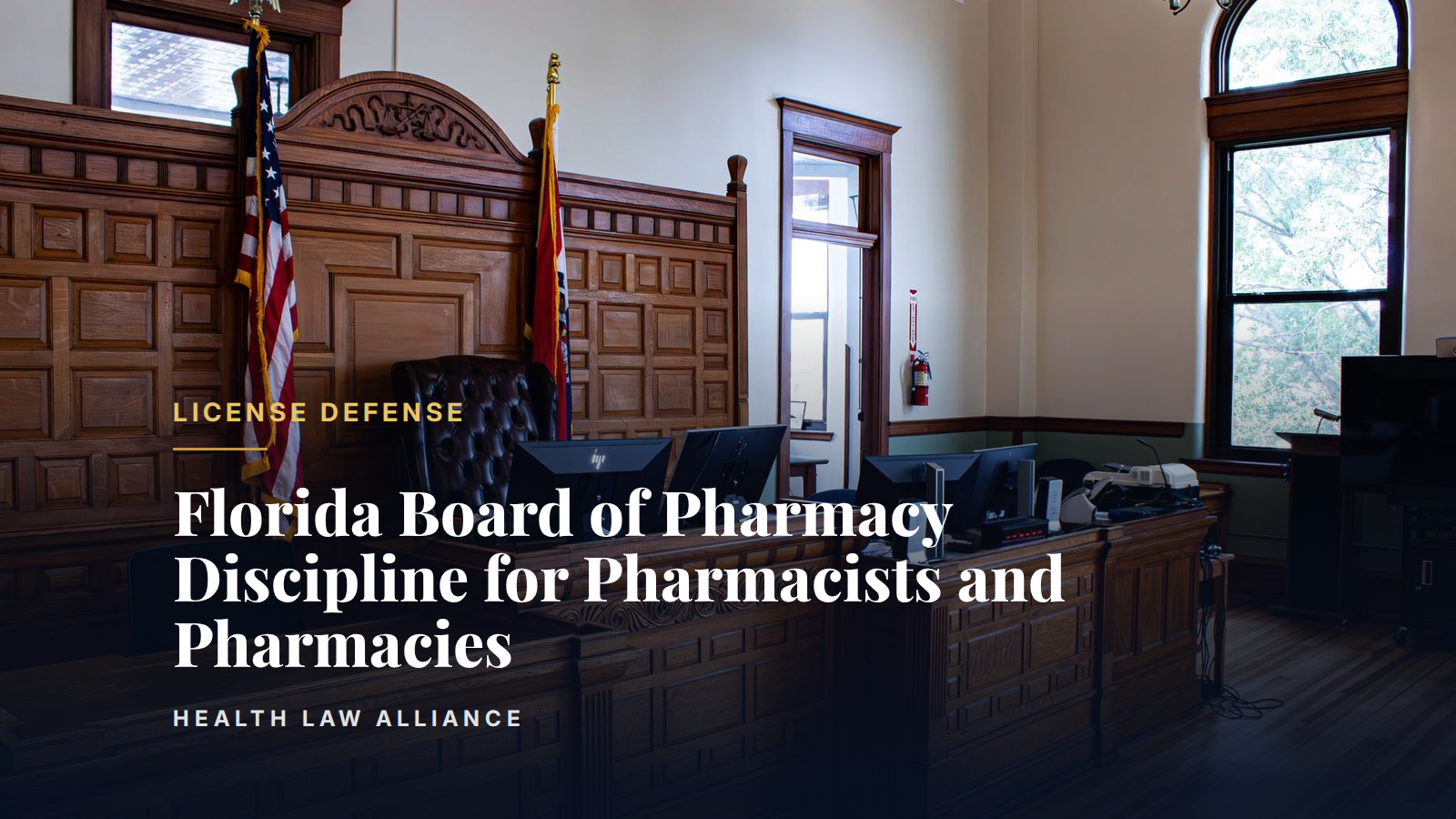
A complaint to the Florida Board of Pharmacy opens a disciplinary path for pharmacists, pharmacy technicians and permit holders alike. The Florida Department of Health investigates the complaint, a probable cause panel decides whether to file a formal administrative complaint, and the case can end in a negotiated consent agreement or a contested hearing before the Division of Administrative Hearings. Every stage carries its own deadline, and Florida Statutes Sections 456.073 and 456.072 set specific numbers on several of them. The process sits inside Health Law Alliance's broader professional license defense practice.
How a Complaint Becomes a DOH Investigation
Florida law requires a pharmacy board complaint to be in writing and signed before the Department of Health will open a file. Once accepted, Department investigators gather records and interview witnesses to determine whether the conduct violated Chapter 465. The Legislature's own target for that phase is six months from receipt of the complaint, under Section 456.073, though it is not an absolute deadline. Any investigation or disciplinary case still open one year after the complaint was filed must be referred to the Board of Pharmacy, with the Department reporting its status quarterly until the case closes. A pharmacist served with an investigative subpoena during this phase is already part of a legal proceeding.
The Probable Cause Panel Decides Whether to Prosecute
The Department refers its investigative file to a probable cause panel made up of a present Board of Pharmacy member, a current or former professional board member, and, where one is available, a current or former consumer member. Under Section 456.073, the panel has 30 days after receiving the final investigative report to decide whether probable cause exists, and the State Surgeon General can extend that period. If the panel finds probable cause, it directs the Department to file a formal administrative complaint. The file stays confidential until 10 days after that finding, after which the administrative complaint and the supporting evidence become public record. A panel that finds no probable cause closes the case, and the file stays confidential.
The Administrative Complaint and the Hearing
A formal administrative complaint sets out the specific statute the Department believes was violated and the penalty it intends to seek. From that point the case is prosecuted under Chapter 120, Florida's Administrative Procedure Act. A respondent who disputes the facts is entitled to a formal hearing before an administrative law judge at the Division of Administrative Hearings; where no fact is in dispute, the matter can proceed as an informal hearing before the board. A license holder can also choose to surrender the license voluntarily while under investigation, covered in Voluntary License Surrender While Under Investigation.
Settlement, Consent Agreements and the Range of Penalties
A formal administrative complaint can still resolve through a negotiated consent agreement, which Section 456.073 requires the Department to approve before it becomes final. The penalties available come from Section 456.072(2): license denial, suspension or revocation, practice restriction, an administrative fine of up to $10,000 per count, a reprimand or letter of concern, probation, corrective action, a refund of fees, or required remedial education. Permit discipline carries its own ceiling. Section 465.023 caps a pharmacy permit suspension at one year and bars a revoked permit holder from reapplying for one year. A board action can also trigger a federal OIG exclusion from Medicare and Medicaid billing, or a PBM's network termination, independent of what the Board of Pharmacy decides on its own record.
A pharmacy board case becomes public ten days after a probable cause panel finds against the respondent, and no consent agreement resolves it until the Department signs off.
Why Early Legal Counsel Is Critical
It is critical that pharmacists, pharmacy technicians and permit holders promptly retain experienced healthcare defense counsel upon receiving notice of a Department of Health complaint, an investigative subpoena, or a probable cause panel's finding. Early legal intervention can protect the provider's rights, ensure appropriate responses to the Department's requests, avoid inadvertent admissions, preserve relevant defenses, and allow counsel to communicate with investigators on the provider's behalf. Delaying legal representation can significantly affect the outcome of a matter and expose the provider to unnecessary risk.
How Health Law Alliance Can Help
Health Law Alliance has represented 2,500+ clients nationwide.
Health Law Alliance's attorneys represent pharmacists, pharmacy technicians and pharmacy permit holders at every stage of a Florida Board of Pharmacy case, from the Department's first records request through a probable cause panel finding, a negotiated consent agreement, or a contested hearing before the Division of Administrative Hearings. If you have received a complaint notice, a subpoena, or an administrative complaint from the Florida Department of Health, contact Health Law Alliance's state board of pharmacy defense attorneys for a free, confidential consultation.