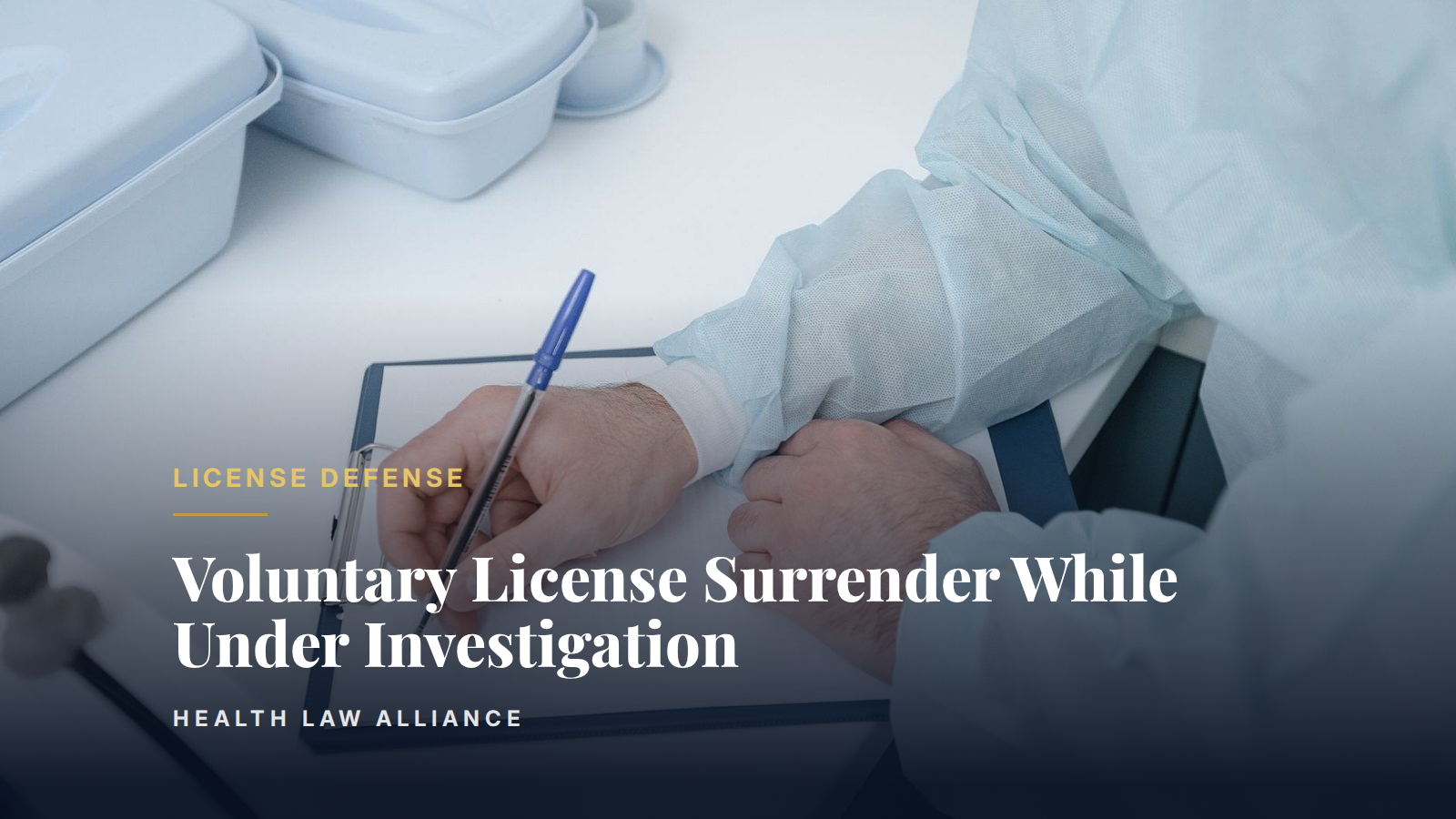
State licensing boards typically offer three paths once a formal investigation or complaint against a physician's license is pending: a negotiated consent order, a contested hearing, or a voluntary surrender of the license before either concludes. Boards generally treat a surrender entered while the case is open as a disciplinary resolution, not a clean resignation. It carries the same reportability to national databases that a consent order does and can attach conditions to any future return to practice. What the surrender actually closes, and what it leaves open, is worth knowing before a physician signs one.
A Third Option Beside the Consent Order and the Hearing
Physicians facing a state medical board investigation often expect the case to end one of two ways: a negotiated consent order admitting specified violations, or a contested hearing where the board decides the outcome. A voluntary surrender is a third option, and boards can accept it at almost any stage of an open case, from the initial notice of investigation through the eve of a hearing. Some boards decline to accept a surrender once an investigation has advanced far enough that completing the disciplinary record serves the public interest better than closing the file early. Where a board does accept it, the surrender becomes the disciplinary record.
What a Surrender Does and Does Not Stop
A surrender ends the board's pending proceeding against the license itself, but it leaves everything running on a separate track untouched. A physician who surrenders after receiving a target letter or a grand jury subpoena remains exposed to that federal investigation regardless of what happens to the state license. Criminal exposure survives the same way. A payer that ties credentialing to an active license can still move for network termination once the license is gone, and a surrender does not by itself end an existing monitoring or impaired-practitioner program obligation already in place.
Reporting to the National Practitioner Data Bank
Federal regulations at 45 CFR Part 60 govern reports to the National Practitioner Data Bank, and the NPDB Guidebook is explicit: a surrender made after notice of an investigation, in exchange for a board agreeing to cease one, or in lieu of discipline, is a reportable action. That report reaches hospitals, insurers, and other boards that query the databank during credentialing, so a surrender negotiated to avoid a public order does not avoid the disclosure that order would have carried. State licensing databases carry the same entry independent of the NPDB report.
Federal Program Exclusion Review
A license surrendered while a disciplinary proceeding over professional competence, performance, or financial integrity was pending can also draw scrutiny from the HHS Office of Inspector General. OIG holds broad, permissive exclusion authority under 42 U.S.C. Section 1320a-7(b) reaching license actions of this kind, separate from the mandatory exclusions tied to a criminal conviction. Whether a given surrender leads to an exclusion, and on what terms, depends on the specific facts OIG reviews case by case. Neither a surrender nor the absence of a criminal charge resolves that question on its own.
DEA Registration and Medicare Enrollment Stay Separate Questions
A state license surrender resolves the state board proceeding only. It has no automatic effect on a physician's DEA registration, which follows its own surrender and reinstatement process under separate federal authority, or on Medicare and Medicaid enrollment, which CMS and state Medicaid agencies evaluate under their own rules once they learn of the license action. Each question belongs to a different agency on a different timeline, and each deserves its own legal review rather than an assumption that resolving the board matter closed out the rest.
A voluntary surrender entered while an investigation is open closes the board's file the same way a consent order does, not the way a retirement does.
Why Early Legal Counsel Is Critical
It is critical that physicians promptly retain experienced healthcare defense counsel upon receiving notice of an investigation, a subpoena, or a request to consider surrendering a license. Early legal intervention can protect the physician's rights, clarify what a surrender would actually resolve against what it would leave open, and allow counsel to communicate with the board and any other agency involved on the physician's behalf. Deciding whether to sign a surrender without that review can trade a board proceeding for reporting and exclusion consequences that outlast it.
How Health Law Alliance Can Help
Health Law Alliance has handled 5,000+ matters across healthcare regulatory and license defense over 25+ years, including board investigations that reach a decision point between a consent order, a hearing, and a surrender. If a state board has raised the possibility of a voluntary surrender, or a licensure audit finding has already opened an investigation, contact Health Law Alliance's professional license defense attorneys for a free, confidential consultation before signing anything the board sends.