Clinical laboratories that pay referring physicians a fee for drawing, processing, or handling blood specimens have drawn federal scrutiny for more than a decade, and the pace of enforcement has not slowed. HHS-OIG flagged specimen processing and handling arrangements as a substantial fraud risk in a June 25, 2014 Special Fraud Alert, and the Department of Justice has since extracted tens of millions of dollars in settlements built on exactly that theory. A physician who accepts a per-specimen fee from a laboratory is not automatically violating the Anti-Kickback Statute (AKS), but the arrangement carries structural features that prosecutors treat as red flags on sight, and the fee schedule itself becomes the government's exhibit.
Specimen Processing and Handling Fee Arrangements
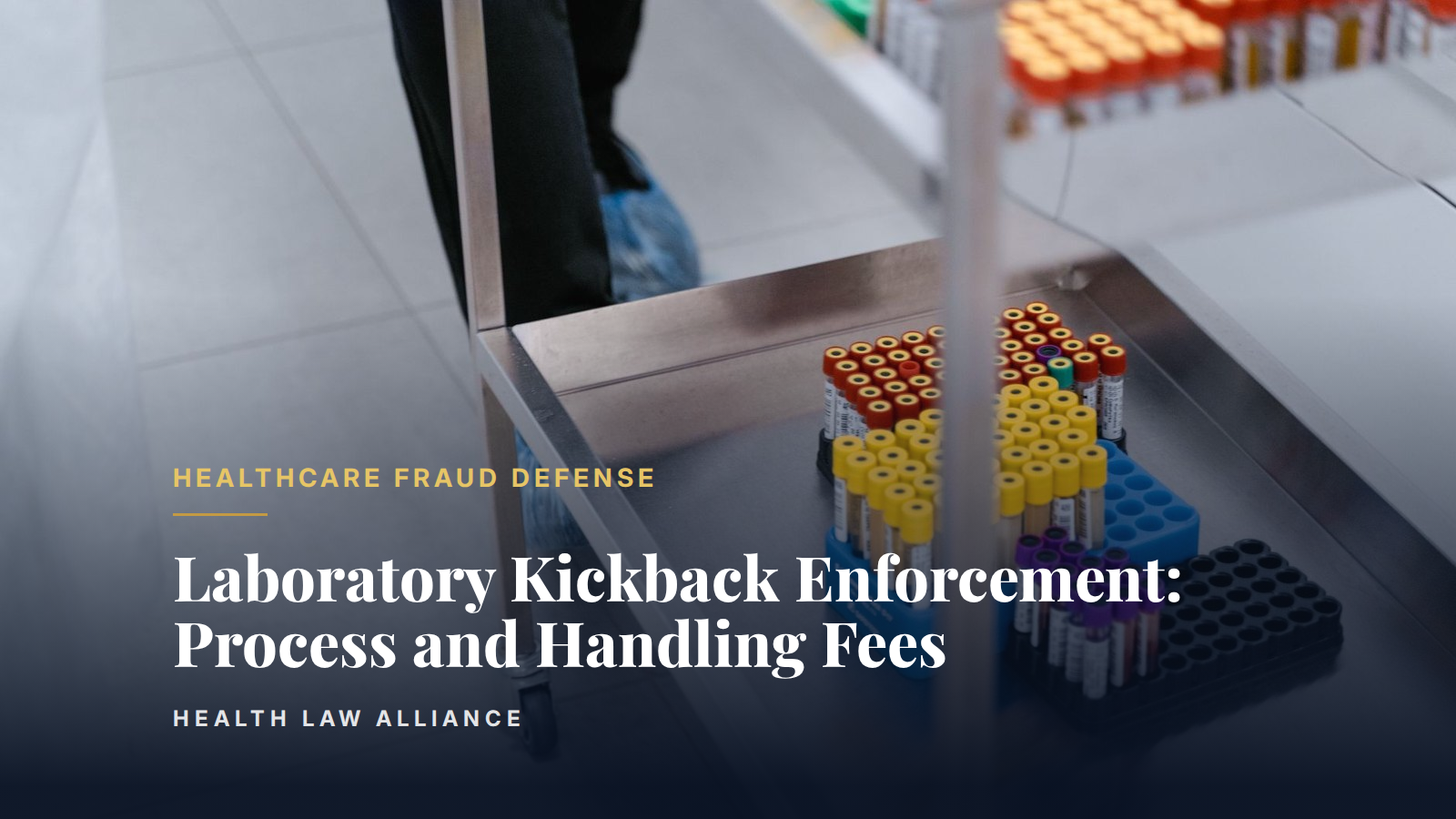
A specimen processing fee is a payment a laboratory makes to a referring physician or practice, billed as compensation for collecting a blood draw, centrifuging it, holding it at a specified temperature, and packaging it for transport. Labs typically structure the fee per specimen or per patient encounter, and it often attaches to the more expensive, higher-margin panels rather than routine bloodwork. OIG's 2014 alert addressed two related patterns: payments for specimen collection, processing, and packaging, and payments for submitting patient data into a laboratory registry. In the government's largest resolved case on this theory, Health Diagnostics Laboratory and Singulex paid physicians $10 to $17 per specimen in processing and handling fees while also waiving patient copayments and deductibles.
Red Flags the OIG and DOJ Treat as Kickbacks
OIG's fraud alert lists specific characteristics that turn a processing fee from overhead reimbursement into an inducement. Payment that exceeds fair market value for the work actually performed is the clearest marker. So is a laboratory paying separately for tasks that Medicare or Medicaid already reimburses through the collection fee built into the test itself. Structure matters as much as amount: a fee routed to the individual ordering physician rather than the group practice that bears the collection cost, a per-specimen charge for more than one tube drawn in a single encounter, and a fee tracking the volume or value of referrals rather than labor performed all read as inducements. A fee conditioned on ordering a specific test or panel is treated the same way, regardless of the label on the invoice.
The dollar amount of a specimen processing fee rarely decides a laboratory kickback case. Whether the fee tracks referral volume instead of actual labor is what turns it into a kickback.
The Theories Prosecutors Use
Two enforcement paths run off the same underlying conduct. Civilly, the government pursues a False Claims Act theory: because a kickback-tainted referral makes every downstream Medicare or Medicaid claim a false claim, exposure multiplies per claim rather than per arrangement. Criminally, the Anti-Kickback Statute is itself a felony statute, and a specimen fee structured as a referral inducement can support charges against the laboratory's executives and the referring physician alike. The scale is not theoretical: Health Diagnostics Laboratory and Singulex paid a combined $48.5 million in April 2015 to resolve allegations tied directly to the 2014 Special Fraud Alert. The same referral can separately implicate the Stark Law when the laboratory is an entity in which the physician holds a financial interest; Stark runs on strict liability, with no intent requirement. A matter that opens with a civil investigative demand can escalate to a grand jury subpoena once investigators conclude the fee schedule was never about specimen handling. Billing Error or Fraud: Where Enforcement Draws the Line walks through the broader distinction between a documentation problem and a fraud theory.
Why Early Legal Counsel Is Critical
It is critical that physicians and laboratory executives promptly retain experienced healthcare defense counsel upon receiving a subpoena, civil investigative demand, audit notice, or other government inquiry touching a specimen processing or handling fee arrangement. Early legal intervention can protect the practice's rights, ensure appropriate responses to government requests, avoid inadvertent admissions, preserve every available defense, and let counsel communicate with investigators on the practice's behalf. Delaying legal representation can significantly affect the outcome of a matter and expose the practice to unnecessary risk, particularly once a grand jury subpoena signals the matter has moved toward criminal exposure.
How Health Law Alliance Can Help
Health Law Alliance defends physicians and laboratory executives against Anti-Kickback Statute and False Claims Act allegations arising from specimen processing, handling, and other referral-based fee arrangements, from the first document request through resolution. Our bench includes a former federal prosecutor and a former senior healthcare-industry executive, a background that informs how the government builds a kickback theory and where it can be challenged. If your practice or laboratory has received a government inquiry into a specimen fee arrangement, contact us for a free, confidential consultation.