Sterile compounding pharmacies that prepare compounded sterile preparations (CSPs) must show, on an ongoing basis, that the staff mixing those preparations can do so without introducing contamination. Under the revised USP General Chapter 797, in effect since November 1, 2023, that showing depends on a specific tool: the media-fill test. A pharmacy that lets an employee's qualification lapse, or that mishandles a failed test, risks a state board of pharmacy citation, suspension of its sterile compounding permit, and difficult questions in any later contamination investigation.
What a Media Fill Test Verifies
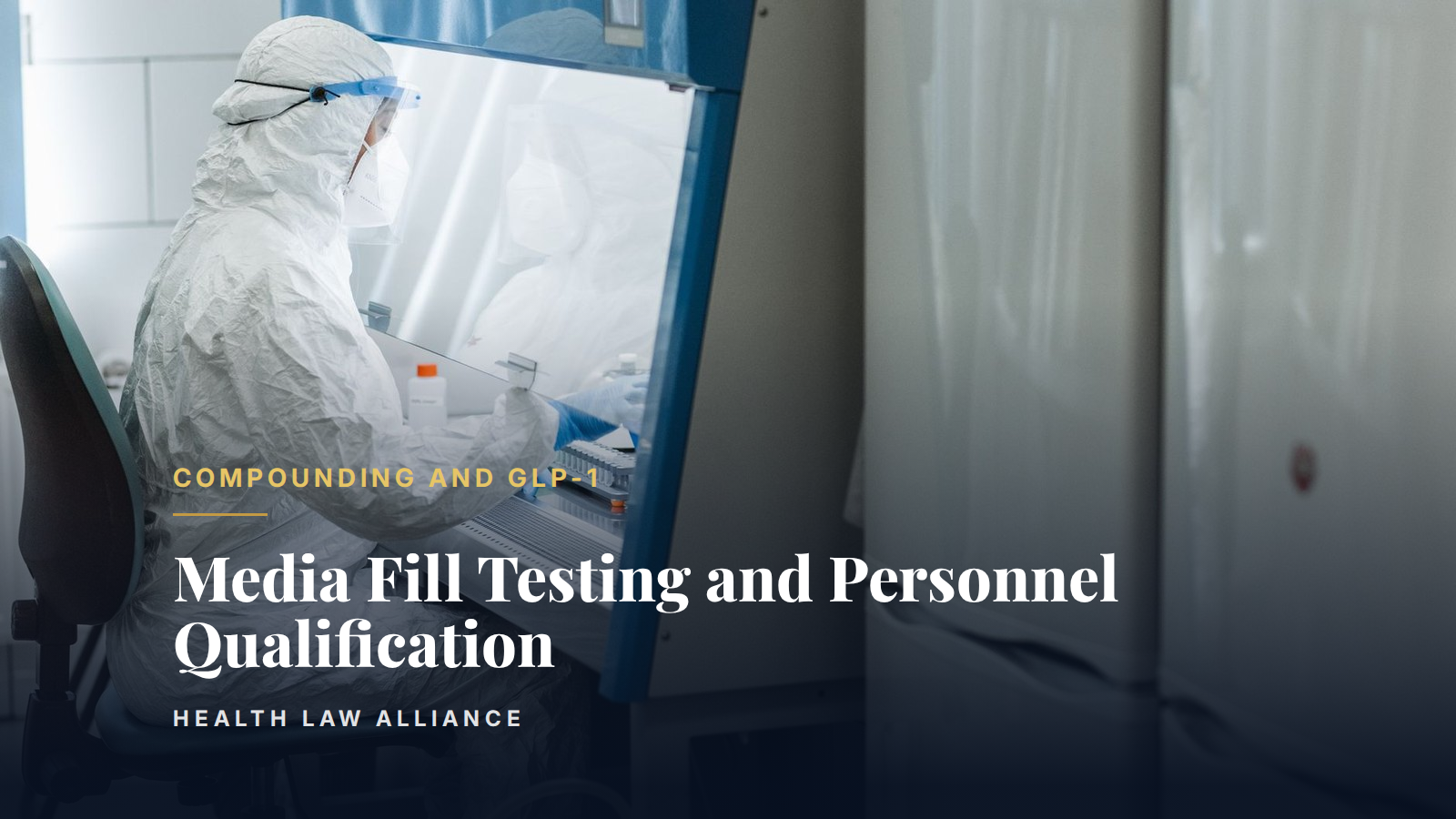
A media-fill test has compounding personnel run through their ordinary aseptic manipulations using a microbiological growth medium in place of an actual drug. The filled containers are incubated, typically for 14 days, and inspected for microbial growth. Under USP 797/800, the media-fill test is one part of a broader aseptic manipulation competency evaluation that also includes gloved fingertip sampling and surface sampling of the direct compounding area. Hand hygiene and garbing technique are assessed separately. Failing either evaluation removes the individual from sterile compounding duty across the board, regardless of the pharmacy's 503A/503B registration status.
How Often Testing Is Required
Personnel must complete initial qualification, generally a series of passing media-fill tests, before compounding sterile preparations without direct supervision. USP 797 then sets the retesting clock by CSP risk category: Category 1 and Category 2 staff must pass a new media-fill test at least every 6 months, while Category 3 staff, who handle preparations carrying extended beyond-use dates and additional processing steps, face a tighter 3-month cycle. Outsourcing facilities registered under Section 503B also carry separate FDA cGMP process validation obligations for each aseptic filling line, on top of the underlying personnel schedule.
Investigating a Failed Test
A failed gloved fingertip sample, a failed media-fill test, or a failed surface sample each result in failure of the aseptic manipulation competency evaluation for that individual. USP 797 calls for more than a retest: a root cause investigation into whether the failure reflects a technique problem, an environmental control failure in the cleanroom, or an issue with equipment or supplies. That investigation should also look backward, at whether sterile preparations the individual compounded before the failure was identified could have been affected.
A single failed media-fill test can force a pharmacy to review every sterile preparation an affected employee compounded before the failure was caught.
Requalifying Compounding Staff
An employee who fails may not resume compounding the affected CSP category until retrained and requalified with a new passing test. Retraining should target the root cause identified in the investigation rather than repeat the original training verbatim. Pharmacies that see failures cluster across multiple staff members, or repeat for the same individual, should shorten testing intervals and examine cleanroom conditions rather than treat each failure as an isolated event. Documentation of every qualification, failure, investigation, and requalification should be retained and ready to produce to a state board inspector. Pharmacies preparing for an on-site review should also see State Board Compounding Inspections: Preparation and Response.
Why Early Legal Counsel Is Critical
It is critical that compounding pharmacies promptly retain experienced healthcare defense counsel upon receiving a state board of pharmacy deficiency notice or inspection finding tied to personnel qualification records. Early legal intervention can protect the pharmacy's rights, ensure appropriate responses to board or FDA requests, avoid inadvertent admissions, preserve relevant defenses, and allow counsel to communicate with investigators or auditors on the pharmacy's behalf. Delaying legal representation can significantly affect the outcome of a matter and expose the pharmacy to unnecessary risk.
How Health Law Alliance Can Help
Health Law Alliance represents sterile compounding pharmacies, pharmacists-in-charge, and outsourcing facilities in state board investigations and federal inquiries tied to personnel qualification, media-fill failures, and cleanroom deficiencies, drawing on the firm's 25+ years of healthcare regulatory experience. Pharmacies facing a board inspection finding, a contamination investigation, or questions about documenting a failed test should review their qualification records with the firm's compounding pharmacy attorneys before responding to regulators. Contact Health Law Alliance for a free, confidential consultation.