A Medicaid dental audit typically tests three things: whether the radiograph on file supports each billed procedure, whether the chart documents medical necessity for restorative work performed instead of extraction, and whether pediatric claims reflect the heightened review that state Medicaid agencies and Medicaid Fraud Control Units now apply to children's dental billing. A compliance officer who cannot produce that documentation on request faces recoupment of the disputed claims and, in more serious cases, referral for a broader program integrity investigation.
Radiograph Support for Every Billed Procedure
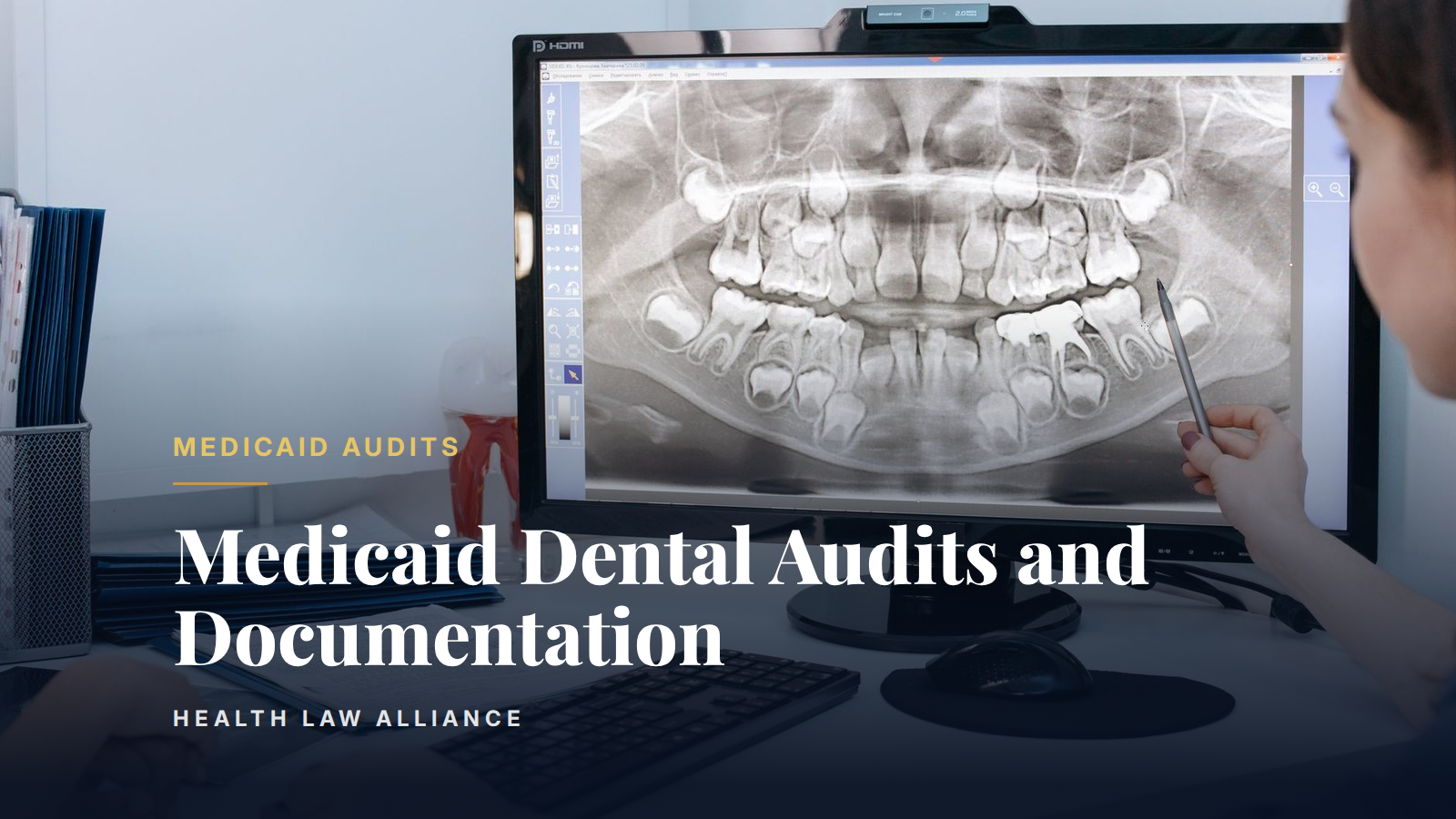
State Medicaid dental manuals generally condition payment for restorative and surgical procedures on radiographs that are diagnostic quality, current, and labeled with the patient's name, the date the image was taken, and left or right orientation. An auditor reviewing a restoration, extraction, or pulpotomy claim expects the film to show the specific tooth or area billed, not a series taken for an unrelated visit. A radiograph that is illegible, outdated, or missing from the chart converts an otherwise defensible claim into one subject to recoupment, regardless of whether the treatment itself met the standard of care.
Medical Necessity Documentation for Restorative Work
A Medicaid auditor reviewing restorative work is not evaluating the quality of the dentistry performed. The auditor is asking whether the chart shows, before the procedure, why restoration rather than extraction was the appropriate course for that tooth, supported by the patient's dental and medical history. Problem focused evaluations, billed under CDT code D0140, carry their own documentation burden: the specific complaint, the tooth or area examined, and the clinical findings that justified treating the visit as urgent rather than routine. A prior authorization request that lacks that narrative, or a chart note that repeats identical language across many patients, is one of the clearest signals that leads a state Medicaid agency to send a self-audit demand letter.
Heightened Scrutiny of Pediatric Dental Claims
The HHS Office of Inspector General has audited pediatric dental billing in several states because children's Medicaid claims draw disproportionate fraud risk. In California, the Office of Inspector General identified 335 dental providers, including 329 general dentists and 6 orthodontists, with questionable billing patterns tied to $117.5 million in 2012 Medicaid payments, concentrated among dental chains billing high volumes of pulpotomies and extractions performed on children. State Medicaid Fraud Control Unit investigators apply that same pattern recognition to practices whose pediatric billing volume or procedure mix stands out among their peers, and in some cases the state Medicaid agency will impose a payment suspension while the investigation proceeds, cutting off reimbursement before the audit concludes. A pattern read as fraud rather than error can also result in False Claims Act liability or exclusion from federal health care programs under OIG exclusion authority.
A Medicaid dental audit tests the chart, not the chairside skill of the dentist who treated the patient.
Why Early Legal Counsel Is Critical
It is critical that a dental practice's compliance officer retain healthcare defense counsel as soon as a Medicaid dental audit letter or self-audit demand arrives, rather than after the state issues a recoupment demand or a Medicaid Fraud Control Unit referral. Early counsel can review the radiograph and medical necessity file before it is produced, distinguish genuine documentation gaps from true billing errors, and preserve the practice's right to an audit appeal within the deadline set by the state's notice. A practice that waits until after an adverse audit finding has fewer options for correcting the record and a narrower window to negotiate before recoupment begins.
How Health Law Alliance Can Help
Health Law Alliance represents dental practices and other Medicaid providers in audits, self-audit demands, and Medicaid Fraud Control Unit inquiries as part of the firm's Medicaid audit defense practice. If your practice has received a Medicaid dental audit notice and needs its radiograph and medical necessity documentation organized before a state or federal reviewer arrives, contact us for a free, confidential consultation.