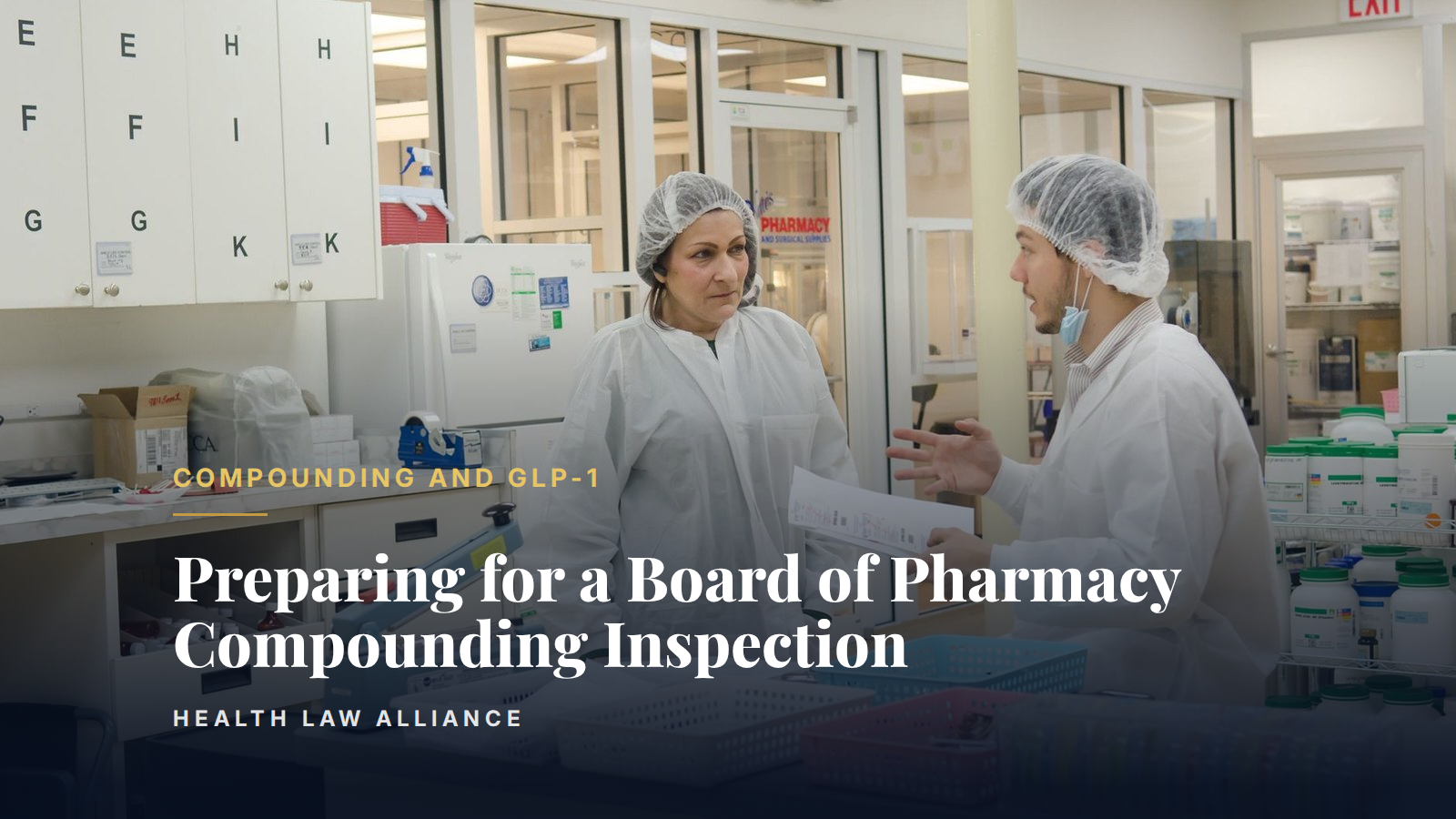
A Board of Pharmacy compounding inspection can be announced or unannounced, and most state boards hold broad statutory authority to enter a licensed pharmacy, review records, and observe compounding operations. The inspection tests whether daily practice matches USP General Chapter <795>, USP General Chapter <797>, and USP General Chapter <800>, the standards most states have adopted by reference into their pharmacy practice acts. A pharmacy that has already staged its compliance file, reconciled its beyond-use dating logs, and corrected known gaps is answering the inspector's questions from a documented record. A pharmacy that finds those same gaps for the first time, at the moment the inspector points to them, is starting the conversation from an open deficiency. Preparing for a compounding inspection is largely a matter of running a mock inspection against the same standards the board will use, and closing gaps before they become findings.
What Board Of Pharmacy Inspectors Review
State boards of pharmacy are the primary regulators of 503A compounding pharmacies, and an inspector's document request generally tracks the same categories every time: garbing and hand hygiene logs, environmental monitoring and viable air sampling results, equipment certification and calibration records, personnel training and competency assessments, master formulation and compounding records, and the beyond-use date assigned to every preparation currently on the shelf. A pharmacy that also compounds for office use, or that operates a 503B outsourcing facility alongside its retail operation, should expect a request for cGMP documentation under 21 CFR Parts 210 and 211 as well, since that federal framework governs 503B operations directly, while 503A pharmacies remain primarily state-regulated under the USP chapters. Our companion articles on the compliance file inspectors ask for and on which framework governs a given compounding operation walk through how to organize each category before an inspection date is ever set.
Running A Mock Inspection Before The Board Does
A mock inspection means walking the compounding area with the same checklist a board inspector would use, then testing whether the paperwork actually supports what is on the shelf. That includes pulling a sample of finished preparations and confirming the assigned beyond-use date matches the compounding category and storage conditions under USP <795> and <797>, checking that environmental monitoring logs have no unexplained gaps, and confirming that every technician compounding sterile preparations has a current, dated competency assessment on file. A pharmacy that also handles hazardous drugs should verify its USP <800> containment, personal protective equipment, and closed-system transfer device records separately, since board inspectors increasingly treat hazardous drug handling as its own line item rather than folding it into the sterile compounding review.
Correcting Findings Before They Become Board Action
The gap between a routine inspection finding and formal board discipline is usually the pharmacy's own response. A single missing log or an isolated documentation lapse, corrected promptly with a written corrective action plan, is typically resolved at the inspection level. A pattern of uncorrected gaps, an expired beyond-use date on a dispensed preparation, or repeat findings from a prior inspection is the fact pattern that moves a board from a corrective action request toward a formal complaint, a notice of hearing, and license discipline, including suspension, revocation, or a monetary fine. A pharmacy that identifies a deficiency on its own, documents the correction, and can show the board a dated record of that correction is in a materially different posture than one where the inspector finds the same gap first.
A deficiency a pharmacy finds and corrects before the inspection is a compliance record. The same deficiency, found first by a board inspector, is the opening line of an inspection report.
Why Early Legal Counsel Is Critical
It is critical that pharmacies retain healthcare defense counsel before a mock inspection reveals a deficiency, or immediately upon receiving board of pharmacy inspection findings. Early legal involvement can shape how a corrective action plan is written, ensure responses to the board do not become unintended admissions, and preserve the pharmacy's defenses if a finding later escalates toward a formal complaint. Delaying legal representation until a hearing notice arrives narrows the options available to resolve the matter short of license discipline.
How Health Law Alliance Can Help
Health Law Alliance defends compounding pharmacies in board of pharmacy inspections, corrective action negotiations, and formal disciplinary proceedings nationwide. Our bench includes counsel who structure pre-inspection self-audits, review 503A and 503B compliance files, and respond once a board has already opened an inquiry. If your pharmacy wants to review its USP <795>, <797>, or <800> compliance file, beyond-use dating logs, or an open board finding before it escalates, contact us for a free, confidential consultation.