
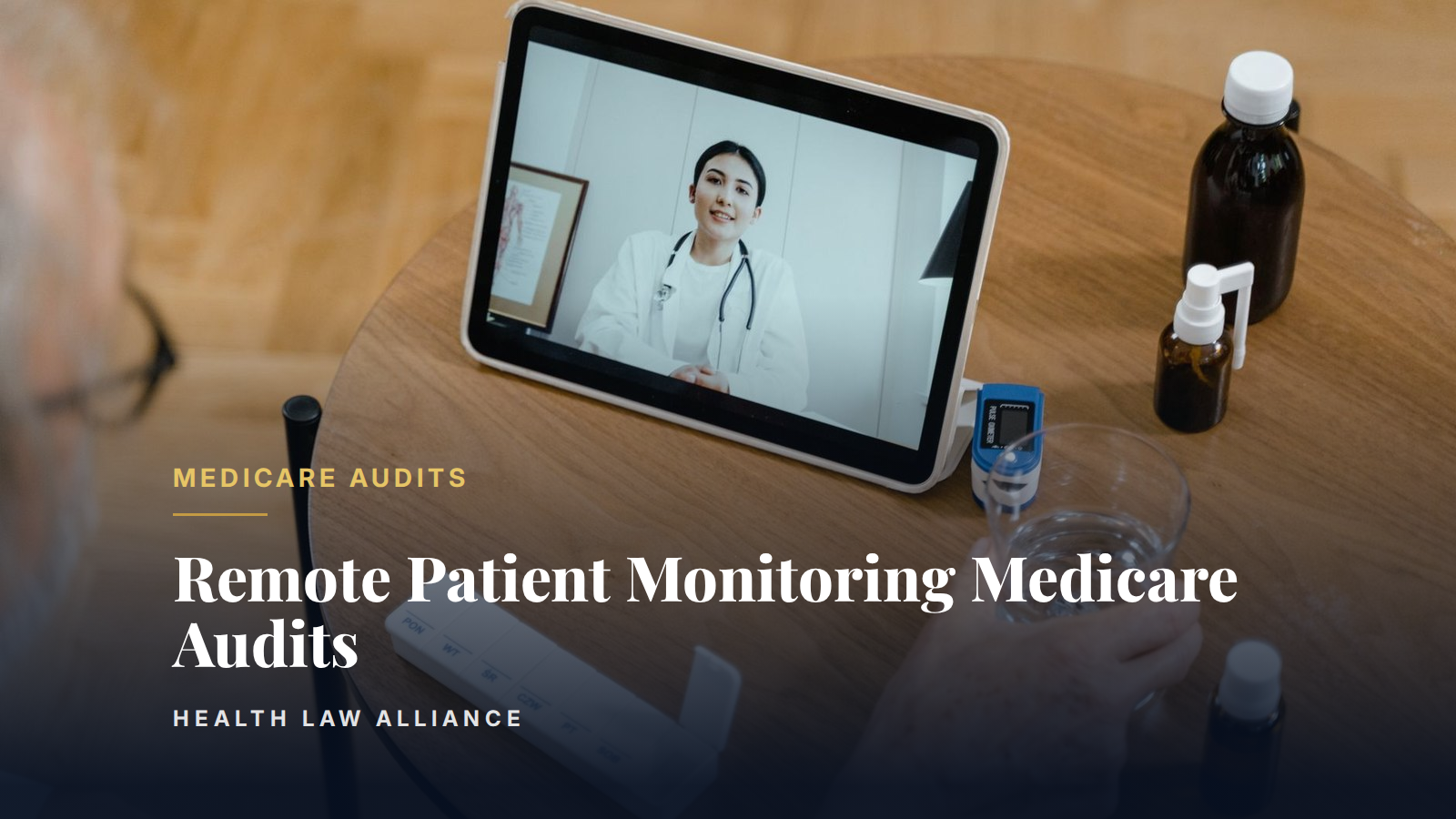
Medicare paid $536 million for remote patient monitoring in 2024, a 31 percent increase over the prior year, and the HHS Office of Inspector General is now examining the claims behind that growth, per its August 2025 data snapshot. For physicians billing CPT 99453, 99454, 99457, and 99458, the exposure sits in three mechanical requirements: whether the device actually transmitted data on enough days, whether the monthly management time included a real interactive conversation with the patient, and whether the practice can explain why its RPM enrollment grew as fast as it did. A missing device-day or an undocumented phone call is enough to turn a routine RPM claim into a multi-year audit finding.
Device-Day Thresholds Under CPT 99453 and 99454
CPT 99454 pays for the RPM device supply and data transmission for a 30-day period, but only when the device recorded and transmitted physiologic data on at least 16 of those 30 days. CPT 99453 covers the one-time device setup and patient education for the episode of care and is not billed again in the same 30-day cycle. Beginning January 1, 2026, CMS added CPT 99445 for monitoring periods of 2 to 15 days at a lower payment rate, per the CY 2026 Medicare Physician Fee Schedule final rule, which means a claim billed at the 99454 rate now has to show it actually reached the 16-day floor, not the shorter one. Few Medicare Administrative Contractors have adopted an RPM-specific local coverage determination, so contractors instead compare the device transmission log against the billed code, and identical or batch-entered readings are a common basis for denial.
Interactive Communication Requirements for 99457 and 99458
CPT 99457 pays for the first 20 minutes of clinical staff time managing RPM data in a calendar month, and CPT 99458 pays for each additional 20 minutes. Both require at least one interactive communication with the patient or caregiver during the month, meaning a real-time, two-way conversation. A live phone call satisfies the requirement; a portal message, text message, or asynchronous chart note does not. CMS also added CPT 99470 for 10 to 19 minutes of monthly management time, but it did not relax the interactive-communication requirement itself. Recovery Audit Contractors (RACs) and Unified Program Integrity Contractors reviewing 99457 and 99458 claims look for time logs that document when the conversation happened and what was discussed, not just a running minute total.
OIG's Enrollment Volume Scrutiny
The OIG's August 2025 data snapshot on RPM billing flagged five patterns for further review: enrollment spikes of 150 percent or more in a single month, a high share of patients billed with no documented prior relationship to the practice, device charges without a corresponding month of management time, overlapping claims from multiple providers for the same beneficiary, and two or more devices billed per patient every month. In June 2025, Dr. Subodh Agrawal and his Georgia practice, Health Wealth Safe, Inc., paid $1.29 million to resolve False Claims Act allegations that RPM claims were billed for patients whose devices did not automatically collect and transmit readings, the same requirement CPT 99454 exists to document. Once a contractor identifies one of these patterns, extrapolation lets it apply the sample error rate across the full audit period, turning a handful of flagged patients into a recoupment demand covering the practice's entire RPM panel. A practice contesting the finding, or the government's broader suspension of payments authority in a credible-allegations posture, faces a narrow procedural window to respond.
An enrollment spike that looks like practice growth on a dashboard can look like a billing pattern under audit.
Why Early Legal Counsel Is Critical
It is critical that physicians promptly retain experienced healthcare defense counsel upon receiving an audit notice, documentation request, or other government inquiry involving remote patient monitoring claims. Early legal intervention can protect the physician's rights, ensure the response accounts for both the device-day and interactive-communication requirements, avoid inadvertent admissions, and preserve defenses that may otherwise be lost. Delaying representation can significantly affect the outcome of the matter.
How Health Law Alliance Can Help
Health Law Alliance defends physicians against Medicare audits of remote patient monitoring billing, including device-day disputes, interactive-communication findings, and enrollment-volume inquiries tied to the OIG's current review. Our bench includes a former federal prosecutor and a former senior healthcare compliance executive, background that shapes how we evaluate which flagged claims are defensible. If your practice has received an audit notice involving RPM claims, contact us for a free, confidential consultation.