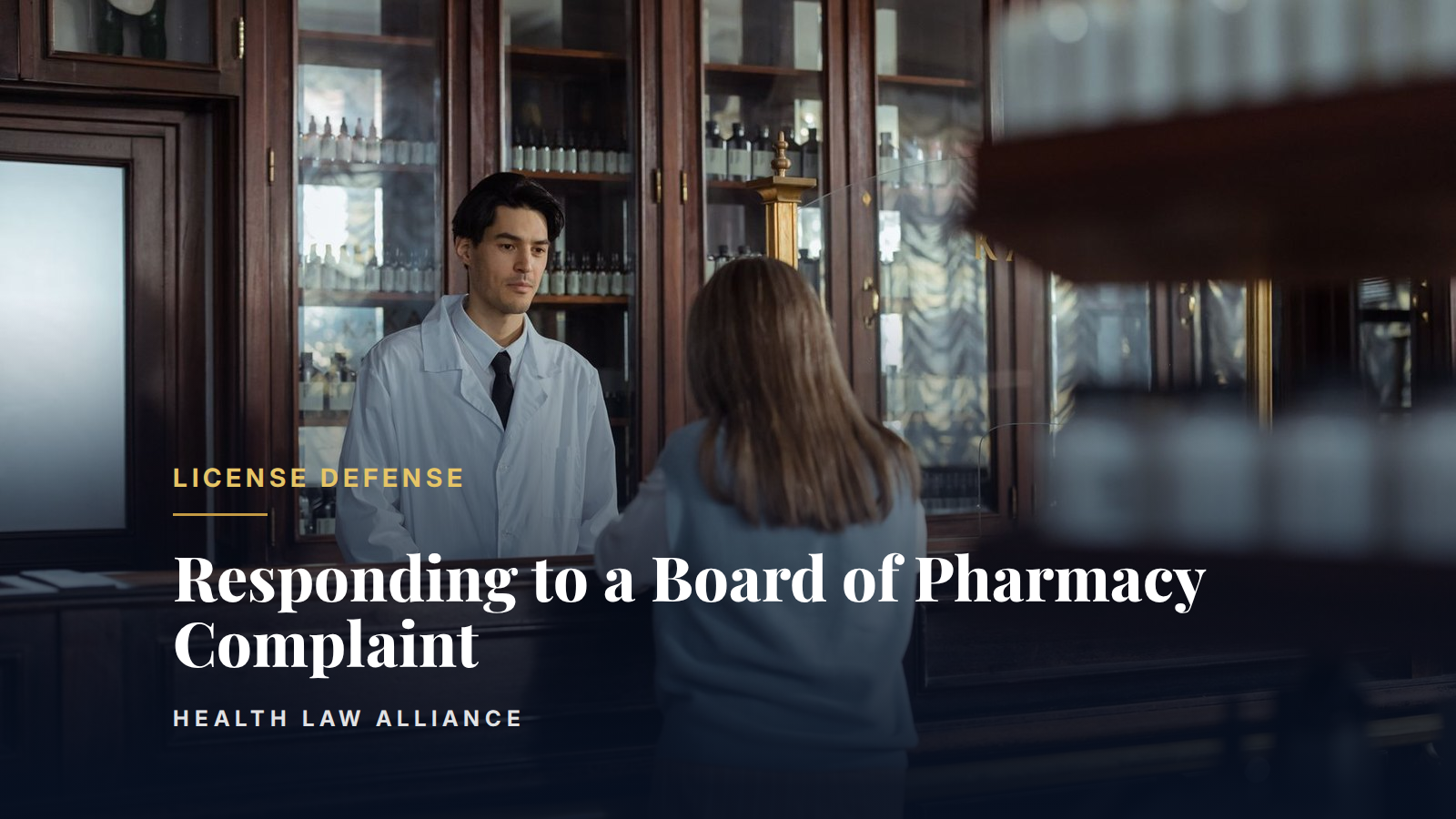
A board of pharmacy complaint arrives as a letter, not a hearing date, and that gap is where most pharmacists-in-charge do the most damage to their own case. The letter names the allegation and sets a window to submit a written statement, request an informal conference, or wait for a formal proceeding. Every state board runs its own process, on its own statute and its own clock, so the deadline and the board's investigative powers depend on which state board sent the letter. What does not vary is this: whatever a pharmacist writes back in the first response becomes part of the permanent record the board builds the case on.
What a Complaint Notice Actually Starts
A board complaint can originate from a patient, a competitor, an employer, a dispensing error report, a PBM audit referral, or a mandatory report from a hospital or another pharmacist. Most boards open a file, assign an investigator, and send the licensee written notice of the allegation before any hearing is scheduled. That notice states a deadline set by the board's own procedural rule, and often names the statute or regulation at issue. Some boards also authorize an investigator to request records, interview staff, or issue a subpoena for pharmacy records before the licensee has spoken with counsel. Treating the notice as routine paperwork rather than the opening move of a legal proceeding is the first mistake.
What to Concede, and What to Leave to Counsel
A written response is an opportunity to correct the record, not an obligation to answer every question the investigator poses. Pharmacists-in-charge should confirm objective facts already documented, a fill date, a National Drug Code, a staffing schedule, since disputing what the board can independently verify costs credibility for no benefit. What should not go in is a characterization of intent, an assessment of fault, or an apology framed as an admission. Conceding a fact is not the same as conceding a violation, and a response that blurs the two hands the board a finding it would otherwise have to prove. A matter can also widen: a dispensing-error complaint touching controlled substances can draw a parallel DEA look, and one involving a federal healthcare program can prompt an OIG exclusion referral or a target letter from federal prosecutors. A response drafted without that wider view can create exposure outside the board's own docket.
A response written before counsel reviews the file does not just answer the board's question. It sets the terms of every question that follows.
How an Early Statement Binds a Later Case
Board investigators build the file from the first response forward. A phrase meant to explain context, describing a busy shift or a short-staffed pharmacy, can be read into the record as an admission of a systemic problem rather than a one-time lapse. If the matter does not resolve at the investigative stage, it proceeds to either an informal conference, where board staff and counsel discuss the evidence and a negotiated consent order is often the outcome, or a formal disciplinary hearing where the board's counsel can question the licensee about inconsistencies with that first written statement. A pharmacist who volunteered an unfavorable characterization months earlier has no way to walk it back once it is part of the record the hearing officer reads.
Where the Matter Can Run Beside the Board Case
A board complaint rarely travels alone when the underlying conduct also touches a PBM contract, a Medicare or Medicaid billing pattern, or a controlled-substance record. A board finding can support a PBM's network termination decision, and a case beside a criminal referral raises the stakes of every word in the response. License Cases That Run Beside Criminal Investigations covers coordinating a response across both tracks. Where impairment is at issue, the board may raise diversion to a monitoring program instead of formal discipline; Monitoring and Impaired-Practitioner Programs: Entry, Terms, and Exit covers what that track requires to enter and to exit.
Why Early Legal Counsel Is Critical
It is critical that pharmacists retain experienced healthcare defense counsel promptly upon receiving a board of pharmacy complaint notice, before submitting any written response. Early legal intervention can protect the licensee's rights, shape a response that answers the board's actual question without volunteering an admission, and preserve defenses that a rushed reply can waive. Delaying counsel until after the first response is submitted leaves far less room to correct course.
How Health Law Alliance Can Help
Health Law Alliance has represented 2,500+ clients before state licensing boards over 25+ years, drafting board responses that protect the record from the first letter forward. Our professional license defense attorneys review the complaint and any parallel exposure before a single word goes back to the board. Contact Health Law Alliance for a free, confidential consultation before you respond.