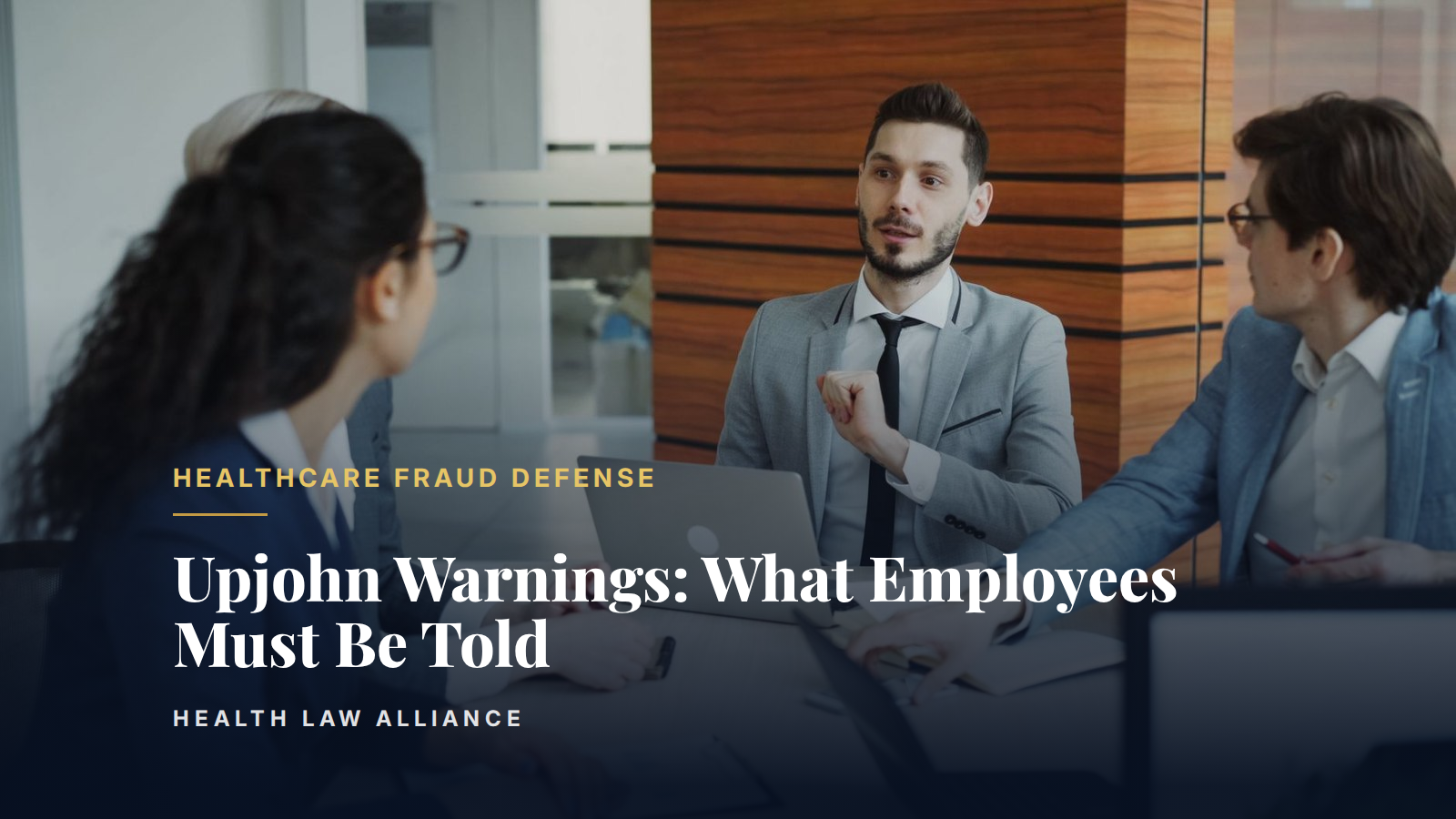
A compliance officer sitting in on an internal investigation interview will often hear company counsel open with a short disclosure known as an Upjohn warning. The name comes from Upjohn Co. v. United States, the 1981 Supreme Court decision that extended attorney-client privilege to communications between corporate employees and company counsel. The warning tells the employee being interviewed one thing above all else: the lawyer in the room represents the company, not them. Getting that disclosure wrong, or skipping it, can cost the company the privilege the interview was supposed to protect.
What an Upjohn Warning Covers
The warning covers three points, and all three have to be said aloud rather than assumed. First, counsel represents the company under investigation, not the individual employee answering questions. Second, the privilege created by the interview belongs to the company alone; the employee cannot invoke it to keep their own statements confidential. Third, the company may later waive that privilege and share the substance of the interview with regulators or prosecutors, including in the middle of responding to a civil investigative demand or a grand jury subpoena. An employee who assumes the lawyer is protecting them personally has misunderstood the room before the first question is asked.
Why the Warning Exists
Upjohn Co. v. United States, 449 U.S. 383 (1981), rejected a rule that let privilege attach only to communications with a company's top decision-makers, holding instead that lower-level employees who supply the facts counsel needs to give sound legal advice are covered as well. That protection carries an ethical condition. ABA Model Rule 1.13(f) requires a lawyer for an organization to clarify who the client is whenever the lawyer knows, or reasonably should know, that the organization's interests and an employee's interests may diverge. The Upjohn warning is how that duty gets satisfied in practice, delivered at the start of the interview rather than assumed.
What Happens When the Warning Is Skipped
An employee who was never told the lawyer represented the company can later argue they reasonably believed the conversation was personal and privileged to them, not something the company could disclose without their consent. Courts have relied on that kind of misunderstanding to find no valid, informed waiver occurred, which can undercut the company's own claim to protection over the interview record. The same gap creates a conflict of interest for counsel, since a lawyer who let an employee believe they were also being represented is now positioned against someone they arguably owed duties to. Beyond the privilege exposure, that carries its own professional cost: bar complaints, and in the more serious cases, malpractice claims against the attorney who ran the interview.
An Upjohn warning protects the company's privilege. It does not protect the employee answering the questions, and the warning exists to make sure the employee hears that distinction before they talk, not after.
Why This Matters Before a Subpoena Arrives
Internal investigations in a healthcare fraud matter rarely start in a vacuum. A referral arrangement that implicates the anti-kickback statute or the Stark Law puts company counsel in front of the same employees who will later face questions from DOJ or HHS-OIG. The distinction between those two statutes, covered in Stark Law vs the Anti-Kickback Statute: The Differences That Matter, often determines which employees get interviewed first and what the warning needs to address. Compliance officers coordinating those interviews carry real exposure of their own if they are treated as fact witnesses rather than as protected communicants speaking for the company. Knowing which is happening in the room, before answering, is the entire point of the warning.
Why Early Legal Counsel Is Critical
It is critical that healthcare organizations retain experienced healthcare defense counsel promptly after learning of a civil investigative demand, grand jury subpoena, or other government inquiry that could prompt an internal investigation. Early legal intervention can determine how interviews are structured, whether Upjohn warnings are properly documented, and whether the privilege built during the investigation survives a later challenge. Delaying legal representation can significantly affect the outcome of a matter and expose both the company and the individual employees involved to unnecessary risk.
How Health Law Alliance Can Help
Health Law Alliance has represented 2,500+ clients across 25+ years of federal and state healthcare fraud investigations, including matters that began as internal investigations before a government inquiry followed. Our healthcare fraud defense attorneys can structure internal investigation interviews, deliver and document Upjohn warnings correctly, and advise employees on when they need their own counsel. Contact Health Law Alliance for a free, confidential consultation before your next internal investigation interview.