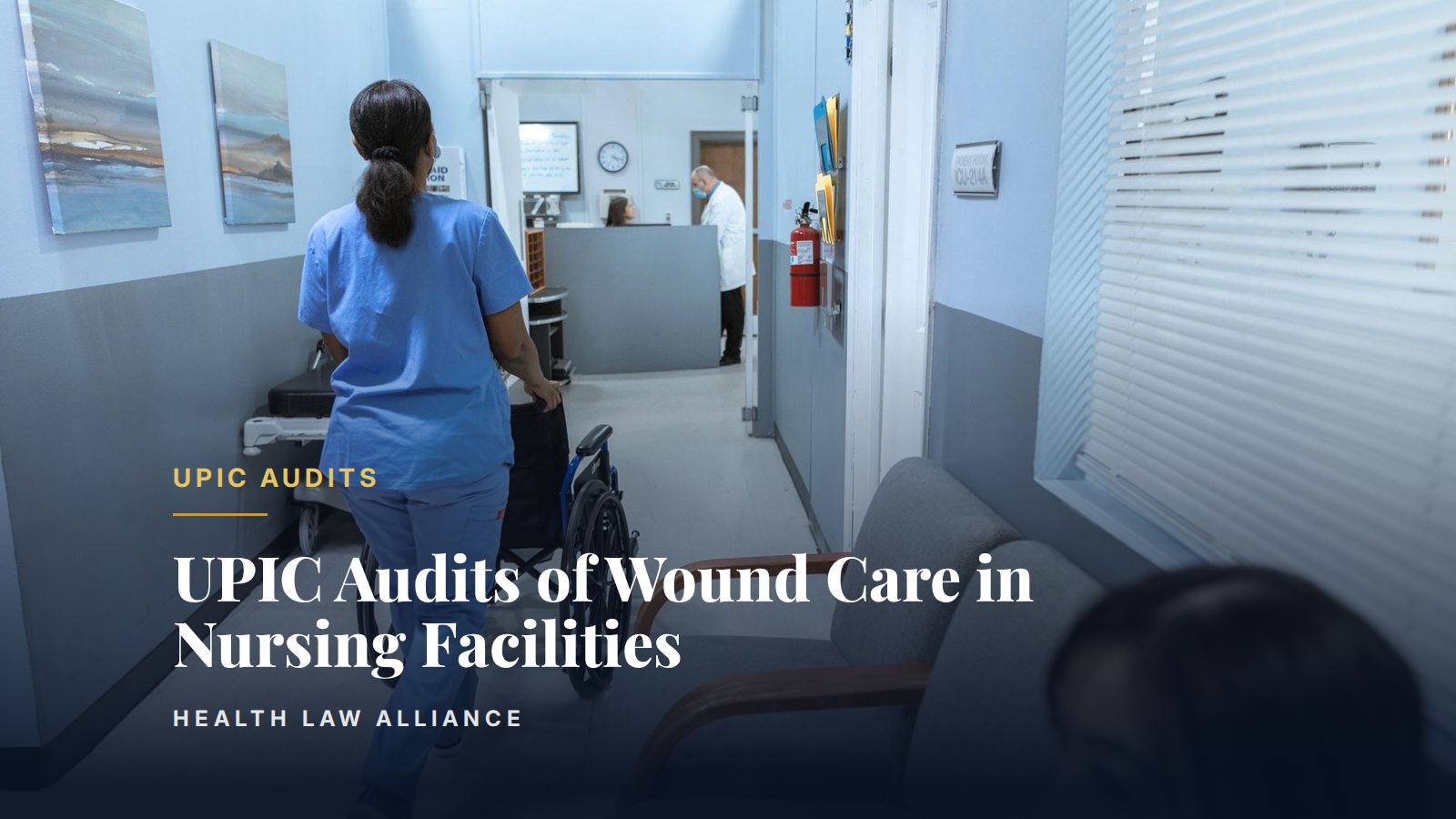
Unified Program Integrity Contractors (UPICs) conduct prepayment and post-payment medical review of wound care billed to nursing facility residents by outside physician groups that visit on a recurring schedule and bill Medicare directly for debridement, skin substitute application, and related bedside procedures. The exposure is concrete. On November 21, 2025, the Department of Justice announced a $45 million civil False Claims Act settlement with Vohra Wound Physicians and its owner, resolving allegations that the practice, one of the nation's largest providers of bedside specialty wound care in nursing homes and skilled nursing facilities, pressured physicians to perform debridement at nearly every visit regardless of medical need and programmed its billing software to default to the higher-paying surgical procedure code.
The Bedside Wound Care Model Under Review
The Vohra settlement describes a structure common across nursing facility wound care: a physician group contracts with facilities to see residents on a rotating circuit and bills Medicare Part B directly for each encounter. The Department of Justice alleged Vohra set volume-based incentives pushing physicians toward the surgical excisional debridement code over conservative wound care, and configured its billing software to generate documentation supporting the higher code regardless of what the clinician did. The settlement includes a five-year Corporate Integrity Agreement with the HHS Office of Inspector General, requiring an independent review organization to monitor Vohra's claims.
Skin Substitute Volume as a Separate Signal
Skin substitute billing draws its own scrutiny. A September 2025 report from the HHS Office of Inspector General found Medicare Part B spending on skin substitutes in non-institutional settings rose from roughly $400 million to nearly $3 billion per quarter in two years, surpassing $10 billion annually by the end of 2024, on an 83 percent rise in units paid and a 153 percent rise in the average payment per unit. Nursing facility wound care runs through a different billing path, since a resident's attending physician bills Part B directly rather than through an office visit code. The incentive the OIG described, Medicare paying a provider more for a graft than its acquisition cost, applies wherever the product is billed, which is why a UPIC audit of nursing facility wound care can include the grafts a mobile provider bills across its resident panel.
Nursing Home Records Enter the File
The Medicare Program Integrity Manual lists nursing home records among the additional documentation a reviewer may request, alongside physician office and hospital records. For a mobile wound care practice, a UPIC can request the facility's own nursing notes and wound measurement logs for the same date of service as the billed procedure, not only the billing physician's chart. A companion article explains the request format; the deadline is shorter than most providers expect. Under 42 CFR 405.903 and 405.929, providers have 30 calendar days to respond to a UPIC additional documentation request, against 45 days for a Medicare Administrative Contractor, Recovery Audit Contractor, or Supplemental Medical Review Contractor request. Under 42 CFR 405.930, a reviewer denies the claim for missing that window even when the service was medically necessary.
A UPIC audit of nursing facility wound care reaches past the billing provider's own chart, into the facility's nursing notes and wound logs, to test whether the billed procedure matches what the resident's own caregivers recorded.
What a Finding Can Cost
When a UPIC identifies a documentation or medical necessity gap, the result is a recoupment demand covering every claim reviewed, not a single visit. Every entry a mobile provider bills needs a legible signature identifying the treating clinician, with a signature log available to resolve an illegible one, and a note that stands on its own, independent of the facility's assessment of the resident. A UPIC audit of nursing facility wound care is, in practice, two audits side by side: the billing provider's chart and the facility's own record of the same resident.
Health Law Alliance's attorneys have overseen 2,000+ audits and handled 5,000+ matters, with 25+ years of experience.
Why Early Legal Counsel Is Critical
It is critical that nursing facility wound care providers promptly retain experienced healthcare defense counsel upon receiving a UPIC audit notice, an additional documentation request, or a target letter tied to bedside wound care billing. Early legal intervention can protect the provider's rights, ensure appropriate responses to government and contractor requests, avoid inadvertent admissions, preserve relevant defenses, and allow counsel to communicate with investigators or contractors on the provider's behalf. Delaying legal representation can significantly affect the outcome of a matter and expose the provider to unnecessary risk.
How Health Law Alliance Can Help
Health Law Alliance represents mobile and bedside wound care practices and skin substitute suppliers in UPIC audits and the recoupment demands that follow. Our attorneys build the defense file from both sides of the chart, the billing provider's documentation and the facility's own nursing records, before a response goes to the contractor. If your practice is facing a UPIC audit tied to nursing facility wound care, contact our wound care audit defense attorneys for a free, confidential consultation.