Wound care practices building a telehealth schedule alongside their in-person clinic have to decide, before the chart is written, which portions of a visit actually happened in front of the patient. Medicare covers a limited set of wound care services by telehealth: history review, photograph-based reassessment, and general follow-up. Debridement, wound bed preparation, and applying a skin substitute graft require the clinician's hands on the tissue and stay outside that coverage entirely. A hybrid practice that blurs the two in its documentation hands a reviewer a ready-made finding.
What Can Be Assessed by Telehealth
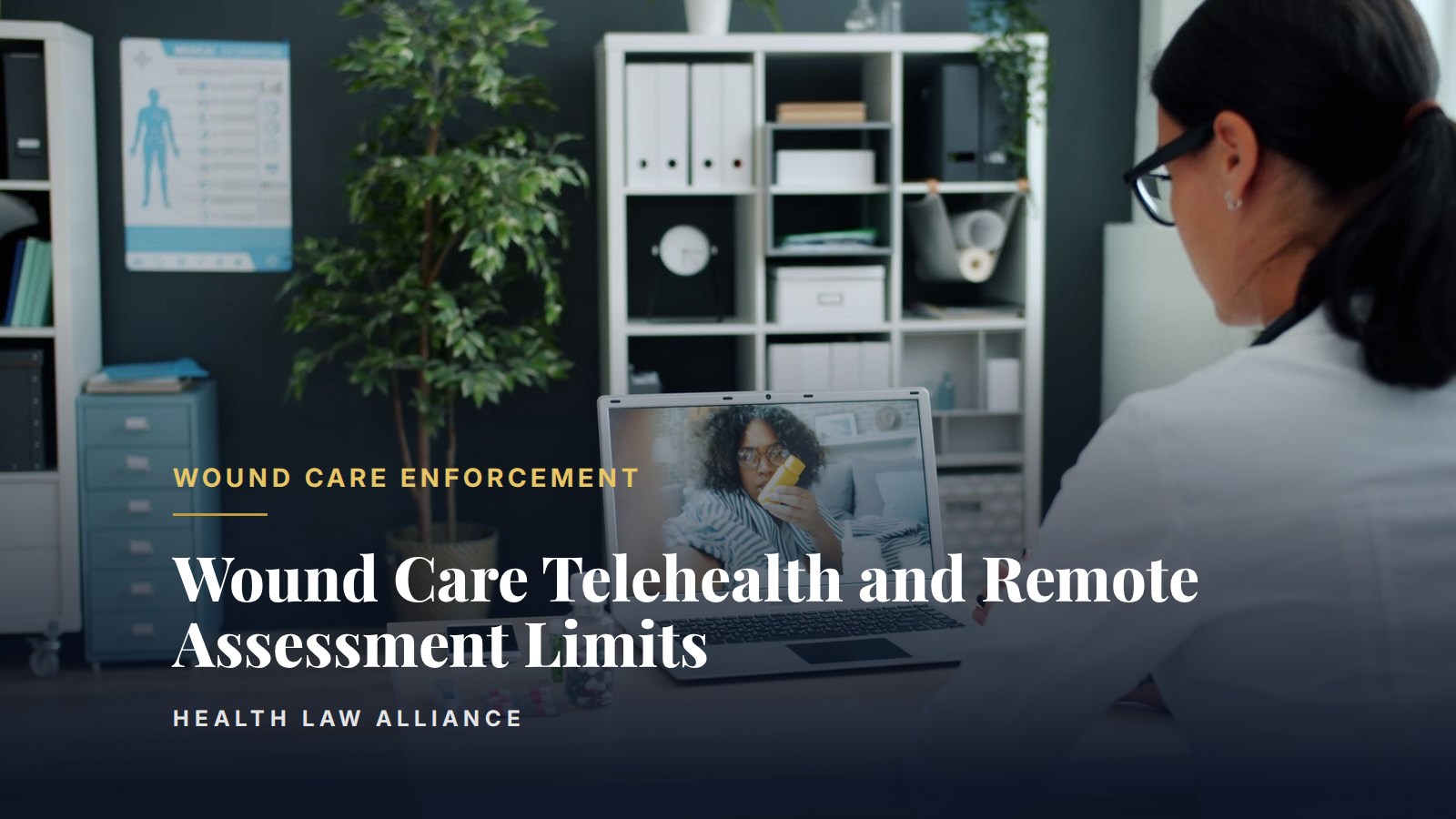
The Centers for Medicare & Medicaid Services maintains its own list of covered telehealth services, and the flexibilities that let a patient receive that care at home rather than travel to a rural originating site have been extended through December 31, 2027 under the most recent federal legislation, per KFF's summary of Medicare telehealth coverage. Within that coverage, the services best suited to remote delivery are the ones that do not depend on physically touching the wound: history-taking, medication reconciliation, visual inspection through a clear photograph or live video, and counseling on offloading, nutrition, or home wound care supplies. A telehealth encounter can also triage whether a wound has changed enough to move up the next in-person appointment. None of that requires a hand on the patient.
Why Debridement Requires an In-Person Visit
Debridement removes necrotic, devitalized, or infected tissue from a wound, a procedure that requires the clinician to be physically present to perform it. The same is true of sharp debridement, wound bed preparation before grafting, and applying a skin substitute: each is a hands-on procedure, not an evaluation, so no telehealth flexibility extends coverage to the act itself. Practices that bill a procedural wound care code for a date of service logged as telehealth invite a payer to ask, correctly, how the procedure was physically carried out. The safer posture treats every procedural code as an in-person-only event and reserves telehealth for the assessment and follow-up components of care.
A telehealth visit can identify that a wound needs debridement. It cannot perform the debridement.
Documenting a Hybrid Wound Care Model
A hybrid practice's chart has to show, for every encounter, which modality it was and why that modality fit what happened that day. Each note should state the visit type, the technology used, and who was present with the patient. A local coverage determination for wound care typically ties medical necessity to specific measurement and description elements, and the note should say whether those elements came from an in-person exam or a telehealth encounter rather than reading identically to an office visit either way. The practice's signature log matters just as much in a hybrid model: the log has to identify which clinician performed which portion of care, in person or remotely, so a reviewer can match the claim to the provider who actually rendered it.
Where Hybrid Charts Draw Audit Scrutiny
Reviewers auditing hybrid practices look first for a procedural code billed on a date the chart also flags as a telehealth encounter, the mismatch that turns a documentation gap into a payment dispute. Medicare Wound Care Documentation: The Chart That Survives Audit covers the documentation elements a wound care chart needs regardless of modality. Physician Office Wound Care Billing: Site-of-Service and Supply Audits covers how site-of-service errors compound once a practice runs both in-office and telehealth schedules. Skin Substitute Audits: Product Selection, Size, and Frequency Findings addresses the graft-specific documentation that a telehealth visit alone can never satisfy, since product selection and application both require an in-person encounter.
Why Early Legal Counsel Is Critical
It is critical that wound care providers retain experienced healthcare defense counsel promptly upon receiving an audit notice, prepayment review letter, or other government inquiry tied to telehealth or hybrid billing. Early legal intervention can protect the practice's rights, ensure accurate responses to the payer's requests, avoid inadvertent admissions about how a visit was conducted, preserve relevant defenses, and allow counsel to communicate with the reviewer on the practice's behalf. Delaying legal representation can significantly affect the outcome of a matter and expose the practice to unnecessary recoupment risk.
How Health Law Alliance Can Help
Health Law Alliance has represented 2,500+ clients across wound care, skin substitute, and Medicare and Medicaid audit matters over 25+ years, defending practices that run hybrid telehealth and in-person schedules. If a payer has flagged a telehealth-billed encounter or a hybrid documentation pattern, our wound care audit defense attorneys can review the chart against the applicable coverage rules before the practice responds. Contact Health Law Alliance for a free, confidential consultation before you respond to an audit.