

Your registration is decided in an administrative forum with its own rules and a very short clock.
Request a Free Case ReviewWhen DEA moves to deny, suspend, or revoke a registration, it issues an Order to Show Cause. From service, the registrant has 30 days to request a hearing. Miss it and the right to be heard is waived, and the Administrator can act on the record as it stands.
The hearing itself is not a courtroom trial. It runs before a DEA Administrative Law Judge under the agency's own procedural rules, the ALJ issues a recommended decision, and the Administrator issues the final order. Review after that is in a U.S. Court of Appeals, on a record you can no longer add to. What you put in front of the ALJ is what you get to argue about for the rest of the case.

Anthony's background as a former federal prosecutor and executive for major healthcare companies provided a level of expertise and insight that made all the difference. His deep understanding of healthcare law, particularly in litigation and compliance matters, helped navigate complex legal issues with ease.
With upmost professional respect, I will be forever grateful to have such caring individuals as Attorney Anthony Mahajan and Attorney Diana Yastrovskaya who come into my life, even though I am a business owner but I always felt I was treated as a friend and was made reaching out to them with ease.
I had a great experience working with Health Law Alliance. From the very beginning, their team was incredibly helpful, responsive, and professional. They answered all of my questions quickly and kept me informed throughout the entire process.

Anthony and his staff have gone above and beyond. His proactive communication and ability to handle complex legal scenarios effectively have been a significant asset. Highly recommended attorney.

Top-notch attorneys with an unparalleled scope of experience and breadth of knowledge. You will want them in your corner.

Had nothing but great experience from them. Knowledgeable and professional in all aspects. They have a vast knowledge in health care cases, great to be on your side against insurances.

Trustworthy and experienced.
Three features of the administrative forum decide most outcomes, and all three are in play in the first month.
The 30-day window to request a hearing runs from service, not from when counsel is retained. It is a jurisdictional deadline, not a scheduling courtesy, and there is no informal extension to be negotiated with the investigator at your counter. The first decision in the case is whether to elect a hearing at all, and it has to be made on incomplete information.
The ALJ hears the evidence, makes credibility findings, and issues a recommended decision. The Administrator issues the final order. A Court of Appeals then reviews that record deferentially. Evidence you did not put in, arguments you did not preserve, and remediation you had not yet started are all unavailable later. There is no second bite once the record closes.
A DEA action commonly triggers a state board reporting obligation and can run beside a criminal investigation. Sworn testimony and written submissions in the administrative case are usable elsewhere. Positions taken to save the registration can create problems in the other forums if nobody is coordinating them.
Four structural features separate a registration hearing from ordinary litigation.

What an inspection produces, and how a registrant responds to it, becomes the record DEA relies on in an Order to Show Cause, an Immediate Suspension Order, and any administrative hearing.
Four stages, with the heaviest work in the first thirty days.
We read the Order to Show Cause against the underlying investigative file, identify every allegation and the evidence likely behind it, and make the election decision on the record rather than the deadline. In parallel we map the state board and criminal exposure so the strategy is coherent across all of them from day one.
Recordkeeping, inventory reconciliation, suspicious order monitoring, dispensing protocols, and staff training get fixed and documented while there is still time for the fix to have a history. Independent verification, where it is available, turns an assertion into evidence.
Prehearing statements, exhibits, and witnesses are prepared against the public interest factors. We test the government's proof on its own terms, and we present remediation as completed fact. Every submission is written knowing a Court of Appeals may read it.
We brief exceptions to the recommended decision, address the Administrator's final order, and preserve appellate issues. Where the outcome allows continued registration on conditions, we make the conditions workable so compliance does not become the next proceeding.
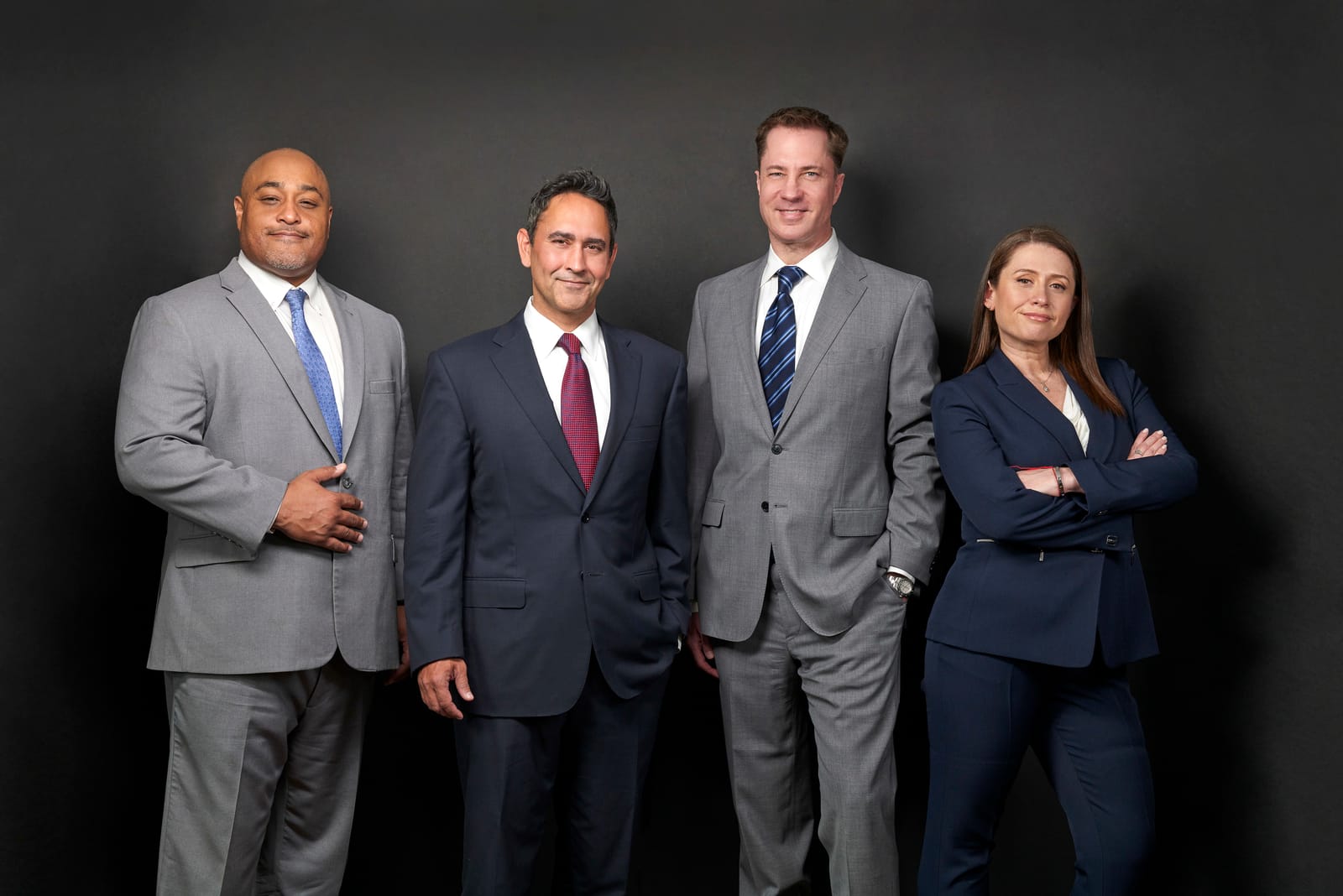
Health Law Alliance handles the response and any parallel appeal, licensing matter or referral as one coordinated matter, so the strategy does not change hands as the matter moves between forums.
The bench includes a former Assistant U.S. Attorney nominated for the DOJ Director's Award, senior healthcare-company counsel, and attorney-providers with experience across healthcare audits and investigations.


Agency and company marks identify former professional experience of individual HLA team members. They do not imply affiliation, endorsement, or a client relationship.
Bring us the Order to Show Cause and the inspection history. We will tell you what the government has to prove, what remediation is worth starting this week, and whether a hearing is the right election. Free, confidential, no retainer.