

The Additional Documentation Request is the first real decision point in a Medicare review, and most of the case is decided by what gets produced.
Request a Free Case ReviewAn Additional Documentation Request asks a provider to produce the medical records supporting specific claims. It can come from a Medicare Administrative Contractor, a UPIC, a Recovery Audit Contractor or the Supplemental Medical Review Contractor, and it is normally answered within 45 days.
It is easy to treat an ADR as an administrative errand. It is not. The records produced become the evidentiary record for the claims at issue, and they are what any later redetermination, reconsideration or ALJ hearing is argued from. A claim that is denied because nothing was sent is denied for insufficient documentation, and that denial is very hard to undo later.

Anthony's background as a former federal prosecutor and executive for major healthcare companies provided a level of expertise and insight that made all the difference. His deep understanding of healthcare law, particularly in litigation and compliance matters, helped navigate complex legal issues with ease.
With upmost professional respect, I will be forever grateful to have such caring individuals as Attorney Anthony Mahajan and Attorney Diana Yastrovskaya who come into my life, even though I am a business owner but I always felt I was treated as a friend and was made reaching out to them with ease.
I had a great experience working with Health Law Alliance. From the very beginning, their team was incredibly helpful, responsive, and professional. They answered all of my questions quickly and kept me informed throughout the entire process.

Anthony and his staff have gone above and beyond. His proactive communication and ability to handle complex legal scenarios effectively have been a significant asset. Highly recommended attorney.

Top-notch attorneys with an unparalleled scope of experience and breadth of knowledge. You will want them in your corner.

Had nothing but great experience from them. Knowledgeable and professional in all aspects. They have a vast knowledge in health care cases, great to be on your side against insurances.

Trustworthy and experienced.
An ADR looks like a request for paperwork and functions as the evidentiary foundation of everything that follows. Records that are incomplete, unsigned, internally inconsistent or missing the element the reviewer is checking produce denials that then have to be argued out through the appeal levels. A prepayment ADR also holds up payment on the claims in question, so the commercial pressure to send something quickly runs directly against the need to send the right thing.

A claim with no records produced is denied for insufficient documentation. There is nothing to argue on the merits, and recovering from that position at redetermination means explaining an absence rather than defending care that was delivered.
Where the ADR is part of prepayment review, payment on the identified claims does not issue until the records are reviewed and accepted. For providers with concentrated Medicare revenue this creates pressure to send quickly, which is exactly when incomplete productions happen.
ADRs are frequently how a contractor assembles the sample that a postpayment review and a statistical extrapolation are later built on. A weak production across a handful of claims can become an error rate applied across the full claim population.
Four things about an ADR that are routinely missed.
The first response is not a routine administrative task. It establishes the documents, timing, and record the contractor can later use in its findings and on appeal.
Four stages inside the response window.

We establish which contractor issued the ADR, whether it is prepayment or postpayment, what coverage criteria apply to the claims listed, and what the reviewer will actually be checking against.
Each claim is reviewed against those criteria: order present, medical necessity documented, signatures valid, dates coherent, modifiers supported. Gaps are identified while there is still time to address them properly.
Records are produced organised to the request, indexed, and accompanied by a cover submission that points the reviewer to where each required element sits. Making the reviewer hunt is how avoidable denials happen.
Where denials are likely on particular claims, the redetermination argument is prepared alongside the production. Where the ADR looks like sampling for a wider review, we say so early so the response is built for what is coming rather than only for what was asked.
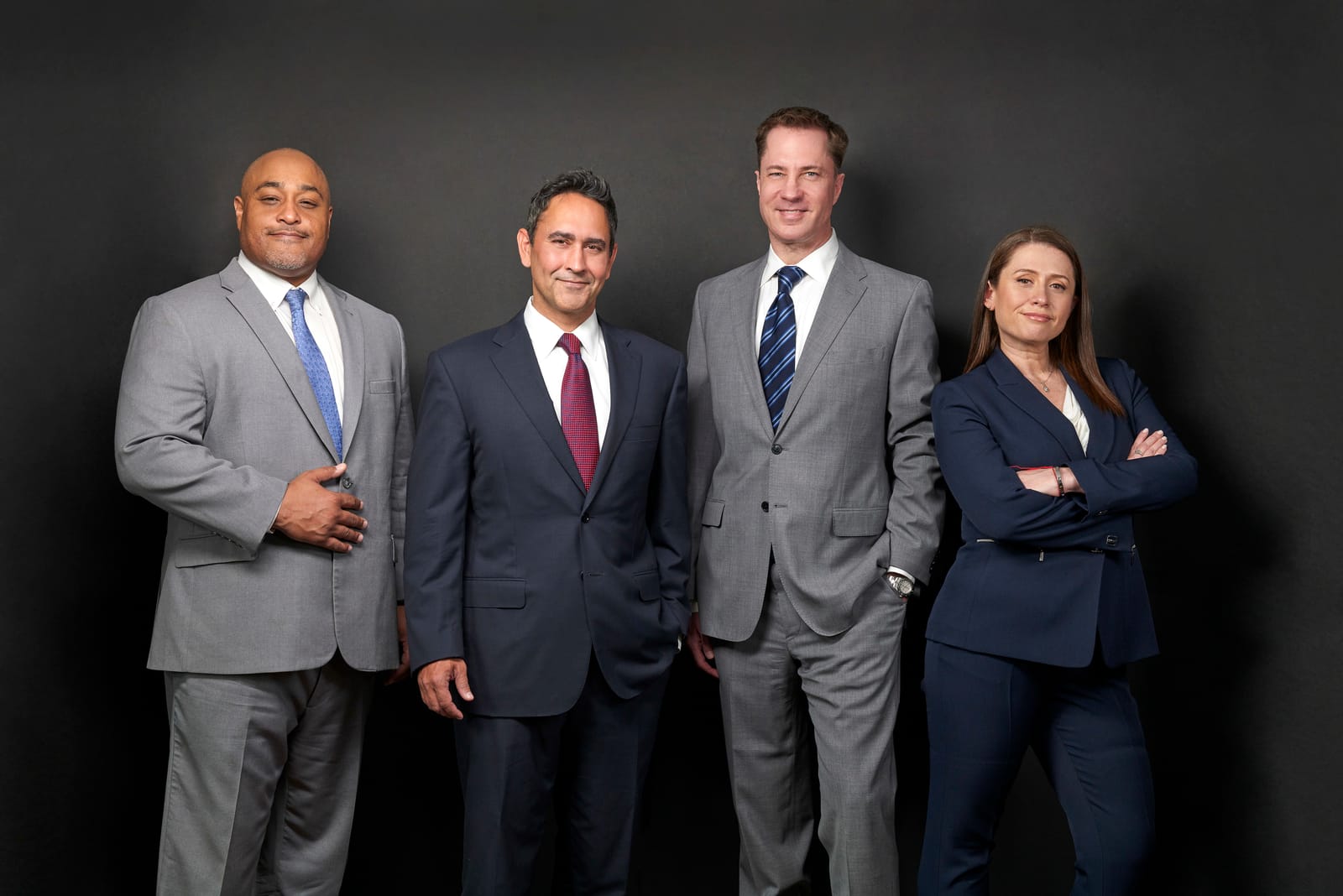
Health Law Alliance handles the response and any parallel appeal, licensing matter or referral as one coordinated matter, so the strategy does not change hands as the matter moves between forums.
The bench includes a former Assistant U.S. Attorney nominated for the DOJ Director's Award, senior healthcare-company counsel, and attorney-providers with experience across healthcare audits and investigations.


Agency and company marks identify former professional experience of individual HLA team members. They do not imply affiliation, endorsement, or a client relationship.
Seven questions that come up on almost every first call. The answers below are general; specific situations require privileged consultation.
Send us the ADR and a sample of the records you intend to produce. We will tell you what the reviewer will be checking, where the gaps are, and whether this looks like sampling for something larger. Free, confidential, no retainer.