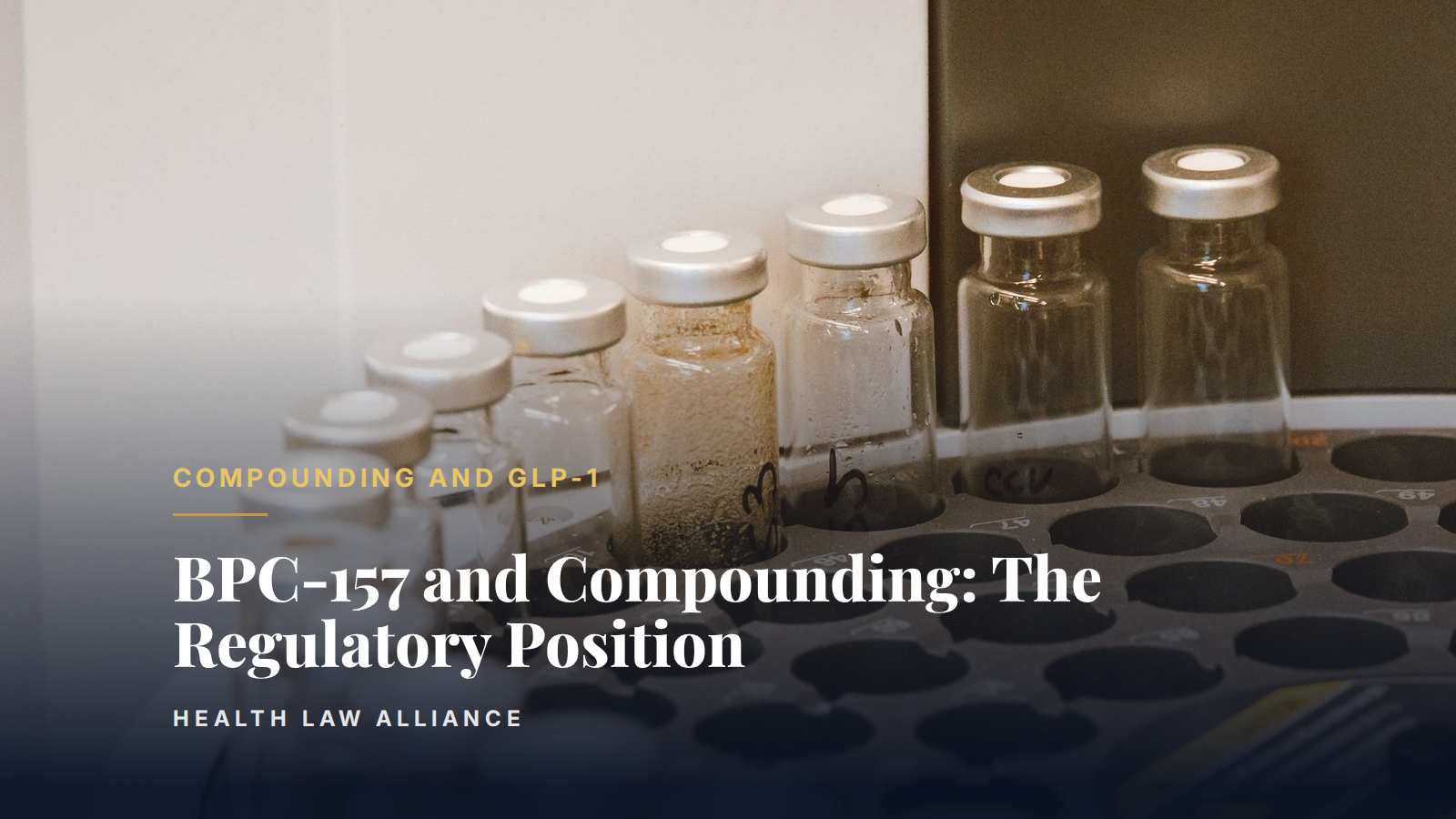
The FDA's 503A Bulks List decides which bulk substances a compounding pharmacy can use without inviting enforcement action, and BPC-157, the injectable peptide marketed for wound and gut-lining repair, is still not on it. FDA placed BPC-157 in Category 2, the tier for substances presenting significant safety risks, following nominations filed in 2015 and 2018, citing immunogenicity risk and incomplete safety data for the proposed routes of administration. The nominations behind that listing have since been withdrawn, which removes the Category 2 flag but does not put BPC-157 on the approved list. For a compounding pharmacist or prescriber ordering it today, that gap is where the exposure sits.
From Category 2 to a Withdrawn Nomination
FDA added BPC-157 to Category 2 of its interim bulk drug substance policy based on nominations that did not specify a free-base or acetate form. The agency's stated concern was immunogenicity risk for certain routes of administration, along with peptide-related impurity and active pharmaceutical ingredient characterization issues and little or no safety data supporting the proposed uses. Category 2 is the tier FDA uses for substances it would consider enforcement action against if a pharmacy compounds them. BPC-157 sat there until the nominators withdrew the nominations; FDA's own page on significant-safety-risk substances now lists BPC-157 under withdrawn nominations rather than as an active Category 2 entry.
What the Three Categories Control
Section 503A of the Federal Food, Drug, and Cosmetic Act lets a pharmacy compound with a bulk substance that is the subject of an applicable USP or NF monograph, is a component of an FDA-approved drug, or appears on FDA's 503A bulks list. FDA sorts nominations into three tiers: Category 1, which FDA will not pursue for enforcement if compounding conditions are met; Category 2, flagged for safety risk; and Category 3, nominated with insufficient data. Since January 7, 2025, FDA has stopped placing newly nominated substances into any of the three interim categories, so the pathway that produced BPC-157's Category 2 listing is no longer open to new entries.
Where BPC-157 Sits Today
FDA's Category 1 list, the one that actually creates an enforcement-discretion safe harbor, still does not include BPC-157. FDA's Pharmacy Compounding Advisory Committee convened on July 23 and 24, 2026 to evaluate BPC-157 alongside six other peptides, including KPV, TB-500, and MOTS-c, for potential future listing. A committee recommendation is advisory only; it does not add a substance to the bulks list or create a safe harbor on its own. Until FDA completes rulemaking, a pharmacy compounding BPC-157 is compounding a substance with no 503A safe harbor, regardless of where public debate over its safety currently stands.
Withdrawing a nomination from Category 2 leaves BPC-157 off FDA's approved compounding list, exactly where it started.
The Operational Exposure for Pharmacies and Prescribers
BPC-157 is compounded as an oral capsule, oral spray, nasal spray or sterile injectable, and when it is compounded as an injectable the preparation falls under USP 797/800 sterile and hazardous compounding standards regardless of the bulk substance's bulks-list status. Without an FDA-recognized stability standard for BPC-157, a pharmacy assigning a beyond-use date does so without the compendial support that normally justifies the dating period, a gap a state board inspector or FDA investigator can flag on its own.
A 503B outsourcing facility that continues to compound and dispense BPC-157 also carries mandatory federal adverse event reporting obligations for compounded preparations, and that duty does not pause because the substance's safety profile is unsettled. A 503A pharmacy has no comparable federal reporting mandate. That outsourcing facility also layers cGMP obligations and its own 503B reporting obligations after registration on top of the unresolved bulks-list question. Prescribers who order BPC-157 from a compounder carry the same underlying exposure as the pharmacy that fills it.
Why Early Legal Counsel Is Critical
It is critical that compounding pharmacies and prescribers promptly retain experienced healthcare defense counsel before continuing to compound, dispense, or prescribe BPC-157, or in response to any FDA or state board inquiry about it. Early legal intervention can protect the provider's rights, ensure an accurate reading of where a substance actually sits across FDA's bulks-list categories, avoid inadvertent admissions during an inspection, and preserve defenses that are only available before a warning letter or board complaint is issued. Delaying legal representation can significantly affect the outcome of a matter and expose the provider to unnecessary risk.
How Health Law Alliance Can Help
Health Law Alliance's compounding pharmacy defense attorneys track FDA's bulks-list categories, nomination withdrawals, and Pharmacy Compounding Advisory Committee activity as they develop, and translate that status into a defensible compounding and dispensing posture. Health Law Alliance's attorneys have overseen 2,000+ audits and handled 5,000+ matters, with 25+ years of experience. If your pharmacy or practice compounds, dispenses, or prescribes BPC-157 or another peptide with unsettled 503A status, contact Health Law Alliance's peptide compounding attorneys for a free, confidential consultation.