A DEA inspection of a physician practice does not have to start with a special agent at the door. It can start when a diversion investigator, the DEA's regulatory inspector for controlled-substance registrants, asks to review dispensing records, inventory, and storage. The request can trace back to prescription monitoring program data showing an anomaly in the practice's prescribing, a pharmacist's complaint about a prescription that did not look right, a patient overdose connected back to the prescriber, or a tip from a departing employee. What begins as a records review can develop into a far more serious inquiry into whether the prescribing itself had a legitimate medical purpose.
What Draws DEA Attention to a Medical Practice
Several sources can put a physician practice on a diversion investigator's list. Prescription monitoring program data is one: these state-run databases can show anomalies in a practice's prescribing, such as unusually high volume or frequency, before any reviewer looks at a chart, although each state sets its own rules for when DEA can obtain the data. A pharmacist who sees a pattern of irregular prescriptions from a practice and contacts the state board of pharmacy or the local DEA diversion office can start the file. So can a patient overdose traced back to a prescription the practice wrote, or a call from a current or former employee describing what they saw in the office. None of these sources alone proves wrongdoing, but each is enough to justify a closer look.
What Investigators Ask to See
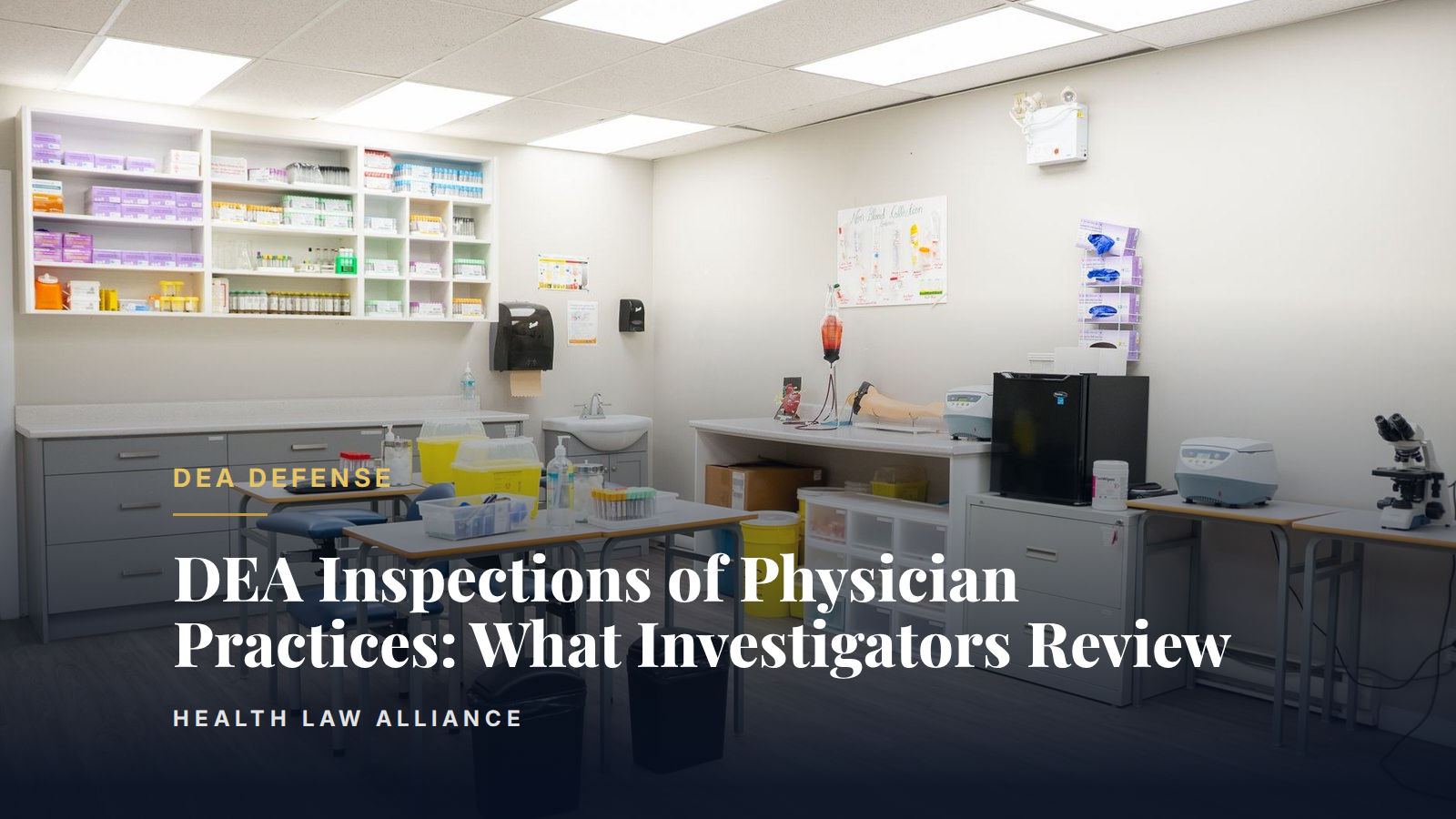
A diversion investigator conducting a records inspection is authorized to review the practice's dispensing or administration logs, the current inventory of controlled substances on hand, and the physical security of wherever those substances are stored. Order and receipt records from wholesale distributors come next, the paperwork at issue in DEA Form 222 and CSOS Ordering Errors, along with any record of substances destroyed or disposed of, covered in DEA Form 41 and Controlled Substance Destruction. The investigator reconciles what the logs say against what is on the shelf, the process described in HLA's glossary entry on inventory reconciliation. Patient charts can enter the review as well, for example for prescriptions the investigator pulled before the visit.
Records Inspection Vs Legitimate Medical Purpose Inquiry
A records inspection is administrative. The diversion investigator checks whether the paperwork is complete, whether the inventory reconciles, and whether storage and security meet the applicable federal regulation, a compliance exercise rather than an accusation. A legitimate medical purpose inquiry asks a different question: whether the history, examination, diagnosis, and treatment plan in a specific chart actually support the prescription written. A controlled-substance prescription must be issued for a legitimate medical purpose by a practitioner acting in the usual course of professional practice, and that is judged on all the circumstances rather than a fixed checklist. That inquiry can shade into a criminal matter. When a diversion investigator's findings, or information developed elsewhere, suggest prescribing crossed from questionable into deliberate diversion, the matter can be referred for criminal investigation, and a special agent, who unlike a diversion investigator can serve search warrants and make arrests, can join the investigation. The same findings can also support a DEA order to show cause or an immediate suspension order, the subject of DEA Immediate Suspension Orders: The Imminent Danger Standard.
The moment a diversion investigator's questions shift from where a prescription is logged to why it was written, the inspection has moved toward a legitimate medical purpose inquiry.
When to Call Counsel
Counsel should be engaged as soon as a practice is notified of a DEA inspection, not after it concludes. A diversion investigator presenting credentials and a request to review specific records is conducting a records inspection, and a practice can confirm the investigator's identity and the stated scope of the visit before producing anything beyond what is requested. The signal to call counsel immediately is a shift in the questions themselves: once a diversion investigator, or a special agent who has joined the visit, asks why a prescription was written rather than where it is logged, the inquiry has moved toward the legitimate medical purpose question, and unguarded answers become part of that record.
Why Early Legal Counsel Is Critical
It is critical that physician practices promptly retain experienced healthcare defense counsel upon receiving notice of a DEA inspection or any inquiry into controlled-substance prescribing. Early legal intervention can protect the practice's rights, keep document production within the actual scope of the request, avoid inadvertent admissions about clinical judgment, preserve relevant defenses, and allow counsel to communicate with the diversion investigator or special agent on the practice's behalf. Delaying representation can affect whether a matter stays a records inspection or develops into a legitimate medical purpose inquiry, and can increase the practice's exposure if it does.
How Health Law Alliance Can Help
Health Law Alliance has handled 5,000+ matters and brings 25+ years of experience. If your practice has received notice of a DEA records inspection or is already facing questions about specific prescriptions, contact Health Law Alliance's DEA defense attorneys for a free, confidential consultation before the inspection goes further.