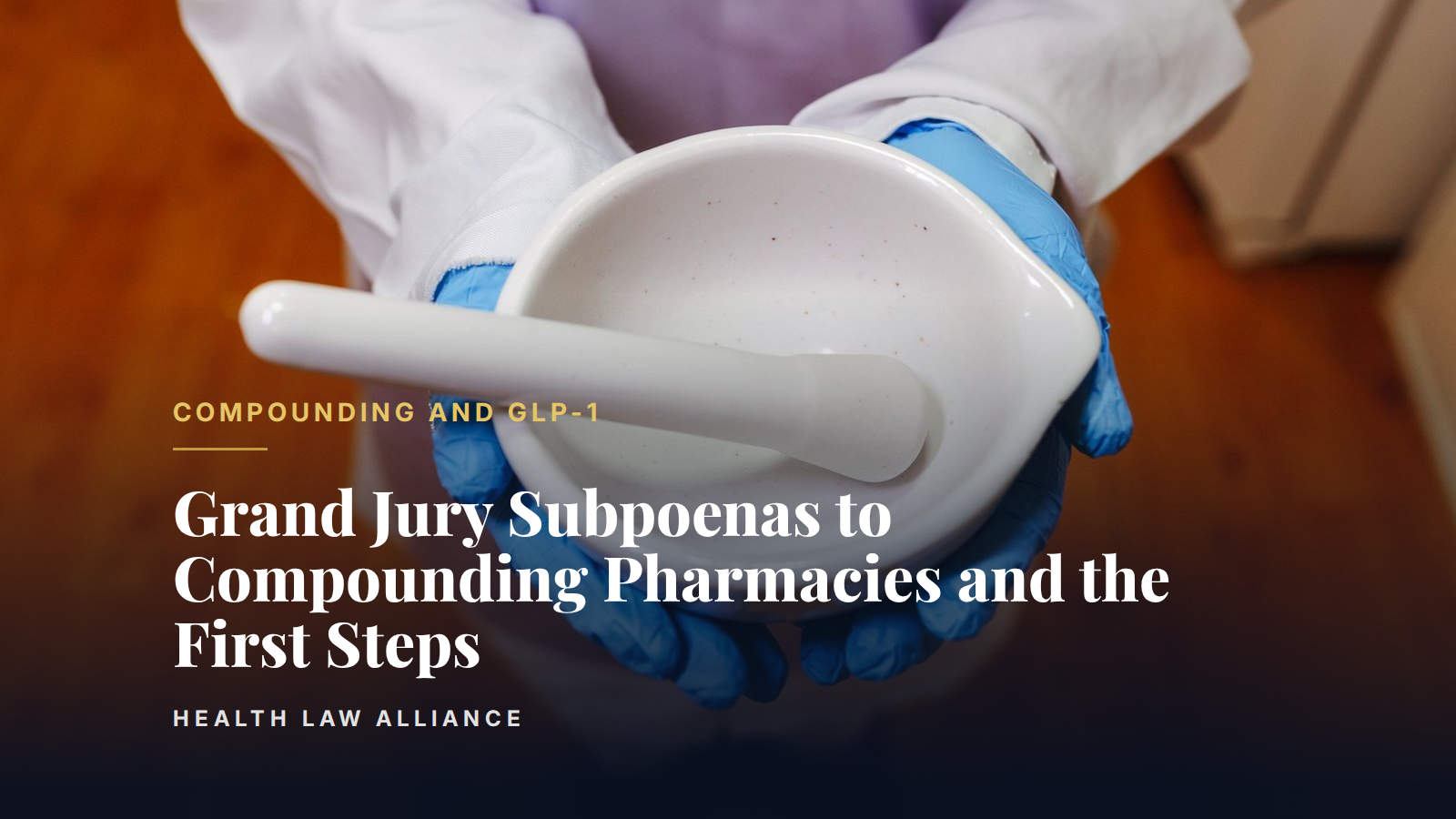
A grand jury subpoena naming a compounding pharmacy signals that federal investigators already believe a crime may have occurred, not that a routine inspection flagged a paperwork gap. The subpoena is a legal command, issued under Federal Rule of Criminal Procedure 17, to produce specific records, data, or testimony, and it triggers a preservation duty the moment it arrives. What the pharmacy does in the first hours, not the first weeks, shapes the record investigators will read.
What the Subpoena Signals
Compounding pharmacies can see a grand jury subpoena after a parallel thread surfaces: an FDA Form 483 inspection finding, a relator's complaint, or a kickback referral tied to telehealth marketing arrangements. The subpoena's own categories can say more than its cover letter: a request for compounding records organized by lot number points toward a quality or sterility theory, while a request for marketing agreements and commission schedules points toward an anti-kickback statute theory. The due-diligence posture described in Buying a Compounding Pharmacy: FDA and Board Due Diligence is forward-looking, assessing risk before a purchase. A grand jury subpoena is the opposite posture: the government has already decided the pharmacy's facts are now its business.
The Preservation Duty Begins on Receipt
The moment a subpoena arrives, 18 U.S.C. 1519 makes it a federal crime, punishable by up to 20 years, to alter, destroy, conceal, or falsify any record or document with intent to obstruct a federal investigation, and the statute reaches conduct taken in contemplation of an investigation, not only conduct taken after one is formally underway. A routine document-retention policy that auto-deletes emails or purges old batch records should be suspended in writing the day the subpoena is received, for every custodian and every system its categories could touch, not only the ones an employee assumes are relevant.
Custodian Questions
A compounding pharmacy designates a records custodian to certify that produced documents are what the business says they are. That role carries its own exposure: a custodian who testifies to completeness without having actually verified it, or who answers questions about how a record was created beyond the scope of authentication, can create a second witness problem inside the first investigation. Counsel, not the pharmacy's compliance manager acting alone, should decide who signs the certification and what, if anything, that person says beyond it.
A custodian's certification under Federal Rule of Evidence 902(11) authenticates the records; it does not explain them.
Why Counsel Should Engage Before Production
18 U.S.C. 1512 separately criminalizes corruptly persuading another person to alter, destroy, or conceal a document relevant to an official proceeding, which means instructions to employees about the subpoena, however casually worded, are themselves evidence. Counsel reviews the subpoena's categories against what the pharmacy actually has, negotiates scope and timing with the prosecutor before the return date rather than after a deficient production, and controls how employees are told what is happening. A subpoena can also run parallel to, or convert into, a civil investigative demand under the False Claims Act if the government's theory ultimately centers on billing rather than a controlled-substance or misbranding violation. None of these decisions is available after documents are already produced piecemeal or after an employee has already been told, informally, what to say.
Why Early Legal Counsel Is Critical
It is critical that compounding pharmacies promptly retain experienced healthcare defense counsel upon receiving a grand jury subpoena. Early legal intervention can protect the pharmacy's rights, ensure appropriate responses to government requests, avoid inadvertent admissions, preserve relevant defenses, and allow counsel to communicate with investigators on the pharmacy's behalf. Delaying legal representation can significantly affect the outcome of a matter and expose the pharmacy and its owners to unnecessary risk.
How Health Law Alliance Can Help
Health Law Alliance defends compounding pharmacies and their owners through grand jury subpoenas, parallel civil investigative demands, and the federal investigations that follow.
Health Law Alliance's attorneys have overseen 2,000+ audits and handled 5,000+ matters, with 25+ years of experience.
If your pharmacy has received a grand jury subpoena, contact us today for a free consultation through our Criminal Healthcare Fraud Defense practice.