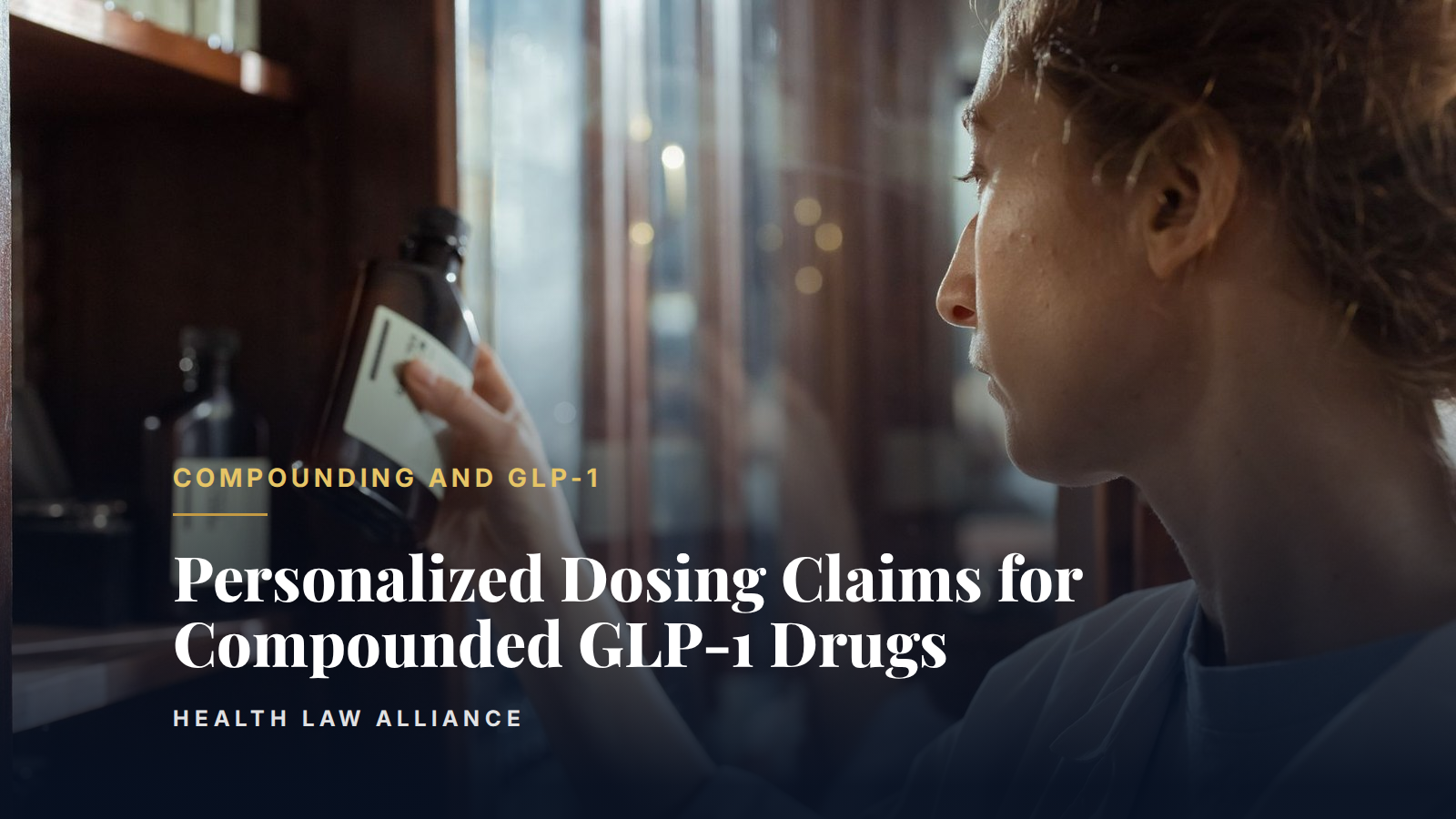
Federal law restricts a compounding pharmacy from dispensing a drug that is essentially a copy of a commercially available, FDA-approved product under Section 503A. A compounded GLP-1 product marketed around personalized dosing can cross that line fast. The exception turns on one narrow fact: a prescribing practitioner determined, for an identified individual patient, that a specific change produces a significant difference for that patient. A marketing claim offered to patients generally, with no patient-specific determination on file for each one, is the exact fact pattern FDA's guidance on essentially-a-copy determinations was written to stop.
The Essential-Copy Rule Under Section 503A
Section 503A, at 21 U.S.C. § 353a(b)(2), excludes a compounded drug from essentially-a-copy status only where a change made for an identified individual patient produces, as determined by the prescribing practitioner, a significant difference from the commercially available version. FDA's guidance applies a three-part test: the same active ingredient, a dosage strength that is the same, similar, or easily substitutable (FDA treats strengths within 10 percent as similar), and the same route of administration. A compounded semaglutide or tirzepatide product matching those three factors is essentially a copy unless the significant-difference exception applies, and that rule, not the now-resolved shortage allowances, governs ongoing GLP-1 compounding under 503A/503B.
What Counts as a Significant Clinical Difference
FDA ties the significant-difference determination to the patient in front of the prescriber, not to a product line. The guidance's own example: removing a specific inactive ingredient can produce a significant difference for a patient with a documented allergy to it, but only because the prescriber made that determination for that patient. A standing policy does not meet the standard; FDA's guidance states that Congress did not intend compounders to use one patient's allergy as the basis for removing an ingredient for every other patient who lacks that allergy. A pharmacy advertising personalized dosing as a general feature of its GLP-1 program, rather than a conclusion reached patient by patient, is describing a marketing position, not the statutory exception. FDA's guidance states the exception plainly:
A compounded drug product is not essentially a copy of a commercially available drug product if a change is made for an identified individual patient, and the prescribing practitioner has determined that the change will produce a significant difference for that patient.
Documenting the Prescriber's Determination
FDA's guidance is specific about what the record has to show. A prescription listing only the patient's name and the compounded formulation does not establish that the prescriber made the required determination. The prescription, or an accompanying record, needs a notation that the prescriber determined the specific change produces a significant difference for that specific patient, kept for at least three years. For a pharmacy compounding semaglutide or tirzepatide at scale, that means a patient-specific note for every prescription relying on the exception, not a protocol applied across the whole patient base. The same discipline governing beyond-use date assignments and sterile compounding under USP 797/800 applies here: the file has to support the claim, for the patient it was made for.
Health Law Alliance's attorneys have overseen 2,000+ audits and handled 5,000+ matters, with 25+ years of experience.
Enforcement Risk of Generic Personalization Claims
GLP-1 compounding is a current example of this exposure. FDA's clarifications on compounded semaglutide and tirzepatide apply the same essentially-a-copy test and significant-difference exception that govern any drug under 503A, now that the shortages that once permitted broader compounding have resolved. The exception exists to stop a compounder from making a small change to a drug and then offering it to the general public without regard to whether a prescriber determined a significant difference for an individual patient. A marketing claim that a GLP-1 program offers personalized dosing, used as a selling point across a patient base rather than a conclusion reached patient by patient, matches that pattern closely. The exposure reaches the pharmacy, the compounding pharmacist, and the prescriber who signs a dosing order the record cannot support. The same gap, volume outpacing documentation, is the fact pattern behind Anticipatory Compounding Limits, the exemption covering compounding before a patient-specific prescription arrives.
Why Early Legal Counsel Is Critical
Compounding pharmacies and prescribers facing an FDA warning letter, state board inquiry, or payer audit over GLP-1 dosing claims can protect their position by engaging healthcare defense counsel early. Early legal involvement can help a pharmacy audit its own prescription records against the significant-difference standard before a regulator does, preserve the prescriber's clinical rationale while the matter is current, and correct a marketing practice before it becomes the basis for a finding. Waiting until a warning letter arrives can narrow the options available to fix the underlying documentation.
How Health Law Alliance Can Help
Health Law Alliance represents compounding pharmacies, pharmacists, and prescribers in FDA, state board, and payer matters tied to GLP-1 dosing and essentially-a-copy determinations. If a pharmacy's GLP-1 marketing, prescription records, or compounding log need review against FDA's significant-difference standard, contact Health Law Alliance's compounding pharmacy attorneys for a free, confidential consultation.