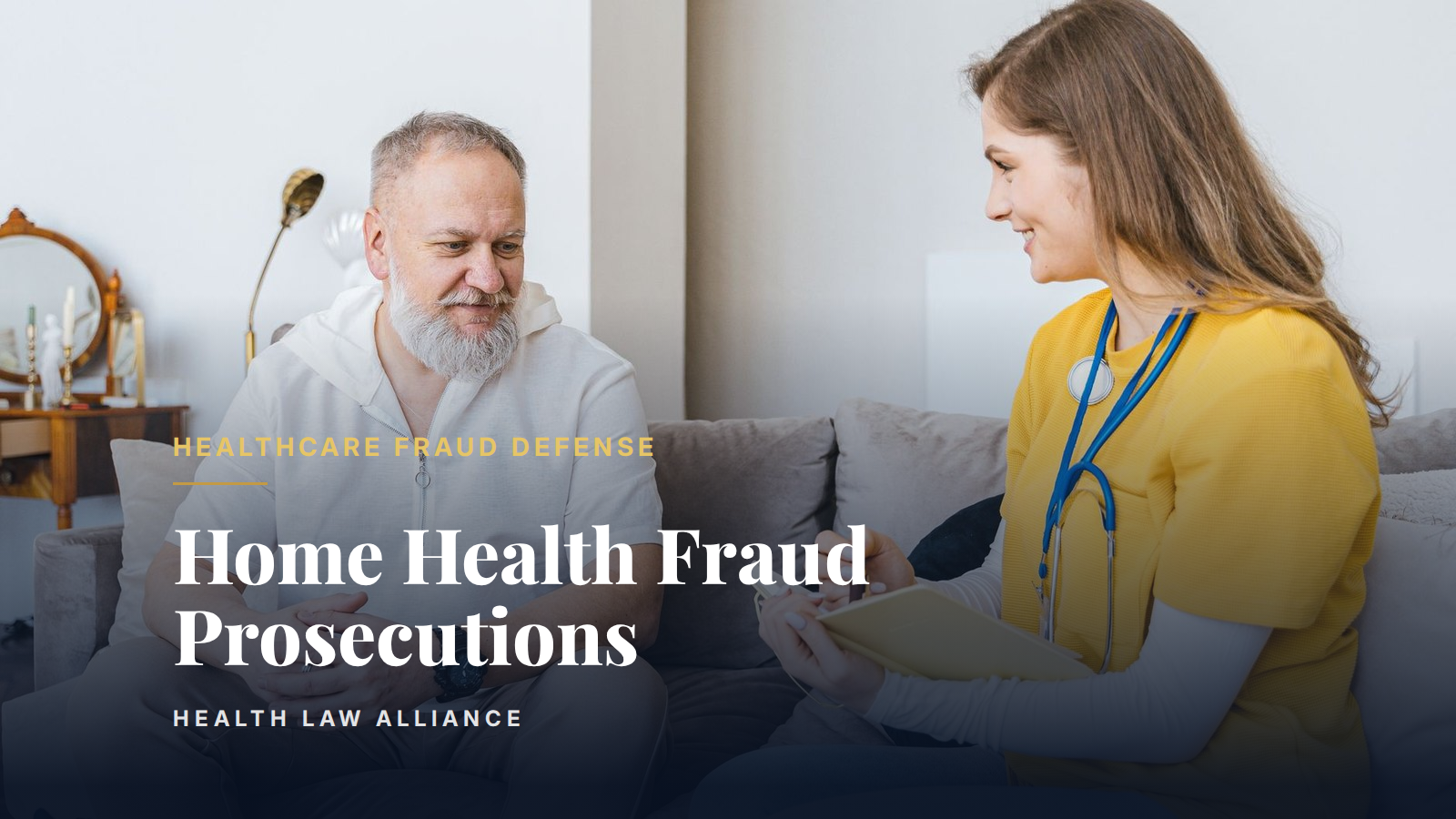
Home health fraud prosecutions in 2026 run on three recurring theories: paying referral sources to recruit patients, compensating physicians for referrals, and certifying patients as homebound who were never evaluated for home health care. Each theory supports a federal felony charge on its own, and the Department of Justice has charged a home health agency owner with patient recruiting kickbacks and falsified homebound certifications this year. The exposure runs well past a recoupment letter, reaching a criminal docket that can end in prison time, exclusion from federal health care programs, and the loss of a Medicare provider number.
Patient Recruiting Through Kickbacks to Referral Sources
The anti-kickback statute, 42 U.S.C. 1320a-7b(b), makes it a felony to knowingly and willfully offer, pay, solicit, or receive remuneration to induce referrals of services paid for by a federal health care program, carrying up to $100,000 in fines and 10 years in prison per count. Home health agencies can violate it by paying discharge planners and case managers for patient leads. The Department of Justice announced on May 15, 2026, that a federal jury convicted the owner of Delta Home Health Care LLC, a Michigan agency, of paying a hospital discharge nurse approximately $300 for every Medicare patient she referred who was later billed, transmitting the nurse more than $130,000 by CashApp, PayPal, check, and cash. The agency then billed Medicare using the referred patients' identities for home health visits those patients had never been evaluated to receive.
Falsifying Homebound Status to Bill Medicare
Medicare pays for home health services only when a physician or allowed practitioner certifies that the patient is confined to the home and under a plan of care the physician or allowed practitioner establishes and periodically reviews. The Michigan case turned on that certification: according to the Department of Justice, the agency's owner represented to Medicare that a doctor had evaluated and certified each referred patient as homebound, when no doctor had ever evaluated those patients for home health services. The scheme caused Medicare approximately $1.6 million in losses from the recruited patients and the fabricated certifications. The jury convicted her on five counts of health care fraud, four counts of paying illegal kickbacks, and one count of conspiracy to defraud the United States and pay illegal kickbacks; she faces up to 10 years in prison on each health care fraud count, up to 10 years on each kickback count, and up to five years on the conspiracy count, with sentencing scheduled for September 2026. A fabricated homebound certification carries that exposure for the agency that submits it, regardless of whether the certifying physician knew it existed.
Civil Investigative Demands and Grand Jury Subpoenas in Home Health Investigations
A home health fraud investigation can start before any indictment, with a civil investigative demand from DOJ's civil division or a grand jury subpoena from a U.S. Attorney's office seeking patient records, referral logs, and compensation agreements with referring physicians and discharge staff. How an agency responds to that first request shapes what the government does next. Responding to a Civil Investigative Demand (CID) and Civil Investigative Demands: Negotiating Scope address how to narrow an overbroad request and preserve privilege before producing records. Where the records show a compensation arrangement with a referring physician, a stark law exception or an anti-kickback statute safe harbor can determine whether it is protected or chargeable as a kickback; home health services are a designated health service under stark law, 42 U.S.C. 1395nn. The strength of the agency's compliance program, discussed in Compliance Program Effectiveness as a Defense, can affect the government's charging decision and, later, the sentence a court imposes.
A home health fraud case turns on a referral relationship the government has already decided was bought, not earned, long before the first count is read in court.
Health Law Alliance's attorneys have overseen 2,000+ audits and handled 5,000+ matters, with 25+ years of experience.
Why Early Legal Counsel Is Critical
It is critical that healthcare providers promptly retain experienced healthcare defense counsel upon receiving a subpoena, audit notice, investigative request, or other government inquiry. Early legal intervention can protect the provider's rights, support appropriate responses to government requests, avoid inadvertent admissions, preserve relevant defenses, and allow counsel to communicate with investigators on the provider's behalf. Delaying legal representation can significantly affect the outcome of a matter and expose the provider to unnecessary risk.
How Health Law Alliance Can Help
Health Law Alliance's healthcare fraud defense attorneys represent home health agencies and other healthcare providers in patient recruiting, kickback, and homebound certification investigations and prosecutions, from the first civil investigative demand through trial. If your home health agency or practice has received a government inquiry involving patient referrals, physician compensation, or homebound certifications, contact Health Law Alliance's hospice and home health audit defense attorneys for a free, confidential consultation.