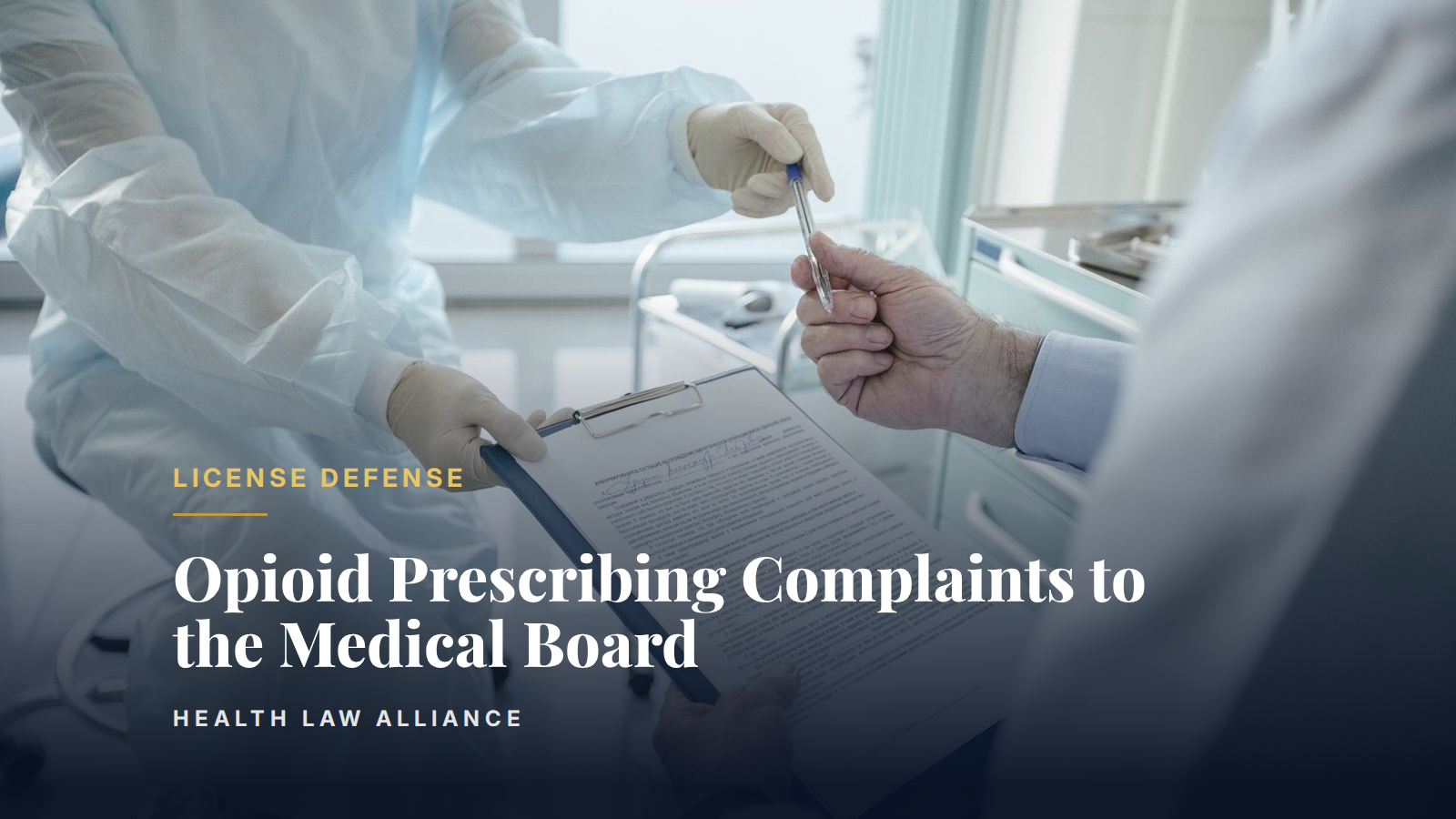
A patient complaint, a pharmacist's report, or an unusual pattern flagged in state prescribing data can put a physician's opioid prescribing in front of the medical board. A medical board complaint is a professional license matter from the day the board opens a file, even if no criminal case follows. The inquiry does not always stay contained to the board: a parallel referral can lead an insurer to a network termination, or, where federal healthcare program billing is implicated, to an OIG exclusion. How a physician responds to the board's first letter can shape every one of those parallel proceedings.
How a Complaint Becomes an Investigation
A medical board complaint can come from a patient, a pharmacist, a hospital, or another provider, and a board's own review of statewide prescribing data can trigger an inquiry on its own. The Texas Medical Board's published process opens with a jurisdictional review confirming the board licenses the physician and the allegation falls within the state's medical practice act, then routes a clinical-care complaint to a physician investigator rather than an attorney investigator alone. Once the investigation opens, the board can issue a subpoena directly to the pharmacies and hospitals that filled or administered the prescriptions at issue, not only to the physician's own practice.
The board inquiry is not always the only exposure arising from the same prescribing pattern. A parallel DEA or Department of Justice investigation can escalate to a target letter naming the physician as a target of a grand jury investigation, a more serious track than the board proceeding by itself. Criminal Charges and Your Professional License examines how a license matter and a criminal referral interact.
PDMP Data in the Board's Review
Prescription drug monitoring program data is part of opioid-prescribing investigations now open at a state medical board. A PDMP records every controlled-substance prescription dispensed in the state, organized by prescriber and by patient, and a state licensing board can query that data once a file is open. The Federation of State Medical Boards has adopted a policy position favoring board access to PDMP records for a licensee under investigation for inappropriate prescribing. Investigators use the data to check what a specific patient's chart documents against what every prescriber in the state filled for that patient.
Chart Review by a Reviewing Physician
Prescribing data alone does not establish a standard-of-care violation. Once a complaint involves clinical care, a board typically assigns it to a reviewing physician in the same field, who reads the chart itself: the documented history, exam findings, risk assessment, any treatment agreement, and the monitoring reflected in later visit notes. The reviewing physician's report states whether the record supports the care given or reflects a departure from the standard of care, a finding several boards hold to a standard of clear and convincing evidence.
A chart reviewed months later never looks like the chart written in the room with the patient.
Typical Consent Order Terms
When a board and a physician resolve an opioid-prescribing complaint by agreement, as in Texas and Georgia, the result is a public, enforceable order, not a private settlement. California's medical board, for example, sets recurring terms that include a probationary period with periodic chart review by an outside reviewing physician at the physician's own expense, a prescribing-practices course and a medical-record-keeping course taken in addition to standard continuing medical education requirements, and, in some matters, a restriction on which schedules of controlled substances the physician may prescribe. A board may also require a monitoring or impaired-practitioner program when the file raises a substance-use concern separate from the prescribing pattern itself; Monitoring and Impaired-Practitioner Programs: Entry, Terms, and Exit covers how those programs structure entry, terms, and exit. A board overseeing a different license can resolve a parallel complaint the same way; Georgia Board of Pharmacy Investigations and Licensing Disputes walks through that board's own path.
Health Law Alliance's attorneys have overseen 2,000+ audits and handled 5,000+ matters, with 25+ years of experience.
Why Early Legal Counsel Is Critical
It is critical that healthcare providers promptly retain experienced healthcare defense counsel upon receiving a subpoena, audit notice, investigative request, or other government inquiry. Early legal intervention can protect the provider's rights, ensure appropriate responses to government requests, avoid inadvertent admissions, preserve relevant defenses, and allow counsel to communicate with investigators on the provider's behalf. Delaying legal representation can significantly affect the outcome of a matter and expose the provider to unnecessary risk.
How Health Law Alliance Can Help
Health Law Alliance represents physicians nationwide in opioid-prescribing complaints before state medical boards, from the board's first request for records through a contested hearing or a negotiated consent order. If you have received a board letter, a subpoena, or a request for an interview about your opioid prescribing, contact Health Law Alliance's state board of medicine hearings attorneys for a free, confidential consultation.