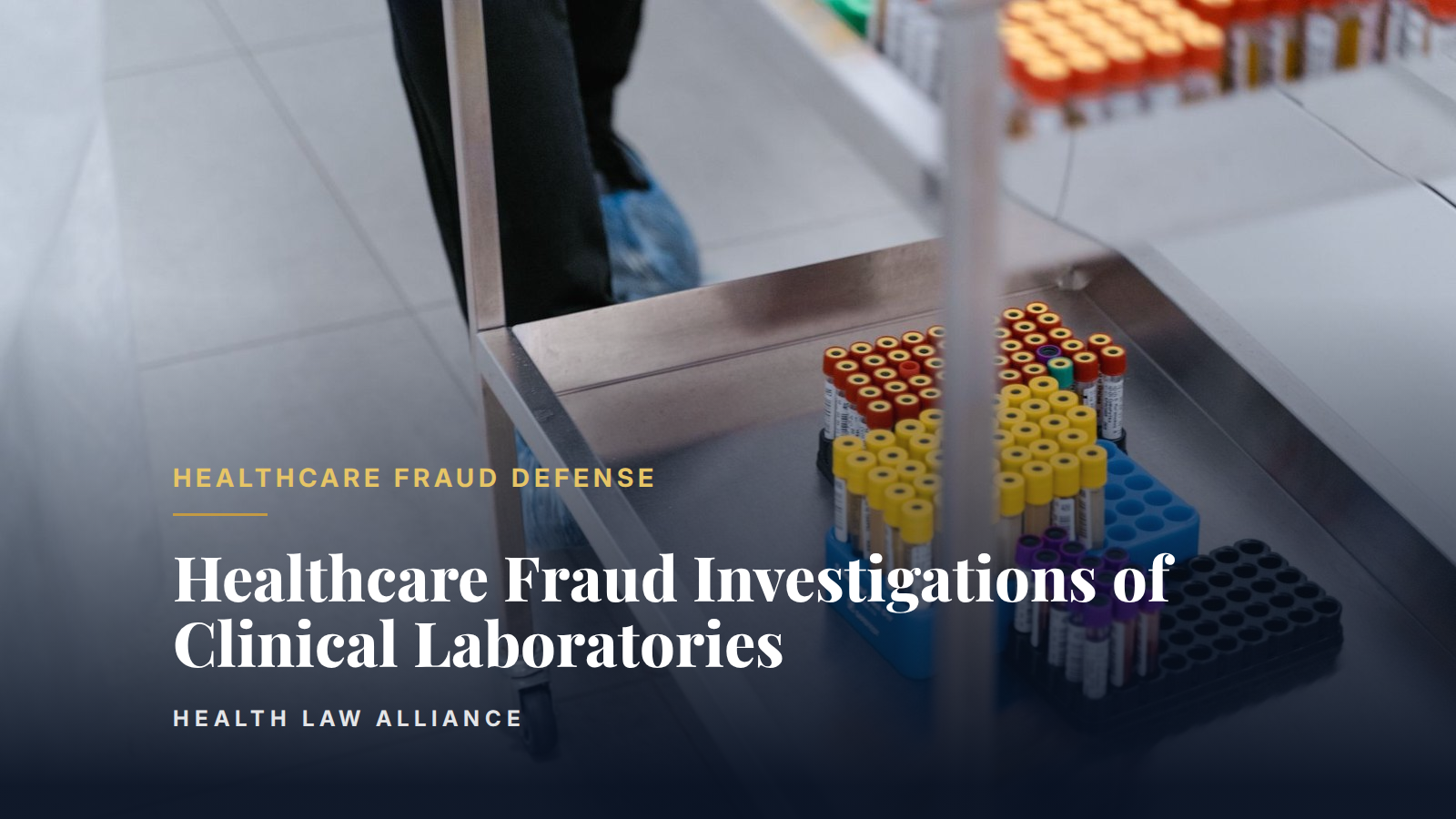
Federal investigators have built healthcare fraud cases around three laboratory testing lines: genetic testing, toxicology (urine drug testing), and respiratory pathogen panels. The pattern repeats: a marketer or telemedicine company generates referrals and doctor's orders, a laboratory bills federal health care programs for tests that were not medically necessary or never ordered, and the government pursues the lab, the marketers, and the referring providers under kickback and false claims theories.
Genetic, Toxicology and Respiratory Panel Fraud Patterns
In a genetic testing case, marketer Robert Desselle was sentenced on September 19, 2025 to 57 months in prison for conspiring to defraud the United States and to pay and receive health care kickbacks. Desselle paid marketers to approach Medicare beneficiaries at grocery stores, pharmacies, and car dealerships, bribed a telemedicine company for doctor's orders authorizing tests those beneficiaries did not need, and received kickbacks from the laboratories that billed Medicare $11.5 million.
Toxicology labs carry the same exposure. Precision Toxicology agreed in 2024 to pay $27 million in a multistate settlement resolving False Claims Act and Anti-Kickback Statute allegations covering urine drug testing billed to Medicare, Medicaid, and other federal programs from 2013 through 2022. The government paired unnecessary testing volume with free collection cups and other items the lab gave physicians who referred that business.
Respiratory pathogen panels have followed the same model. In October 2026, a Maryland laboratory operator was convicted on five counts of health care fraud and one count of money laundering for billing Medicare $18.7 million for respiratory panels that nursing home residents did not need, physicians never ordered, and that, in many cases, were never performed.
Kickback Theories: The Anti-Kickback Statute and EKRA
Two federal kickback statutes drive these cases, and they do not reach the same referrals. The Anti-Kickback Statute (42 U.S.C. 1320a-7b(b)) criminalizes knowing and willful payment or receipt of remuneration to induce referrals reimbursable under a federal health care program, carrying penalties of up to $100,000 and ten years in prison per violation. It reaches only referrals tied to Medicare, Medicaid, and other federal programs, not a kickback paid solely for referring a privately insured or self-pay patient.
Congress closed that gap for laboratories with the Eliminating Kickbacks in Recovery Act, or EKRA (18 U.S.C. 220), which criminalizes remuneration to induce referrals to, or use of, a laboratory, recovery home, or clinical treatment facility, regardless of which payor gets billed, with penalties of up to $200,000 and ten years in prison per occurrence. Its exceptions and interaction with the Anti-Kickback Statute are covered in EKRA Explained: Kickback Rules for Labs and Treatment Centers.
Where a referring physician holds a financial relationship with the laboratory, such as an ownership stake or an equipment lease, a civil stark law theory can attach without any proof of intent, alongside anti-kickback statute exposure for the same referral.
EKRA reaches kickbacks for laboratory referrals paid by any payor, not only federal health care programs, closing a gap the Anti-Kickback Statute leaves open for privately insured and self-pay patients.
Health Law Alliance's attorneys have overseen 2,000+ audits and handled 5,000+ matters, with 25+ years of experience.
How Laboratory Investigations Reach Referring Providers and Employees
A laboratory fraud investigation does not have to stay contained to the lab's corporate entity. A civil investigative demand or a grand jury subpoena can land on the physician practices, telemedicine companies, and marketing firms behind the referrals, not just the laboratory. Billing employees can be approached directly for a voluntary interview, where an inaccurate answer can create false-statement exposure separate from the lab's, covered in FBI Agents at the Door: What Employees Should Know.
A laboratory that knowingly employed an excluded individual, a marketer, biller, or manager barred from federal health care programs, carries exposure that compounds a kickback investigation. Repayment and self-disclosure obligations for that problem are addressed in Employing an Excluded Individual: Repayment and Self-Disclosure.
Why Early Legal Counsel Is Critical
It is critical that healthcare providers promptly retain experienced healthcare defense counsel upon receiving a subpoena, audit notice, investigative request, or other government inquiry. Early legal intervention can protect the provider's rights, ensure appropriate responses to government requests, avoid inadvertent admissions, preserve relevant defenses, and allow counsel to communicate with investigators on the provider's behalf. Delaying legal representation can significantly affect the outcome of a matter and expose the provider to unnecessary risk.
How Health Law Alliance Can Help
Health Law Alliance's healthcare fraud defense attorneys represent clinical laboratories, referring physicians, and laboratory employees at every stage of a genetic testing, toxicology, or respiratory panel investigation, from the first subpoena through trial. If your laboratory or practice has been contacted about one of these investigations, contact Health Law Alliance's healthcare fraud defense attorneys for a free, confidential consultation.