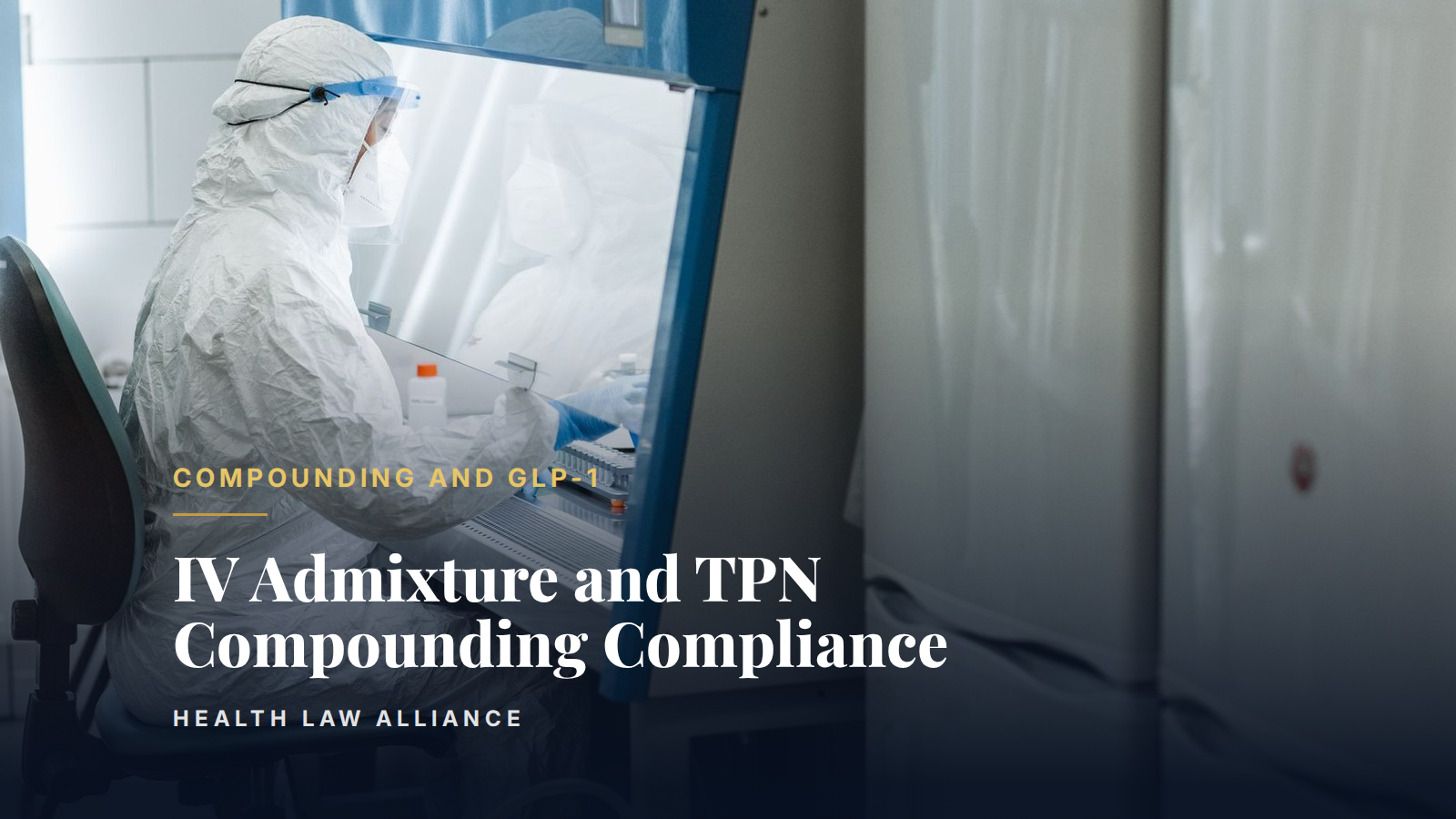
TPN and IV admixture compounding sits near the center of USP 797 enforcement for hospital and infusion pharmacies. Automated compounding devices assemble the electrolyte, dextrose, amino acid, and lipid components of a parenteral nutrition bag by volume or weight, and an uncorrected accuracy drift can put every bag compounded that day at risk before anyone notices. USP 797 Section 9.1 requires a documented accuracy assessment of every automated compounding device before its first use and again each day it is used to compound sterile preparations. For a compounding pharmacist, the exposure runs two directions: a clinical error that reaches a patient, and a documentation gap that surfaces the moment an investigator asks to see the daily record.
Automated Compounding Device Accuracy Assessments
The assessment applies whether or not the device has already been validated by its manufacturer or cleared by the FDA. Compounding personnel must verify the volumetric or gravimetric accuracy of the automated compounding device before the first use and on each day of use, maintain a daily record of the measurements, and implement a corrective action when a result falls outside the manufacturer's specifications. USP 797 Section 9.1 also requires written standard operating procedures for the calibration, maintenance, cleaning, and use of the equipment, built around the manufacturer's recommendations, with records kept to show the procedures were followed.
Gravimetric Verification and the 5 Percent Threshold
A gravimetric automated compounding device is checked by weighing the fluid delivered into the TPN bag and converting that weight to volume using the ingredient's known specific gravity, then comparing the actual bag weight against the calculated expected weight. The American Society of Health-System Pharmacists' guidelines on automated compounding devices for parenteral nutrition call for accuracy within 5 percent of the programmed amount for each ingredient, checked for every additive rather than only the finished bag. A pharmacy that relies on the device's internal calibration alone, without an independent gravimetric check, carries that gap into any inspection that follows a dosing complaint.
A daily accuracy assessment that never becomes a written record is, to a surveyor, indistinguishable from no assessment at all.
Master Formulation Records and Compounding Records
USP 797 separates the Master Formulation Record, required for any compounded sterile preparation made from nonsterile ingredients or prepared for more than one patient, from the Compounding Record, the execution log for a specific patient dose or batch. For a patient-specific TPN dose, the medication order can serve as the Master Formulation Record if it captures the required elements and stays readily retrievable, and the pharmacy's generated label then functions as the Compounding Record, provided the lot number and expiration date of every component are documented on it. Batch-compounded TPN needs its own Master Formulation Record and Compounding Record, including the beyond-use date and the stability or sterility data that supports it.
Patient-specific and hospital-based TPN generally falls under 503A; outsourcing facilities that supply ready-to-use TPN bags to multiple hospitals register as 503B and compound under cGMP requirements layered on top of USP 797. Health Law Alliance's explainer on 503A vs 503B walks through which framework applies to a given TPN operation.
Where Inspectors Find the Documentation Gaps
The gaps that surface most often on inspection are documentary, not clinical. A missing day on the ACD accuracy log, a Master Formulation Record with no beyond-use date justification, or a Compounding Record missing one component's lot number can each stand on its own as a finding. Health Law Alliance's guide to USP 797 and 800 inspection readiness and its review of beyond-use dating cover the broader compliance file inspectors request; automated compounding device records are one line item in it, not a separate inquiry.
Why Early Legal Counsel Is Critical
It is critical that compounding pharmacies promptly retain experienced healthcare defense counsel upon receiving an FDA inspection notice, a state board of pharmacy complaint, or any inquiry tied to automated compounding device records or TPN documentation. Early legal intervention can protect the pharmacy's rights, ensure appropriate responses to investigator requests, avoid inadvertent admissions, preserve relevant defenses, and allow counsel to communicate with investigators on the pharmacy's behalf. Delaying legal representation can significantly affect the outcome of a matter and expose the pharmacy to unnecessary risk, particularly once a gravimetric or documentation gap has already been identified.
How Health Law Alliance Can Help
Health Law Alliance represents compounding pharmacies nationwide in USP 797 compliance matters and 503A/503B compounding disputes, drawing on the firm's experience with 2,000+ audits overseen on behalf of pharmacy clients. The firm's attorneys work with pharmacies through FDA inspections, state board of pharmacy investigations, and the documentation review that follows an automated compounding device or TPN dosing finding. Compounding pharmacies with questions about IV admixture and TPN compliance may contact Health Law Alliance's compounding pharmacy attorneys for a free, confidential consultation.