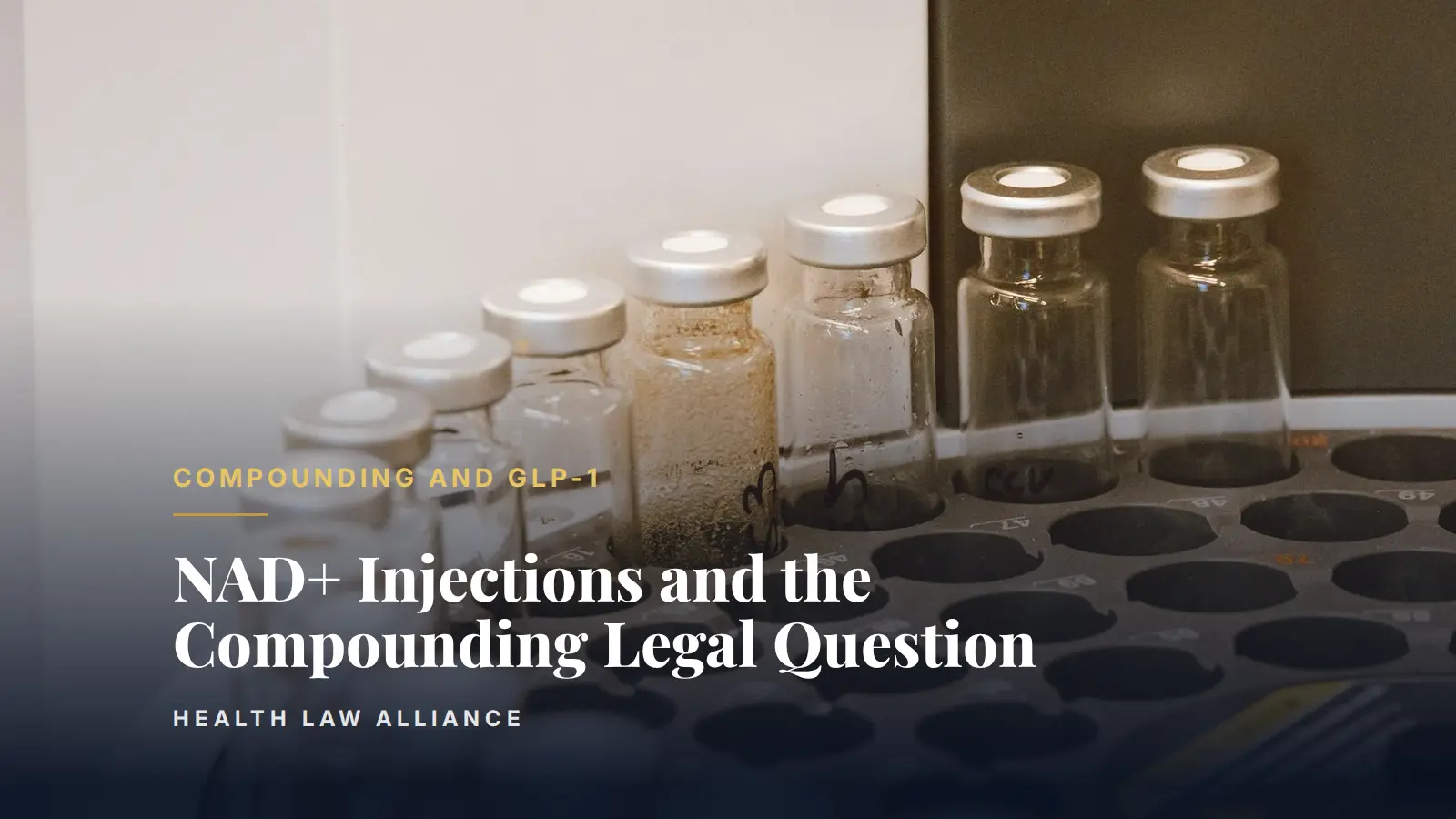
Compounding pharmacies are shipping nicotinamide adenine dinucleotide (NAD+) injectables to wellness clinics and med spas at a volume the ingredient's regulatory record does not support. NAD+ is not the active ingredient in any FDA-approved drug, carries no USP-NF monograph, and in 2019 FDA proposed to keep it off the 503A bulks list. A pharmacy supplying a clinic's NAD+ drip program is working outside that statutory pathway, and a January 2026 warning letter already turned the gap into an enforcement action, not a theoretical risk.
The 503A and 503B Eligibility Question
The 503A/503B framework governs bulk-substance eligibility for both routes, but the tests differ. Under 503A, a pharmacist can compound from a bulk drug substance only if it has an applicable USP-NF monograph, is a component of an FDA-approved drug, or appears on the 503A bulks list. NAD+ meets none of the three. The Pharmacy Compounding Advisory Committee voted in May 2017 against adding NAD to the 503A bulks list, and FDA's 2019 proposed rule cited the molecule's own instability: it degrades substantially when exposed to light, moisture, alkaline pH, or room temperature, along with insufficient clinical safety data. The 503B side closes the same door: a January 2026 warning letter to an outsourcing facility stated its NAD+ products did not appear on the 503B bulks list and were not compounding a shortage-listed drug, the two routes 503B otherwise allows.
NAD+ fails every pathway the compounding statute provides, and FDA's January 2026 warning letter treated that gap as grounds for enforcement rather than a technicality.
What the January 2026 Warning Letter Found
The FDA letter to GenoGenix LLC went beyond the bulks-list gap. Investigators traced a NAD+ lot to patients who needed emergency treatment: testing found bacterial endotoxins at 3,360 EU/mL, a level the letter treated as adulteration. Three patients experienced low blood pressure, uncontrollable shaking, and body aches. The same letter found the product misbranded for inadequate directions for use and flagged it as an unapproved new drug, since the firm had no FDA-approved application on file for any NAD+ product it compounded. Those findings, bulks-list ineligibility, adulteration, and an unapproved-new-drug finding, arrive together once a lot fails testing, not as problems a pharmacy can settle one at a time.
Food-Grade Material and the Endotoxin Problem
FDA's compounder bulletin, current as of October 30, 2024, identifies the sourcing practice behind many of these failures: compounders buying food-grade NAD+ from repackagers to make injectable products without the processing sterile compounding requires. The bulletin ties adverse event reports, severe chills, shaking, vomiting, and fatigue, some requiring medical treatment, to contamination consistent with endotoxins, the same failure the GenoGenix lot later confirmed. The sterile compounding standards under USP 797/800 and the cGMP controls a 503B facility must maintain exist to catch exactly this: pyrogen contamination in a product injected into a patient's bloodstream. A molecule that degrades with light, heat, and moisture also strains the beyond-use date a pharmacy assigns to a finished batch.
The Marketing Claims a Pharmacy Inherits
Clinics and med spas that buy compounded NAD+ market it with claims the supplying pharmacy does not control: anti-aging, cellular rejuvenation, or addiction recovery support. The FTC requires competent and reliable scientific evidence for health claims of that kind, and has pursued clinics for unsupported disease-reversal and addiction-cure marketing. A supplying pharmacy does not run the advertisement, but FDA's warning-letter practice does not separate an ingredient's compounding-eligibility problem from how the finished product reaches the patient. The misbranding finding in the GenoGenix letter traced to inadequate directions for use, the same documentation gap a clinic's feel-younger positioning does nothing to close.
The underlying test repeats across adjacent compounding categories. A pharmacy compounding a drug after it leaves the federal shortage list, covered in Compounding After a Drug Leaves the Shortage List, and a pharmacy compounding a copy of a commercially available product, covered in Compounding Copies of Commercially Available Drugs, face the same question NAD+ raises: does the ingredient or finished product have a lawful pathway, and can the pharmacy's records prove it when an investigator asks.
Health Law Alliance has represented 2,500+ clients nationwide.
Why Early Legal Counsel Is Critical
It is critical that compounding pharmacies, outsourcing facilities, and the clinics they supply promptly retain experienced healthcare defense counsel upon receiving an FDA warning letter, state board inquiry, or other government inquiry involving NAD+ or a similar unlisted bulk substance. Early legal intervention can protect the pharmacy's rights, ensure appropriate responses to government requests, avoid inadvertent admissions, preserve relevant defenses, and allow counsel to communicate with investigators on the pharmacy's behalf. Delaying legal representation can significantly affect the outcome of a matter and expose the pharmacy to unnecessary risk.
How Health Law Alliance Can Help
Health Law Alliance represents compounding pharmacies, outsourcing facilities, and the clinics and med spas that purchase from them on bulk-substance eligibility questions like this one. If your pharmacy compounds or supplies NAD+, peptide, or other high-demand injectables and has received a warning letter or state board inquiry, contact our peptide and compounding defense attorneys for a free, confidential consultation.