A federal healthcare fraud investigation does not stay limited to the billing question that opened it. Once a physician or practice becomes aware of a grand jury subpoena or a civil investigative demand, every later choice about those records, and about what employees are told to say, carries its own exposure. Altering a chart, coaching a witness, or deleting a text message after the government has signaled interest can turn a civil billing dispute into a separate federal obstruction charge, apart from whatever the underlying audit finds.
Altering Records After A Request Arrives
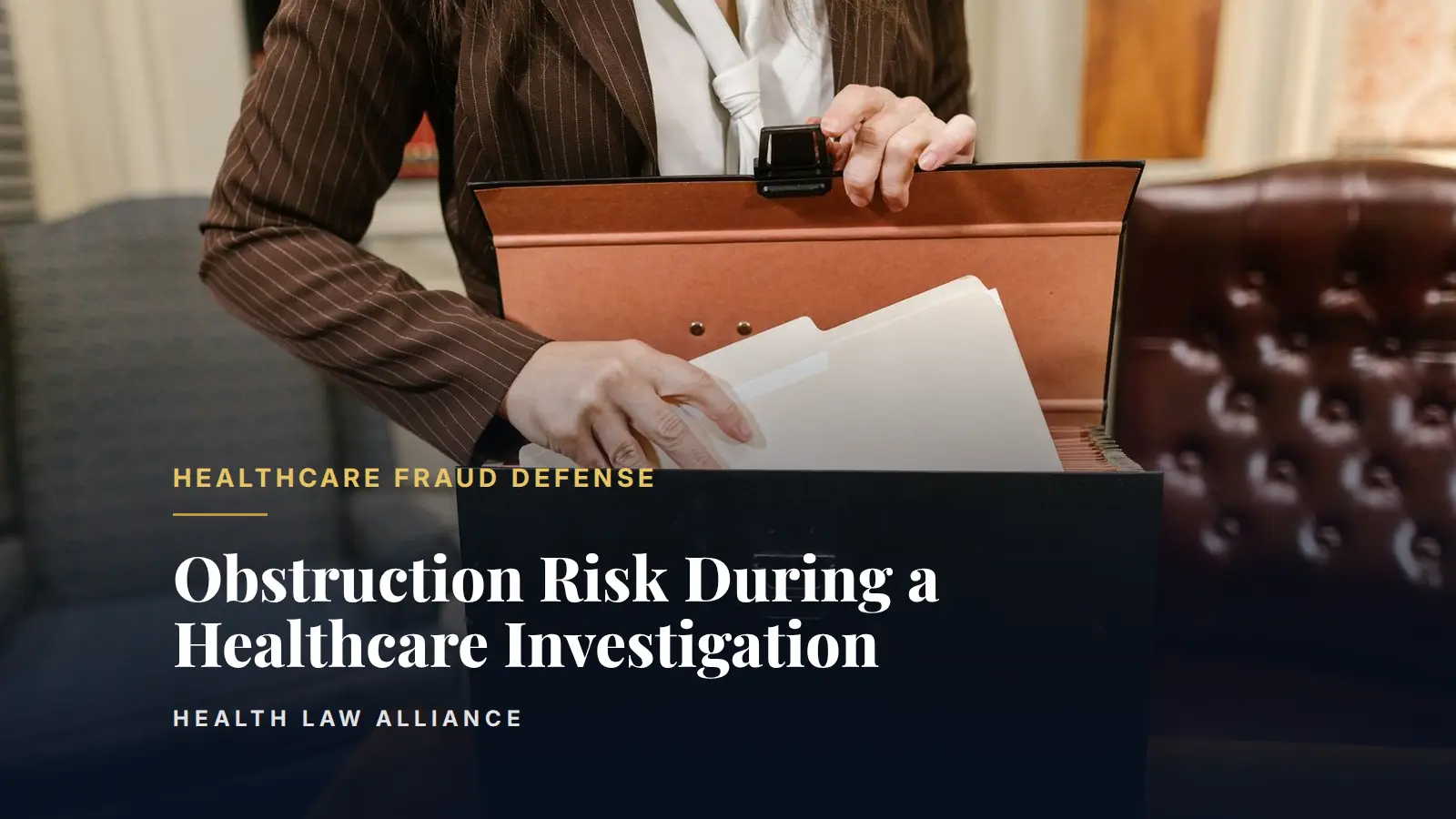
The most direct obstruction exposure comes from changing the record itself. 18 U.S.C. § 1519 makes it a federal crime to knowingly alter, destroy, mutilate, conceal, falsify, or make a false entry in any record or document with intent to impede, obstruct, or influence a matter within a federal agency's jurisdiction, punishable by up to 20 years in prison. The statute does not require that an investigation already be open; it also reaches conduct done in relation to or in contemplation of one. A properly dated late entry or addendum is not the same as an edit that conceals when a change was actually made, a distinction examined in Backdating and Late Chart Edits in a Federal Investigation.
Coaching Witnesses Before They Testify
Telling an employee what to say, or not say, to an investigator carries its own statute. 18 U.S.C. § 1512(b) criminalizes knowingly using intimidation, threats, or corrupt persuasion to influence, delay, or prevent a witness's testimony, or to cause a person to withhold a record or evade a subpoena, and it also carries a maximum of 20 years. A meeting where staff are told what to tell OIG or FBI agents before an interview fits the pattern prosecutors describe as witness tampering, regardless of whether the underlying billing conduct was itself unlawful.
Deleting Messages And Other Electronic Evidence
Text messages, emails, and shared-drive files are records and tangible objects under 18 U.S.C. § 1519 and under the document-destruction provision of 18 U.S.C. § 1512(c), both carrying up to 20 years. Deleting a group chat, wiping a phone, or instructing a vendor to purge a mailbox after a subpoena or audit letter arrives is treated the same as shredding paper files. Both statutes turn on intent to obstruct, not on whether the deleted material would have actually been responsive.
The Statutes That Apply
Congress also wrote a healthcare-specific obstruction provision. 18 U.S.C. § 1518 makes it a crime to willfully prevent, obstruct, mislead, or delay the communication of information or records relating to a federal health care offense to a criminal investigator, punishable by up to 5 years. A false statement made directly to a federal agent, separate from any record, is charged under 18 U.S.C. § 1001, also up to 5 years. Each of these charges stands on its own; a provider can be convicted of obstruction even where the government never proves the underlying anti-kickback statute or stark law allegation that started the inquiry.
Health Law Alliance's attorneys have overseen 2,000+ audits and handled 5,000+ matters, with 25+ years of experience.
Obstruction charges do not require that the government win the underlying case. They only require proof of what was done with the records and the witnesses after the inquiry began.
Why Early Legal Counsel Is Critical
It is critical that healthcare providers promptly retain experienced healthcare defense counsel upon receiving a subpoena, audit notice, investigative request, or other government inquiry. Early legal intervention can protect the provider's rights, ensure appropriate responses to government requests, avoid inadvertent admissions, preserve relevant defenses, and allow counsel to communicate with investigators on the provider's behalf. Delaying legal representation can significantly affect the outcome of a matter and expose the provider to unnecessary risk, including the separate obstruction exposure described above. Once that conduct has occurred, the paths counsel can still negotiate narrow. A resolution through Deferred and Non-Prosecution Agreements in Healthcare becomes harder to reach, and the calculus behind Deciding Whether to Plead in a Healthcare Fraud Case shifts against the provider.
How Health Law Alliance Can Help
Health Law Alliance represents physicians, pharmacies, and healthcare companies from the moment a federal inquiry opens, before any record is touched or any employee is interviewed. The firm's attorneys advise on litigation holds, employee communications, and document preservation so that a legitimate defense is not mistaken for an attempt to obstruct, drawing on the same case-building patterns described in DME Fraud Charges: How Supplier Cases Are Built. Contact Health Law Alliance for a free, confidential consultation through its healthcare fraud defense practice.