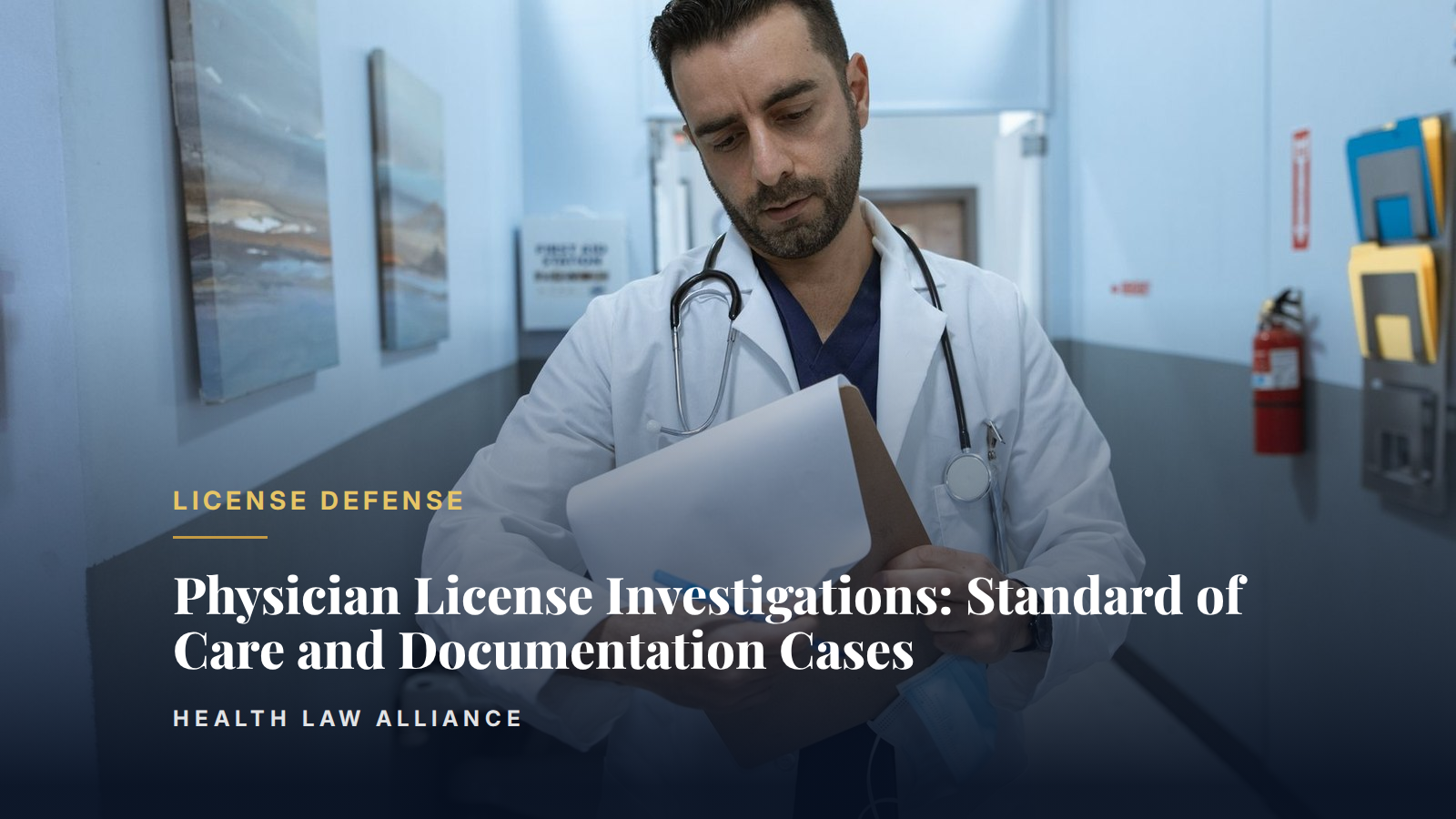
A hospital peer review referral, a patient complaint, or a malpractice claim can each open a state medical board investigation into a physician's standard of care. The board does not interview the physician's memory of the visit. It reads the chart. A standard-of-care investigation carries stakes that rival a malpractice suit: license restriction, a mandatory report to the National Practitioner Data Bank (NPDB), and a public disciplinary record that follows the physician into every future credentialing application.
How a Standard-of-Care Complaint Reaches the Board
State medical boards accept complaints from patients, hospitals, other physicians, and health plans, and most boards screen a complaint before opening a formal investigation. Cases involving possible patient harm typically move fastest through intake. Once a file opens, a medical consultant, usually a physician in the same specialty, weighs three questions: did the care deviate from the accepted standard, did the deviation cause harm, and does the record establish what the physician actually did.
For the full intake and screening sequence, see How a Licensing Board Complaint Becomes an Investigation. The third question, documentation, decides most standard-of-care matters, because a board reviewing an incomplete chart has no way to credit a physician's account of appropriate care.
Peer Review Findings and the Path to a Board Referral
Hospital peer review committees evaluate clinical competence internally, and peer review privilege statutes in all 50 states generally shield committee deliberations from discovery in a malpractice case. That privilege protects the committee's internal deliberations, not the outcome, which the hospital must report separately under federal law.
A hospital must report to the NPDB any professional review action that restricts a physician's clinical privileges for more than 30 days, and any surrender of privileges the hospital accepts while the physician is under investigation for possible incompetence or misconduct, even when the physician did not know the investigation was underway. An NPDB report reaches the state medical board and routinely opens a separate board investigation running alongside, or after, the hospital's own process.
Documentation as the Deciding Evidence
The medical record is the only evidence a board reviewer has from the encounter itself. Copy-forwarded notes, template entries that do not match the visit, late addenda, and gaps in the documented plan of care turn a defensible clinical decision into a sustained finding, because the board's medical consultant has no basis to credit a treatment decision the chart does not describe.
A board reviewer decides a standard-of-care case from the chart, not from the physician's memory of the visit. When the record cannot support the treatment decision, the finding follows the documentation, not the recollection.
Documentation gaps that raise a standard-of-care question can also raise a billing question. A chart that does not support the level of service billed can draw the attention of a payer integrity unit or the Department of Justice, and a physician managing a board investigation who also receives a target letter is facing two proceedings, under two different evidentiary standards, built on the same underlying chart.
Why Early Legal Counsel Is Critical
It is critical that physicians promptly retain experienced healthcare defense counsel upon learning of a peer review referral, a licensing board complaint, or a records request from a state medical board. Early legal intervention can shape how the record and any written response are presented to the board, avoid inadvertent admissions during an initial interview, preserve relevant defenses, and allow counsel to communicate with the board on the physician's behalf. Delaying representation can affect the outcome of the matter and expose the physician to an NPDB report that follows the physician for years.
Many board matters ultimately resolve through a negotiated consent order rather than a contested hearing. For more on what that negotiation costs and preserves, see Consent Orders in License Cases: What You Give Up and What You Keep.
How Health Law Alliance Can Help
Health Law Alliance represents physicians nationwide in state medical board investigations built on standard-of-care and documentation allegations, including matters that involve a parallel hospital peer review proceeding. The firm's founding partner is a former federal prosecutor, and the bench brings 25+ years of combined healthcare defense experience across board investigations, payer audits, and federal healthcare matters. If a hospital, a payer, or a state medical board has opened an inquiry into your charting or standard of care, contact us for a free, confidential consultation through the firm's medical board defense practice before the board's investigation advances further.