A complaint alleging violations of the False Claims Act stays under seal for at least 60 days after filing, and the government routinely asks the court for more time before deciding whether to intervene. A provider under investigation often knows something is wrong before that decision: a civil investigative demand or subpoena tied to the same conduct can arrive while the case is still sealed, before the provider has seen the complaint or learned a qui tam relator exists. The window before the government elects to proceed is the one chance defense counsel has to change how the government reads the case, through a written submission and a meeting with the prosecutor, before the government's position hardens.
The Seal Period and the Government's Election
Under 31 U.S.C. Section 3730(b)(2), the complaint is filed in camera and cannot be served on the defendant until the court so orders. The government can move for extensions “for good cause shown” under 31 U.S.C. Section 3730(b)(3), and it routinely does, so the assigned DOJ attorney often builds the record for months using civil investigative demands under 31 U.S.C. Section 3733 before the government must tell the court, under 31 U.S.C. Section 3730(b)(4), whether it will proceed or decline. How a Qui Tam Lawsuit Unfolds: From Sealed Complaint to Intervention walks through that timeline in full; this piece stays on what defense counsel does inside it.
What Belongs in the Pre-Decision Submission
A written submission works because it gives the prosecutor four concrete things to weigh against the relator's account: the billing and claims record tied claim by claim to the conduct alleged; the clinical or business rationale behind the billing, particularly where the theory rests on medically unnecessary services; the provider's compliance history, training records, and corrective action already taken; and an honest account of the relator's own role and what they could plausibly have known first-hand. Department attorneys are expected to consult the affected agency, so the submission typically reaches counsel at that agency, HHS-OIG on most healthcare matters, not only the DOJ attorney holding the file.
Presenting the Defense to the Prosecutor
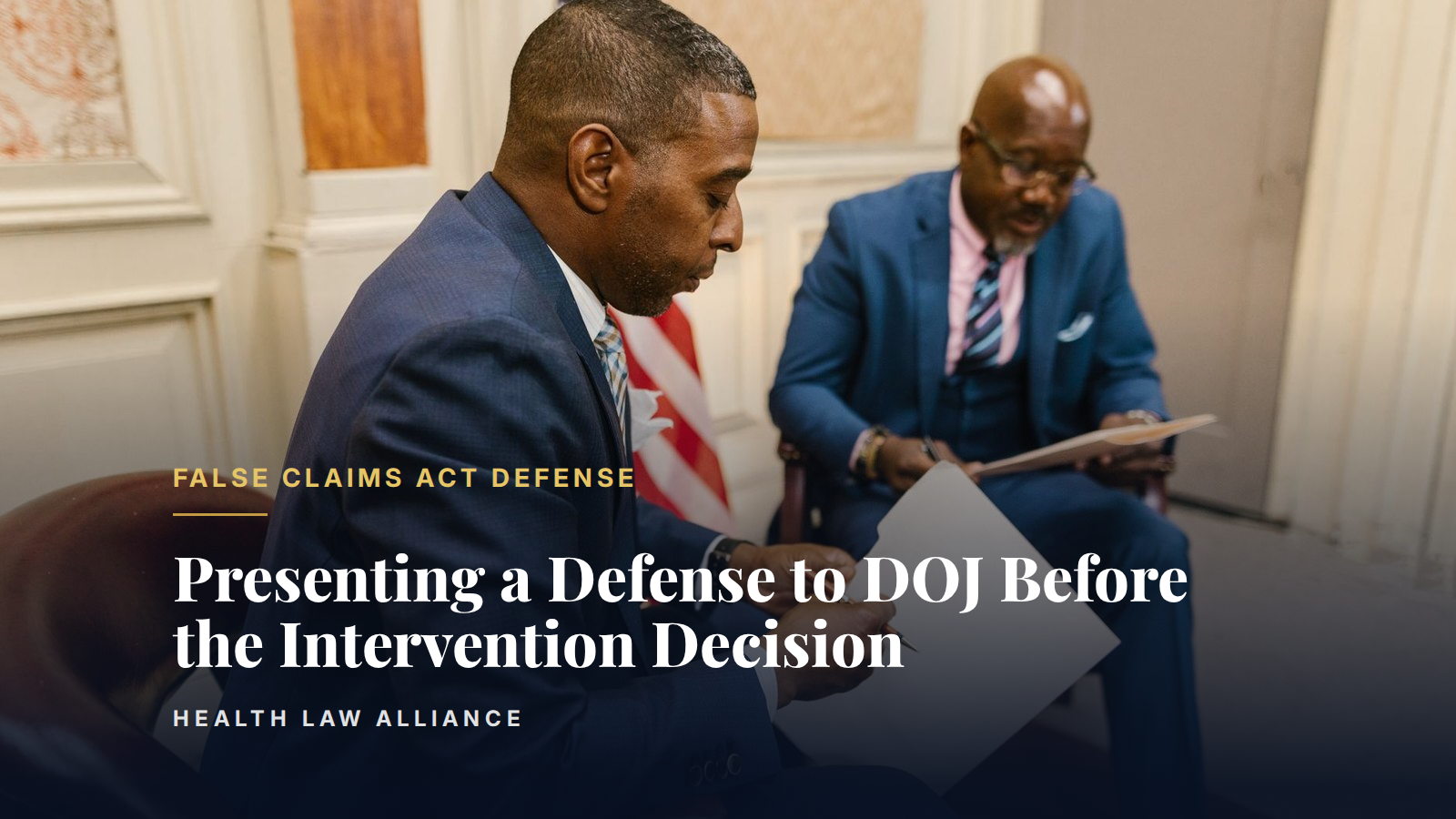
The meeting that follows the written submission tests whether the government's working theory survives contact with the underlying record, answering questions a document alone cannot anticipate. Defense counsel typically requests the meeting with the trial attorney handling the matter, and where agency counsel sits in, the same session addresses whatever program-integrity concern that agency tracks apart from the relator's allegations. A provider that shows up with the billing detail, clinical documentation, and compliance record already in the written submission gives the government a live chance to test its theory before deciding whether the case is worth prosecuting.
The Tradeoff in Showing the Defense Early
No submission and no meeting guarantees declination. The decision weighs litigation resources and agency priorities alongside the merits, and a well-documented defense can still be outweighed by them. Showing the defense early carries a real cost too: whatever narrows the government's read of the case before the decision also hands it a preview it can use to sharpen its own theory. That work is not wasted if the government intervenes anyway. The same billing analysis and materiality argument becomes the record for disputing the damages model and narrowing what the government can credibly call false and knowing. If the matter heads toward a negotiated resolution instead, that same record also shapes the terms of any corporate integrity agreement and whether an OIG exclusion is even on the table.
A submission that does not persuade the government to decline still narrows what the government can credibly demand if it intervenes anyway.
Why Early Legal Counsel Is Critical
It is critical that healthcare providers promptly retain experienced healthcare defense counsel upon learning that a civil investigative demand, subpoena, or other government inquiry may be tied to a sealed qui tam action. Early legal intervention can shape what the government sees before the intervention decision is made, avoid inadvertent admissions in the same records the government is already reviewing, and let counsel communicate with the prosecutor and the agency on the provider's behalf. Waiting until after the government has already elected to proceed can mean the case is litigated on a theory the provider never had the chance to narrow.
How Health Law Alliance Can Help
Health Law Alliance has handled 5,000+ matters across healthcare regulatory and fraud defense over 25+ years, including matters resolved before the government ever decided whether to intervene. If your organization has received a civil investigative demand, a subpoena, or any sign that a qui tam action may be under seal, contact Health Law Alliance's False Claims Act defense attorneys for a free, confidential consultation before the intervention decision is made.